7:38 pm, Saturday, 8 November 2025

Bangladesh RMG exporters demand clarity on US reciprocal tariff

  • Bizbd Report
  • Update Time : 09:44:49 pm, Monday, 15 September 2025
  • 215

Bangladesh’s readymade garment exporters have requested detailed clarification and a clear implementation mechanism regarding a recent United States executive order, which allows a 20 per cent reciprocal tariff on Bangladeshi goods to be reduced if at least 20 per cent US-origin content or raw materials are incorporated.

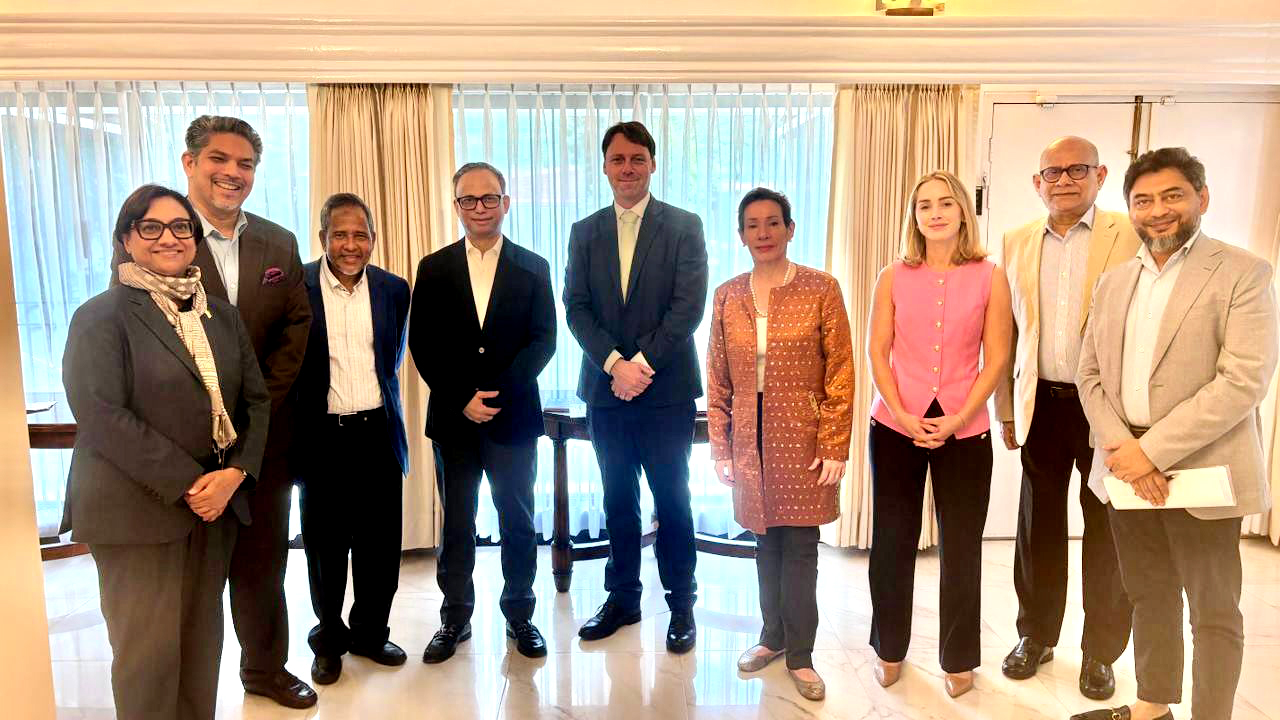
The issue was discussed on Monday at the US Embassy in Dhaka during a meeting between a visiting US Trade Representative (USTR) delegation and the Bangladesh Garment Manufacturers and Exporters Association (BGMEA).

BGMEA president Mahmud Hasan Khan Babu and Brendan Lynch, USTR assistant representative for South and Central Asia, led the talks.

A three-member USTR team arrived in Dhaka for a two-day visit to follow up on earlier discussions in Washington and review a draft trade agreement with Bangladesh.

After the meeting, Mahmud Hasan Khan said that exporters sought clarity on ‘valuation and traceability mechanisms to determine US input content.’ The US delegation said US Customs is finalising the process within the stipulated timeframe.

Under US Executive Order 14257, if an export contains 20 per cent or more US-origin content, the reciprocal tariff applies only to the remainder. For example, an item valued at $100 with 26 per cent US materials would face duties on just $74.

Exporters urged the US to adopt a stacking method for duties, which would reduce tariff burdens and boost Bangladesh’s competitiveness. Currently, only the EU enjoys this facility.

Mahmud Hasan said ‘The US advised us to apply but gave no major assurance.’

Stacking tariffs apply multiple duties sequentially, raising the effective rate. Exporters are seeking a harmonised formula where all duties are calculated on the base value to keep rates closer to a weighted average.

Even with the 20 per cent reciprocal tariff, Bangladesh’s exports to the US face an effective duty of around 36.5 per cent, including the 16.5 per cent MFN tariff. Mahmud Hasan called this a major challenge for our apparel exports urging the USTR to consider deeper cuts.

On labour law reforms, Lynch emphasised alignment with international standards and ILO guidelines.

The BGMEA president confirmed consultations with 81 trade unions to ensure inclusive reforms protecting both jobs and industrial growth.

The US delegation expressed satisfaction with discussions and optimism over lowering tariffs as bilateral trade expands. Bangladesh also plans to increase imports of US cotton to help reduce the trade deficit.

Several other BGMEA leaders were present at the meeting.
Bangladesh’s readymade garment exporters have requested detailed clarification and a clear implementation mechanism regarding a recent United States executive order, which allows a 20 per cent reciprocal tariff on Bangladeshi goods to be reduced if at least 20 per cent US-origin content or raw materials are incorporated.

The issue was discussed on Monday at the US Embassy in Dhaka during a meeting between a visiting US Trade Representative (USTR) delegation and the Bangladesh Garment Manufacturers and Exporters Association (BGMEA).

BGMEA president Mahmud Hasan Khan Babu and Brendan Lynch, USTR assistant representative for South and Central Asia, led the talks.

A three-member USTR team arrived in Dhaka for a two-day visit to follow up on earlier discussions in Washington and review a draft trade agreement with Bangladesh.

After the meeting, Mahmud Hasan Khan said that exporters sought clarity on ‘valuation and traceability mechanisms to determine US input content.’ The US delegation said US Customs is finalising the process within the stipulated timeframe.

Under US Executive Order 14257, if an export contains 20% or more US-origin content, the reciprocal tariff applies only to the remainder. For example, an item valued at $100 with 26% US materials would face duties on just $74.

Exporters urged the US to adopt a stacking method for duties, which would reduce tariff burdens and boost Bangladesh’s competitiveness. Currently, only the EU enjoys this facility. Mahmud Hasan said ‘The US advised us to apply but gave no major assurance.’

Stacking tariffs apply multiple duties sequentially, raising the effective rate. Exporters are seeking a harmonised formula where all duties are calculated on the base value to keep rates closer to a weighted average.

Even with the 20 per cent reciprocal tariff, Bangladesh’s exports to the US face an effective duty of around 36.5 per cent, including the 16.5 per cent MFN tariff. Mahmud Hasan called this a major challenge for our apparel exports urging the USTR to consider deeper cuts.

On labour law reforms, Lynch emphasised alignment with international standards and ILO guidelines.

The BGMEA president confirmed consultations with 81 trade unions to ensure inclusive reforms protecting both jobs and industrial growth.

The US delegation expressed satisfaction with discussions and optimism over lowering tariffs as bilateral trade expands. Bangladesh also plans to increase imports of US cotton to help reduce the trade deficit.

Several other BGMEA leaders were present at the meeting.
Bangladesh RMG exporters demand clarity on US reciprocal tariff

Update Time : 09:44:49 pm, Monday, 15 September 2025

Bangladesh’s readymade garment exporters have requested detailed clarification and a clear implementation mechanism regarding a recent United States executive order, which allows a 20 per cent reciprocal tariff on Bangladeshi goods to be reduced if at least 20 per cent US-origin content or raw materials are incorporated.

The issue was discussed on Monday at the US Embassy in Dhaka during a meeting between a visiting US Trade Representative (USTR) delegation and the Bangladesh Garment Manufacturers and Exporters Association (BGMEA).

BGMEA president Mahmud Hasan Khan Babu and Brendan Lynch, USTR assistant representative for South and Central Asia, led the talks.

A three-member USTR team arrived in Dhaka for a two-day visit to follow up on earlier discussions in Washington and review a draft trade agreement with Bangladesh.

After the meeting, Mahmud Hasan Khan said that exporters sought clarity on ‘valuation and traceability mechanisms to determine US input content.’ The US delegation said US Customs is finalising the process within the stipulated timeframe.

Under US Executive Order 14257, if an export contains 20 per cent or more US-origin content, the reciprocal tariff applies only to the remainder. For example, an item valued at $100 with 26 per cent US materials would face duties on just $74.

Exporters urged the US to adopt a stacking method for duties, which would reduce tariff burdens and boost Bangladesh’s competitiveness. Currently, only the EU enjoys this facility.

Mahmud Hasan said ‘The US advised us to apply but gave no major assurance.’

Stacking tariffs apply multiple duties sequentially, raising the effective rate. Exporters are seeking a harmonised formula where all duties are calculated on the base value to keep rates closer to a weighted average.

Even with the 20 per cent reciprocal tariff, Bangladesh’s exports to the US face an effective duty of around 36.5 per cent, including the 16.5 per cent MFN tariff. Mahmud Hasan called this a major challenge for our apparel exports urging the USTR to consider deeper cuts.

On labour law reforms, Lynch emphasised alignment with international standards and ILO guidelines.

The BGMEA president confirmed consultations with 81 trade unions to ensure inclusive reforms protecting both jobs and industrial growth.

The US delegation expressed satisfaction with discussions and optimism over lowering tariffs as bilateral trade expands. Bangladesh also plans to increase imports of US cotton to help reduce the trade deficit.

Several other BGMEA leaders were present at the meeting.
Bangladesh’s readymade garment exporters have requested detailed clarification and a clear implementation mechanism regarding a recent United States executive order, which allows a 20 per cent reciprocal tariff on Bangladeshi goods to be reduced if at least 20 per cent US-origin content or raw materials are incorporated.

The issue was discussed on Monday at the US Embassy in Dhaka during a meeting between a visiting US Trade Representative (USTR) delegation and the Bangladesh Garment Manufacturers and Exporters Association (BGMEA).

BGMEA president Mahmud Hasan Khan Babu and Brendan Lynch, USTR assistant representative for South and Central Asia, led the talks.

A three-member USTR team arrived in Dhaka for a two-day visit to follow up on earlier discussions in Washington and review a draft trade agreement with Bangladesh.

After the meeting, Mahmud Hasan Khan said that exporters sought clarity on ‘valuation and traceability mechanisms to determine US input content.’ The US delegation said US Customs is finalising the process within the stipulated timeframe.

Under US Executive Order 14257, if an export contains 20% or more US-origin content, the reciprocal tariff applies only to the remainder. For example, an item valued at $100 with 26% US materials would face duties on just $74.

Exporters urged the US to adopt a stacking method for duties, which would reduce tariff burdens and boost Bangladesh’s competitiveness. Currently, only the EU enjoys this facility. Mahmud Hasan said ‘The US advised us to apply but gave no major assurance.’

Stacking tariffs apply multiple duties sequentially, raising the effective rate. Exporters are seeking a harmonised formula where all duties are calculated on the base value to keep rates closer to a weighted average.

Even with the 20 per cent reciprocal tariff, Bangladesh’s exports to the US face an effective duty of around 36.5 per cent, including the 16.5 per cent MFN tariff. Mahmud Hasan called this a major challenge for our apparel exports urging the USTR to consider deeper cuts.

On labour law reforms, Lynch emphasised alignment with international standards and ILO guidelines.

The BGMEA president confirmed consultations with 81 trade unions to ensure inclusive reforms protecting both jobs and industrial growth.

The US delegation expressed satisfaction with discussions and optimism over lowering tariffs as bilateral trade expands. Bangladesh also plans to increase imports of US cotton to help reduce the trade deficit.

Several other BGMEA leaders were present at the meeting.