3:35 pm, Wednesday, 13 May 2026

Bangladesh loses US apparel market share as Vietnam leads, Cambodia rises

Bangladesh’s apparel exports to the United States declined during the first quarter of 2026 amid intensifying competition from regional suppliers, while Vietnam strengthened its dominance in the market and China suffered a sharp contraction in shipments.

According to data released on May 7 by the Office of Textiles and Apparel, although Bangladesh retained its position as the second-largest apparel supplier to the US market after Vietnam, the country’s export performance deteriorated in both value and volume terms, reflecting mounting competitive pressure, falling prices and weaker global demand.

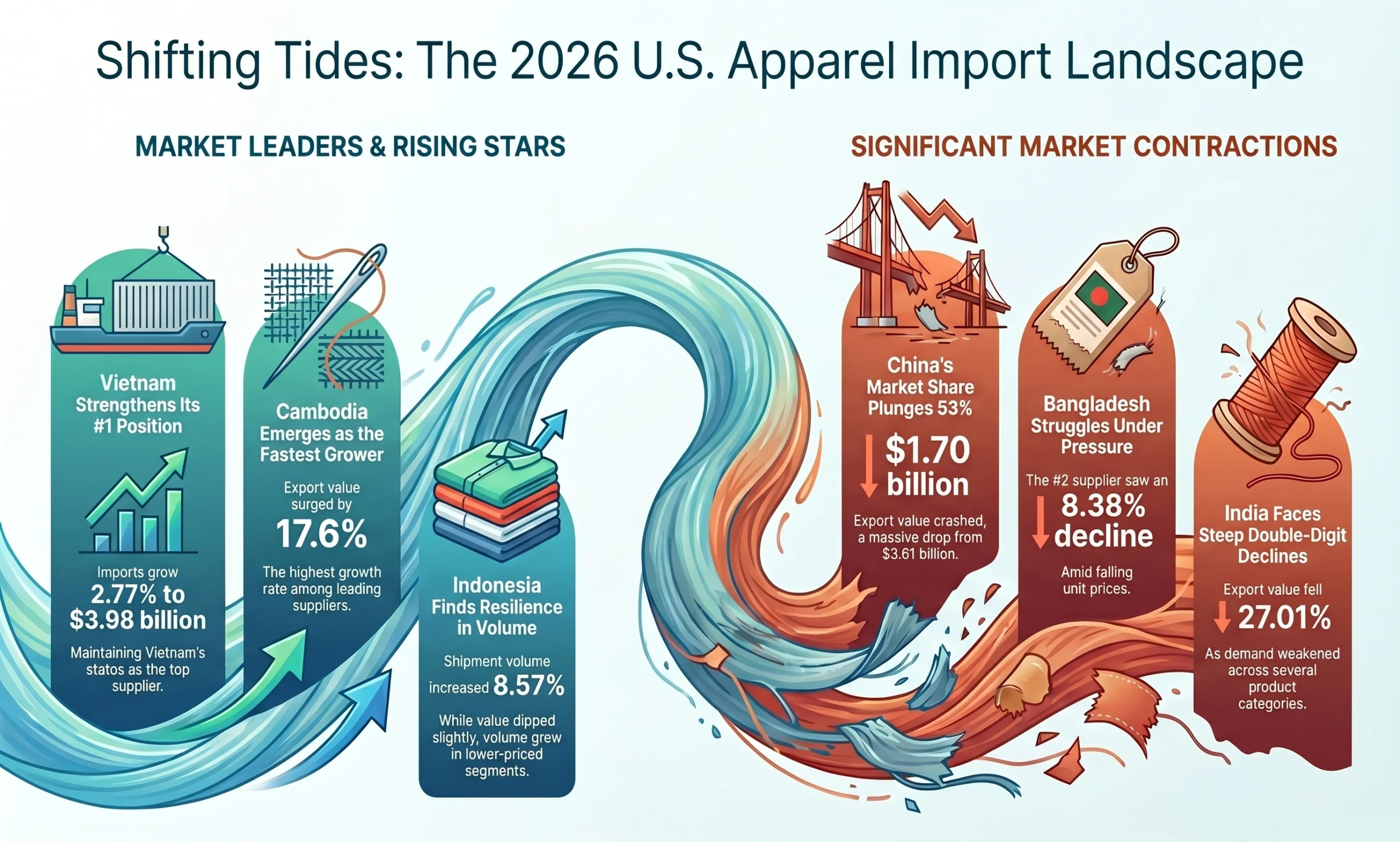
US apparel imports from Bangladesh fell 8.38 per cent year-on-year to $2.04 billion during January–March 2026, down from $2.22 billion in the same period of 2025.

Shipment volume also declined by 5.97 per cent to 690.11 million square metre equivalents (SME) from 733.92 million SME a year earlier.

The country also experienced downward pressure on prices.

Bangladesh’s average unit value declined 2.56 per cent to $2.95 per SME from $3.03 during the period, indicating that exporters faced difficulties in maintaining pricing power amid softer demand and intense competition in the US market.

For March 2026 alone, Bangladesh’s apparel exports to the US declined 8.08 per cent in value and 5.46 per cent in volume compared with the same month of the previous year.

In contrast, Vietnam strengthened its dominance in the US apparel market during the quarter.

US imports from Vietnam increased 2.77 per cent in value to $3.98 billion during January-March 2026, while shipment volume rose 4.87 per cent to 1.18 billion SME.

Vietnam’s growth came despite a slight 2 per cent decline in unit prices to $3.38 per SME.

The country remained significantly ahead of Bangladesh in both value and volume terms, highlighting its stronger positioning in higher-value products, synthetic garments and diversified apparel categories.

Industry analysts said Vietnam’s ability to increase both export value and shipment volume while most suppliers struggled reflected continued buyer confidence in its supply chain efficiency, product diversity and value-added manufacturing capability.

China, once the dominant supplier to the US apparel market, recorded the sharpest decline among major exporting countries.

US imports from China plunged 52.91 per cent in value to $1.70 billion during the first quarter of 2026, compared with $3.61 billion a year earlier, while shipment volume fell 40.15 per cent.

Despite China’s steep contraction, Bangladesh was unable to fully capitalise on the shifting sourcing trend as competing countries such as Vietnam and Cambodia captured a larger share of diverted orders.

Cambodia emerged as the fastest-growing supplier among the leading apparel exporting countries to the US market.

US imports from Cambodia rose 17.6 per cent in value to $1.09 billion during January-March 2026, while shipment volume climbed 18.07 per cent.

Cambodia’s average unit price remained relatively stable, declining only 0.4 per cent to $2.99 per SME, slightly above Bangladesh’s average export price.

The strong performance suggests that Cambodia is increasingly becoming an attractive sourcing destination for US buyers seeking cost competitiveness and diversified supply chains.

India also experienced a notable slowdown during the quarter.

US apparel imports from India declined 27.01 per cent in value and 22.64 per cent in volume, reflecting weaker demand and declining competitiveness in several product categories.

Indonesia, however, showed relative resilience. Although export value slipped marginally by 0.13 per cent, shipment volume increased 8.57 per cent, indicating that the country gained ground in lower-priced apparel segments through higher shipment quantities.

The data also highlighted growing pricing pressure across major sourcing countries.

Bangladesh’s average export price remained lower than Vietnam’s but higher than China’s and Pakistan’s.

However, the simultaneous decline in both unit prices and shipment volumes suggests that Bangladeshi exporters struggled to maintain competitiveness amid aggressive pricing by rival suppliers.

Industry insiders said Bangladesh remains heavily dependent on basic cotton garment exports, while competitors are increasingly expanding into higher-value fashion products, synthetic apparel and diversified product categories.

The latest US import data underline several structural challenges for Bangladesh’s apparel sector at a time when global retail demand remains uncertain and buyers continue to remain cautious about inventory and consumer spending.

Analysts said Bangladesh would need to accelerate investments in product diversification, man-made fibre apparel, backward linkage industries and supply chain modernisation to strengthen its competitiveness in the evolving US sourcing market.

They warned that without a significant shift towards higher-value apparel segments and improved sourcing capabilities, Bangladesh could face increasing difficulty in maintaining market share as regional competition intensifies across Asia.

Bangladesh loses US apparel market share as Vietnam leads, Cambodia rises

Update Time : 05:16:55 pm, Monday, 11 May 2026

Bangladesh’s apparel exports to the United States declined during the first quarter of 2026 amid intensifying competition from regional suppliers, while Vietnam strengthened its dominance in the market and China suffered a sharp contraction in shipments.

According to data released on May 7 by the Office of Textiles and Apparel, although Bangladesh retained its position as the second-largest apparel supplier to the US market after Vietnam, the country’s export performance deteriorated in both value and volume terms, reflecting mounting competitive pressure, falling prices and weaker global demand.

US apparel imports from Bangladesh fell 8.38 per cent year-on-year to $2.04 billion during January–March 2026, down from $2.22 billion in the same period of 2025.

Shipment volume also declined by 5.97 per cent to 690.11 million square metre equivalents (SME) from 733.92 million SME a year earlier.

The country also experienced downward pressure on prices.

Bangladesh’s average unit value declined 2.56 per cent to $2.95 per SME from $3.03 during the period, indicating that exporters faced difficulties in maintaining pricing power amid softer demand and intense competition in the US market.

For March 2026 alone, Bangladesh’s apparel exports to the US declined 8.08 per cent in value and 5.46 per cent in volume compared with the same month of the previous year.

In contrast, Vietnam strengthened its dominance in the US apparel market during the quarter.

US imports from Vietnam increased 2.77 per cent in value to $3.98 billion during January-March 2026, while shipment volume rose 4.87 per cent to 1.18 billion SME.

Vietnam’s growth came despite a slight 2 per cent decline in unit prices to $3.38 per SME.

The country remained significantly ahead of Bangladesh in both value and volume terms, highlighting its stronger positioning in higher-value products, synthetic garments and diversified apparel categories.

Industry analysts said Vietnam’s ability to increase both export value and shipment volume while most suppliers struggled reflected continued buyer confidence in its supply chain efficiency, product diversity and value-added manufacturing capability.

China, once the dominant supplier to the US apparel market, recorded the sharpest decline among major exporting countries.

US imports from China plunged 52.91 per cent in value to $1.70 billion during the first quarter of 2026, compared with $3.61 billion a year earlier, while shipment volume fell 40.15 per cent.

Despite China’s steep contraction, Bangladesh was unable to fully capitalise on the shifting sourcing trend as competing countries such as Vietnam and Cambodia captured a larger share of diverted orders.

Cambodia emerged as the fastest-growing supplier among the leading apparel exporting countries to the US market.

US imports from Cambodia rose 17.6 per cent in value to $1.09 billion during January-March 2026, while shipment volume climbed 18.07 per cent.

Cambodia’s average unit price remained relatively stable, declining only 0.4 per cent to $2.99 per SME, slightly above Bangladesh’s average export price.

The strong performance suggests that Cambodia is increasingly becoming an attractive sourcing destination for US buyers seeking cost competitiveness and diversified supply chains.

India also experienced a notable slowdown during the quarter.

US apparel imports from India declined 27.01 per cent in value and 22.64 per cent in volume, reflecting weaker demand and declining competitiveness in several product categories.

Indonesia, however, showed relative resilience. Although export value slipped marginally by 0.13 per cent, shipment volume increased 8.57 per cent, indicating that the country gained ground in lower-priced apparel segments through higher shipment quantities.

The data also highlighted growing pricing pressure across major sourcing countries.

Bangladesh’s average export price remained lower than Vietnam’s but higher than China’s and Pakistan’s.

However, the simultaneous decline in both unit prices and shipment volumes suggests that Bangladeshi exporters struggled to maintain competitiveness amid aggressive pricing by rival suppliers.

Industry insiders said Bangladesh remains heavily dependent on basic cotton garment exports, while competitors are increasingly expanding into higher-value fashion products, synthetic apparel and diversified product categories.

The latest US import data underline several structural challenges for Bangladesh’s apparel sector at a time when global retail demand remains uncertain and buyers continue to remain cautious about inventory and consumer spending.

Analysts said Bangladesh would need to accelerate investments in product diversification, man-made fibre apparel, backward linkage industries and supply chain modernisation to strengthen its competitiveness in the evolving US sourcing market.

They warned that without a significant shift towards higher-value apparel segments and improved sourcing capabilities, Bangladesh could face increasing difficulty in maintaining market share as regional competition intensifies across Asia.