5:09 pm, Thursday, 7 May 2026

Bangladesh inflation climbs above 9pc in April as fuel price hikes bite

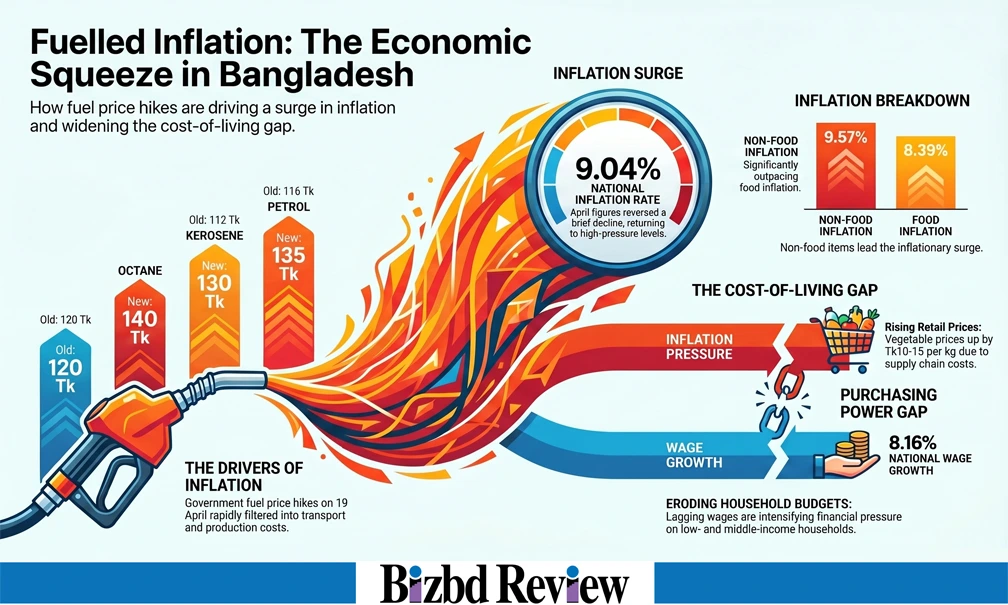
Inflation in Bangladesh climbed to 9.04 per cent in April, reversing a brief decline in March and signalling renewed pressure on household expenses.

Data released on May 6 by the Bangladesh Bureau of Statistics showed inflation had increased from 8.71 per cent in March, marking a return to levels above 9 per cent for five of the past six months.

The latest uptick follows a government decision on April 19 to raise fuel prices, a move analysts say has filtered quickly into transport and production costs.

Diesel prices were lifted to Tk115 per litre from Tk100, kerosene to Tk130 from Tk112, octane to Tk140 from Tk120, and petrol to Tk135 from Tk116.

Economists said that higher fuel costs typically ripple through supply chains, pushing up the cost of goods and services and ultimately burdening consumers.

The impact is already visible in retail markets. Vegetable prices have risen by Tk10–15 per kilogram in recent weeks, while fish and meat have also become more expensive. Rice prices, however, have remained broadly stable.

Data from the BBS showed that food inflation edged up to 8.39 per cent in April, while non-food inflation climbed more sharply to 9.57 per cent, driven by higher expenses for fuel, transport and related services.

Price pressures remained elevated in both urban and rural areas.

Rising inflation was placing renewed strain on low- and middle-income households, as wage growth continued to lag behind living costs.

The national average wage rate increased by 8.16 per cent in April, leaving a gap that was eroding purchasing power and intensifying pressure on household budgets.
Bangladesh inflation climbs above 9pc in April as fuel price hikes bite

Update Time : 07:04:42 pm, Wednesday, 6 May 2026

Inflation in Bangladesh climbed to 9.04 per cent in April, reversing a brief decline in March and signalling renewed pressure on household expenses.

Data released on May 6 by the Bangladesh Bureau of Statistics showed inflation had increased from 8.71 per cent in March, marking a return to levels above 9 per cent for five of the past six months.

The latest uptick follows a government decision on April 19 to raise fuel prices, a move analysts say has filtered quickly into transport and production costs.

Diesel prices were lifted to Tk115 per litre from Tk100, kerosene to Tk130 from Tk112, octane to Tk140 from Tk120, and petrol to Tk135 from Tk116.

Economists said that higher fuel costs typically ripple through supply chains, pushing up the cost of goods and services and ultimately burdening consumers.

The impact is already visible in retail markets. Vegetable prices have risen by Tk10–15 per kilogram in recent weeks, while fish and meat have also become more expensive. Rice prices, however, have remained broadly stable.

Data from the BBS showed that food inflation edged up to 8.39 per cent in April, while non-food inflation climbed more sharply to 9.57 per cent, driven by higher expenses for fuel, transport and related services.

Price pressures remained elevated in both urban and rural areas.

Rising inflation was placing renewed strain on low- and middle-income households, as wage growth continued to lag behind living costs.

The national average wage rate increased by 8.16 per cent in April, leaving a gap that was eroding purchasing power and intensifying pressure on household budgets.