Bizbd Report
Bangladesh’s economy is showing early signs of stabilisation following months of turbulence, but persistent inflation, stalled investment, financial sector fragility, and looming global trade challenges are casting a long shadow over the country’s future prospects, experts warned at a policy briefing on August 28.
The June–July 2025 edition of the Monthly Macroeconomic Insights (MMI), released by the Centre for Macroeconomic Analysis (CMEA) of the Policy Research Institute of Bangladesh (PRI) in partnership with the Australian Government’s Department of Foreign Affairs and Trade (DFAT), offered a sobering assessment of the economy.
While strong remittances, robust exports and cautious fiscal management have cushioned the downturn, analysts cautioned that structural weaknesses must be addressed urgently.
Opening the event, PRI Executive Director Khurshid Alam struck a cautiously optimistic note, saying that despite various challenges, the Bangladeshi economy was continuing to move in the right direction.
He stressed that decisive reforms could help consolidate the current stability.
In his keynote presentation, Ashikur Rahman, Principal Economist at PRI, identified the investment climate as one of the most serious bottlenecks.
‘Without addressing deep-rooted constraints in energy supply, logistics, and political uncertainty, it will be difficult to unlock new investment opportunities,’ he said.
Ashikur cautioned against blaming slower growth solely on tight monetary policy, arguing instead that unless structural bottlenecks in the real economy were addressed alongside financial policies, Bangladesh would not be able to meaningfully stimulate investment and sustain growth.
The report identified inflation as the most pressing short-term concern, noting that it had risen to 8.55 per cent in July, with food inflation recorded at 7.56 per cent.
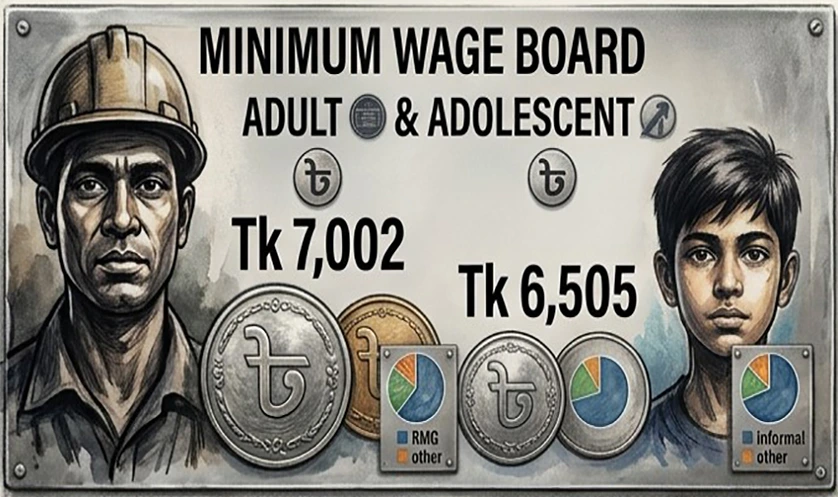
It said that the twelve-month average remained close to double digits at 9.77 per cent. Wages, however, had failed to keep pace, leaving millions worse off.
As a result, poverty was estimated to have risen to 28 per cent of the population, compared to 18.7 per cent in 2022.
Akhtar Hossain, Chief Economist at Bangladesh Bank, acknowledged the problem while outlining the central bank’s strategy.
‘We are currently working to bring down our inflation rate from 9 per cent to 3–4 per cent. However, simply reducing it is not sufficient; we must formulate a rule-based monetary policy to ensure long-term stability. This will allow us to maintain inflation stable at around 4 per cent in the future,’ he said.
Bangladesh Bank has maintained a repo rate of 10 per cent to contain inflation, but this has squeezed private credit, which slowed to just 6.5 per cent in June.
Liquidity stress has pushed the call money rate above 10 per cent, making financing costlier for businesses.
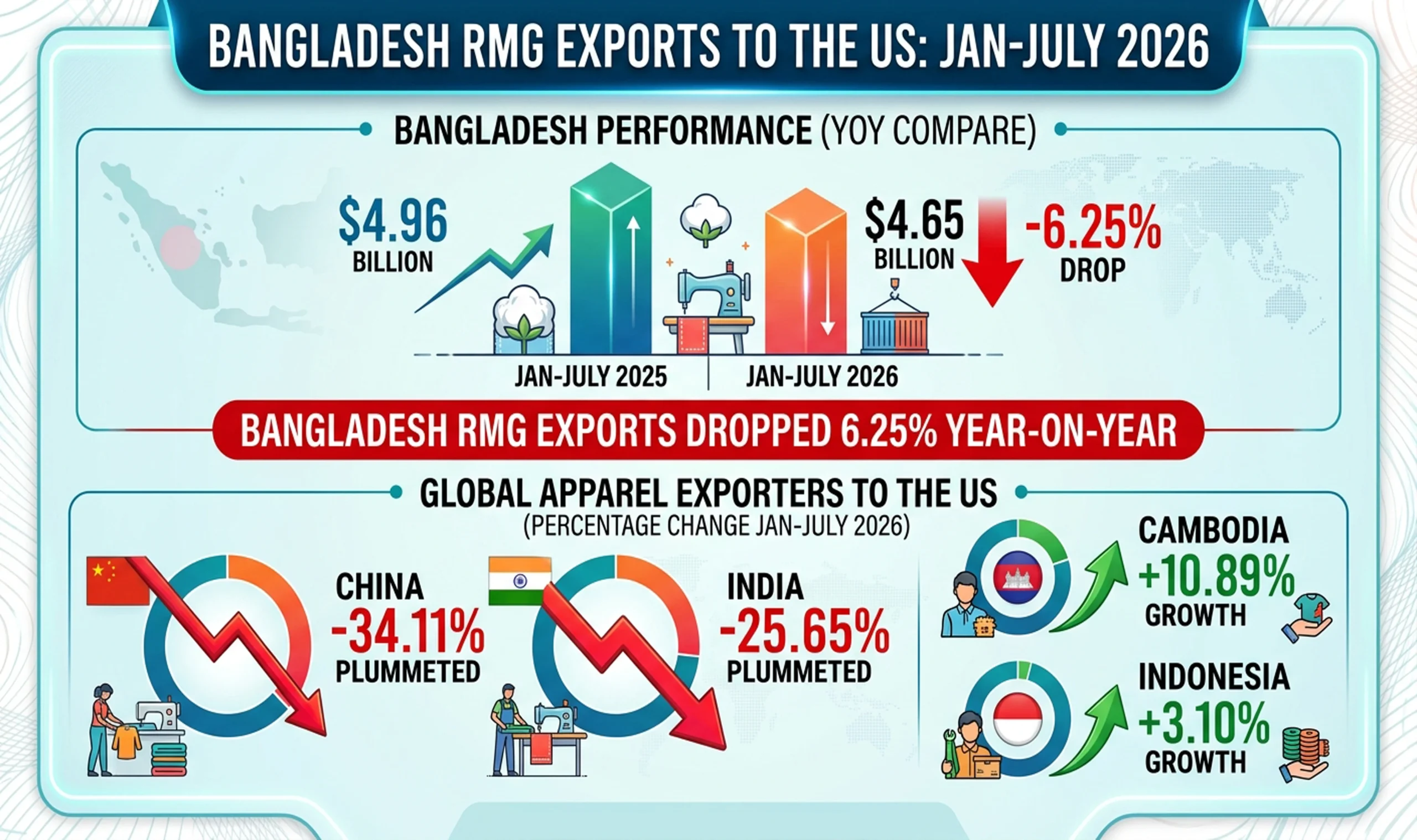
The Monthly Macroeconomic Insights highlighted exports as a rare bright spot, with shipments reaching a 32-month high in July, surging by 25 per cent year-on-year to $4.78 billion.
Remittances also increased by nearly 30 per cent, helping lift foreign exchange reserves to $26 billion — enough to cover 4.5 months of imports.
As a result, the balance of payments recorded a surplus of $3.4 billion in FY25, reversing three consecutive years of deficits.
However, the briefing cautioned that these gains could be overshadowed by Bangladesh’s upcoming graduation from least developed country (LDC) status in November 2026.
It warned that the ready-made garment (RMG) sector, which contributes over 80 per cent of exports, might face EU tariffs of 8–12 per cent, a shift that could result in job losses and an annual export decline of up to $7 billion.
Experts expressed particular alarm about the financial sector, where distressed loans ballooned to Tk 7.57 trillion in 2024 — equivalent to almost the entire national budget.
Weak regulatory oversight, politically motivated lending and poor recovery mechanisms have left banks with the lowest capital adequacy ratio in South Asia.
Several troubled banks are being forced into mergers, with five Shariah-based lenders undergoing restructuring at a cost of Tk 350 billion.
Nine non-bank financial institutions are slated for liquidation. Reforms to the Bank Company Act are underway, but implementation remains in early stages.
Adding to the challenges was political uncertainty, which had dampened investor confidence.
PRI Director Ahmad Ahsan stressed that stability in the run-up to the upcoming election would be vital, noting that political uncertainty had already hurt investment and growth.
He pointed to the employment crisis, observing that nearly 3 million people — most of them women — had left the workforce in 2024.
With a large portion of the population deprived of income, he said, poverty had risen nationwide.
Ahsan urged the interim government to place job creation and poverty reduction at the centre of its agenda.
The monthly report indicated that on the fiscal front, the government had reduced the budget deficit to 4.1 per cent of GDP in FY25, but this had been achieved largely through spending cuts rather than stronger revenue mobilisation.
It noted that direct taxes accounted for only 23 per cent of total revenue, highlighting the regressive nature of the tax system.
Development spending had also faltered, with implementation of the Annual Development Programme at its weakest level in five years.
At the same time, domestic borrowing had surged by 35 per cent, while external debt rose to $104.8 billion, with debt servicing already consuming $4.1 billion in FY25.
The panel, which included Nasiruddin Ahmed, former Chairman of the National Board of Revenue, Anwar-Ul-Alam Chowdhury, President of the Bangladesh Chamber of Industries, and Habibullah N Karim, Senior Vice President of the Metropolitan Chamber of Commerce & Industry, emphasised that reforms were needed in monetary policy, inflation management, and the digitalisation of revenue administration.
They said that strengthening financial governance and improving policy implementation were important to address Bangladesh’s economic challenges.