3:21 pm, Monday, 13 April 2026

Bangladesh RMG slips in US while footwear, travel goods surge

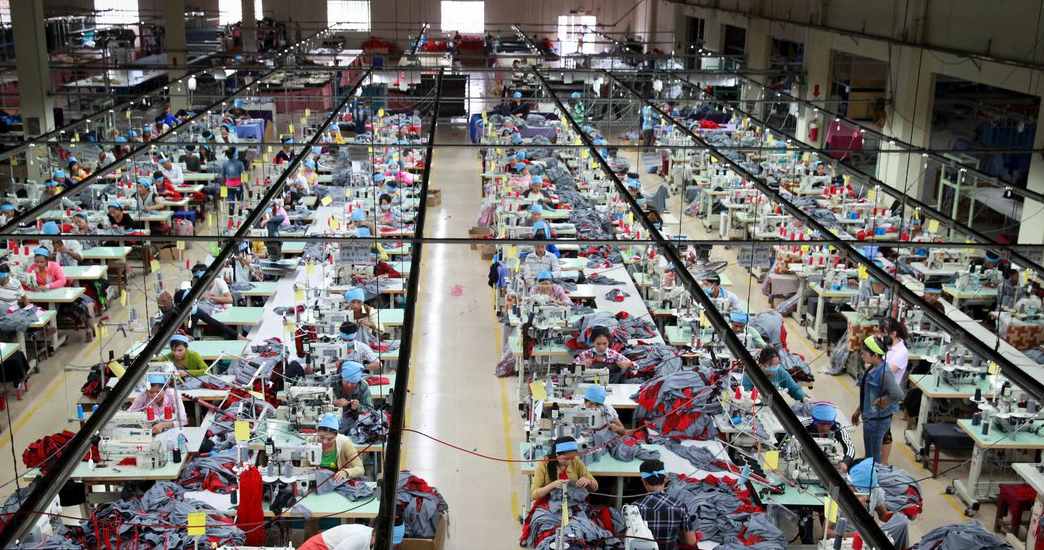
Bangladesh’s apparel exports to the United States, its largest single export destination, continued to decline in the opening months of 2026 amid subdued demand and policy uncertainties, while non-apparel segments such as footwear and travel goods recorded strong growth, signalling a gradual shift in export dynamics.

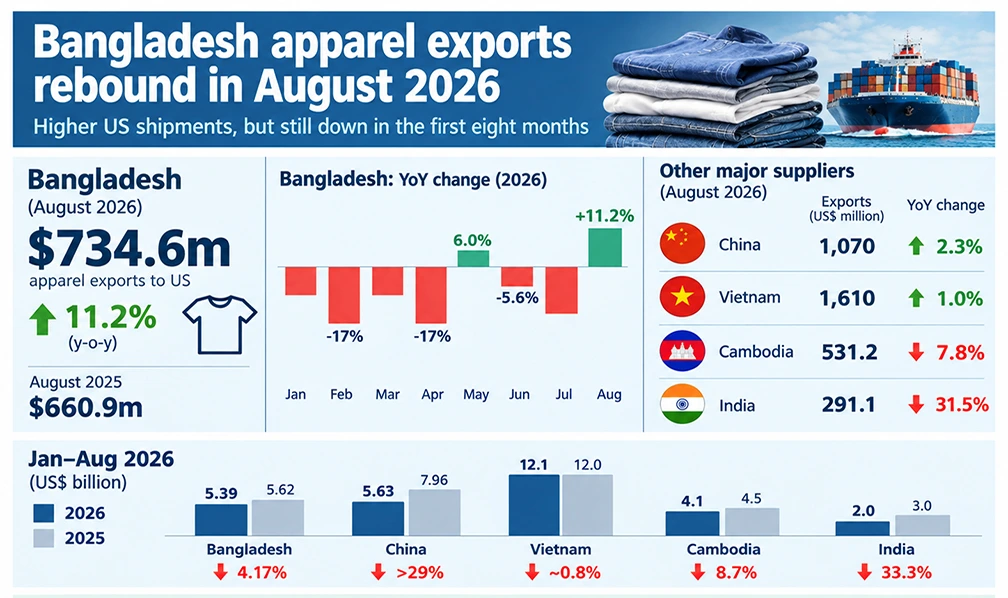
Shipments of readymade garments (RMG) to the US fell sharply by 17.18 per cent year-on-year in February, underscoring persistent pressure on the country’s key export sector.

Export earnings stood at $581.19 million in February 2026, down from $701.71 million in the same month of 2025.

Over the January-February period, Bangladesh’s RMG exports to the US totalled $1.37 billion, compared with $1.50 billion in the corresponding period a year earlier, marking an 8.53 per cent decline, according to data released by the Office of Textiles and Apparel (OTEXA).

In volume terms, shipments dropped by 6.21 per cent to 457.45 million square metres, from 487.75 million square metres in the same period of 2025.

Exporters attributed the downturn largely to the impact of US reciprocal tariff measures, which have raised retail prices and weakened consumer demand.

The decline also reflects broader market conditions, as total US apparel imports fell by 13.47 per cent year-on-year to $11.73 billion during the first two months of 2026, amid elevated inflation and cautious consumer spending.

Despite the contraction, competing suppliers such as Vietnam, Cambodia and Indonesia managed to expand their market share.

OTEXA underscored a clear shift in global apparel sourcing, with Vietnam strengthening its lead through a 2.86 per cent rise in export value to $2.70 billion and a 4.84 per cent increase in volume to 790.23 million square metres, while Bangladesh remained the second-largest supplier.

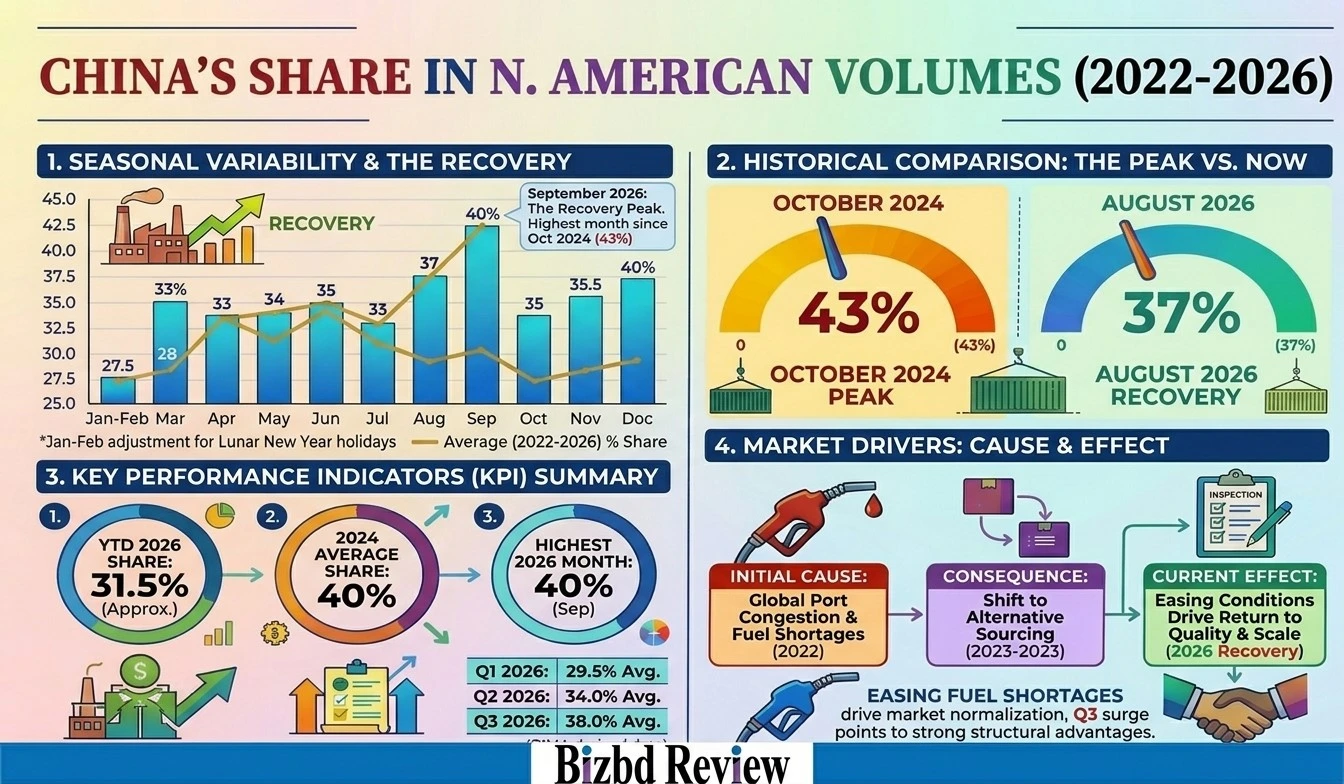
China, once the dominant supplier to the US market, slipped to third position, with exports plunging by 57.65 per cent in value to $1.17 billion and by 46.01 per cent in volume.

India also faced headwinds, as exports declined by 23.75 per cent to $728.92 million, with shipment volumes falling by around 20 per cent during the same period.

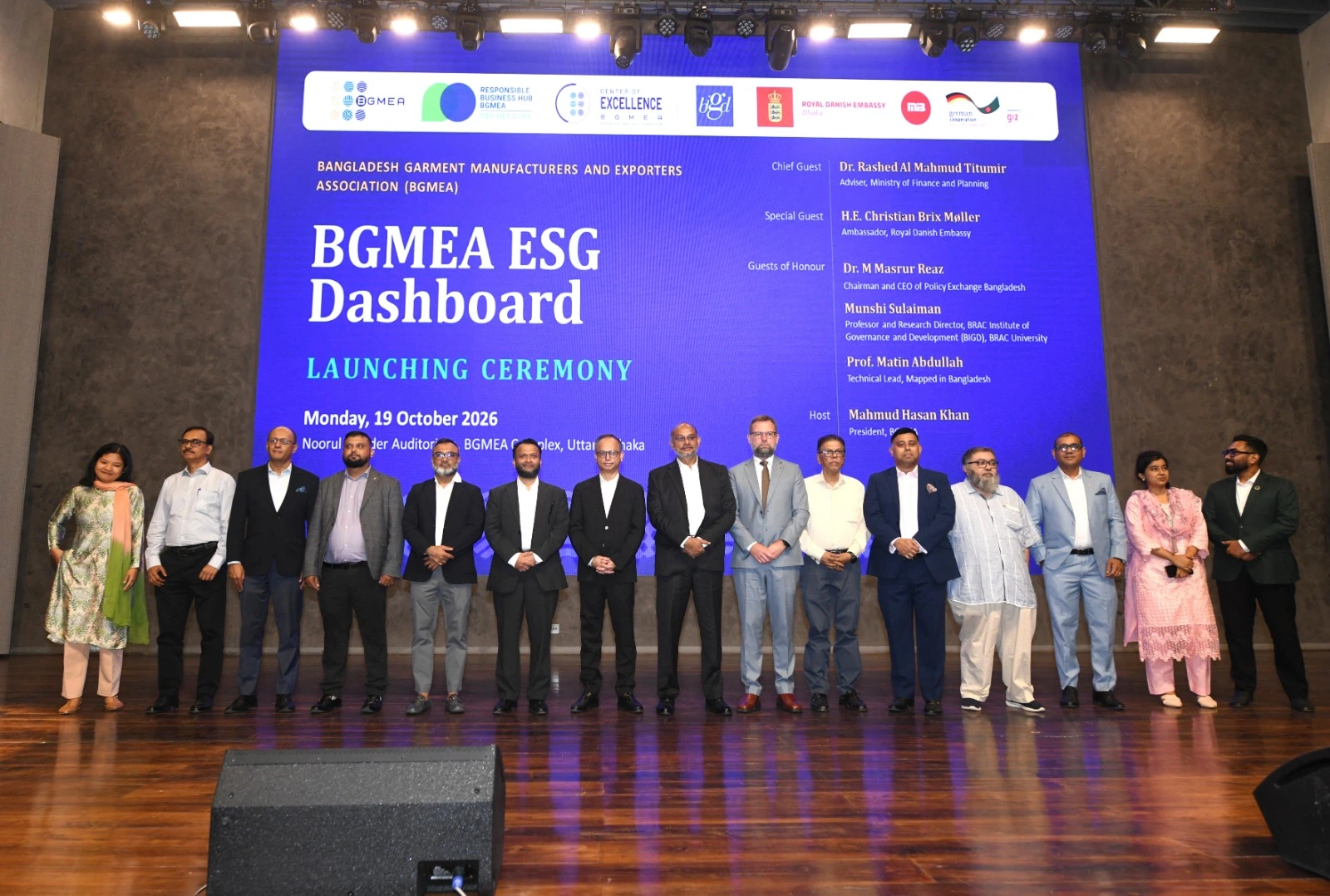
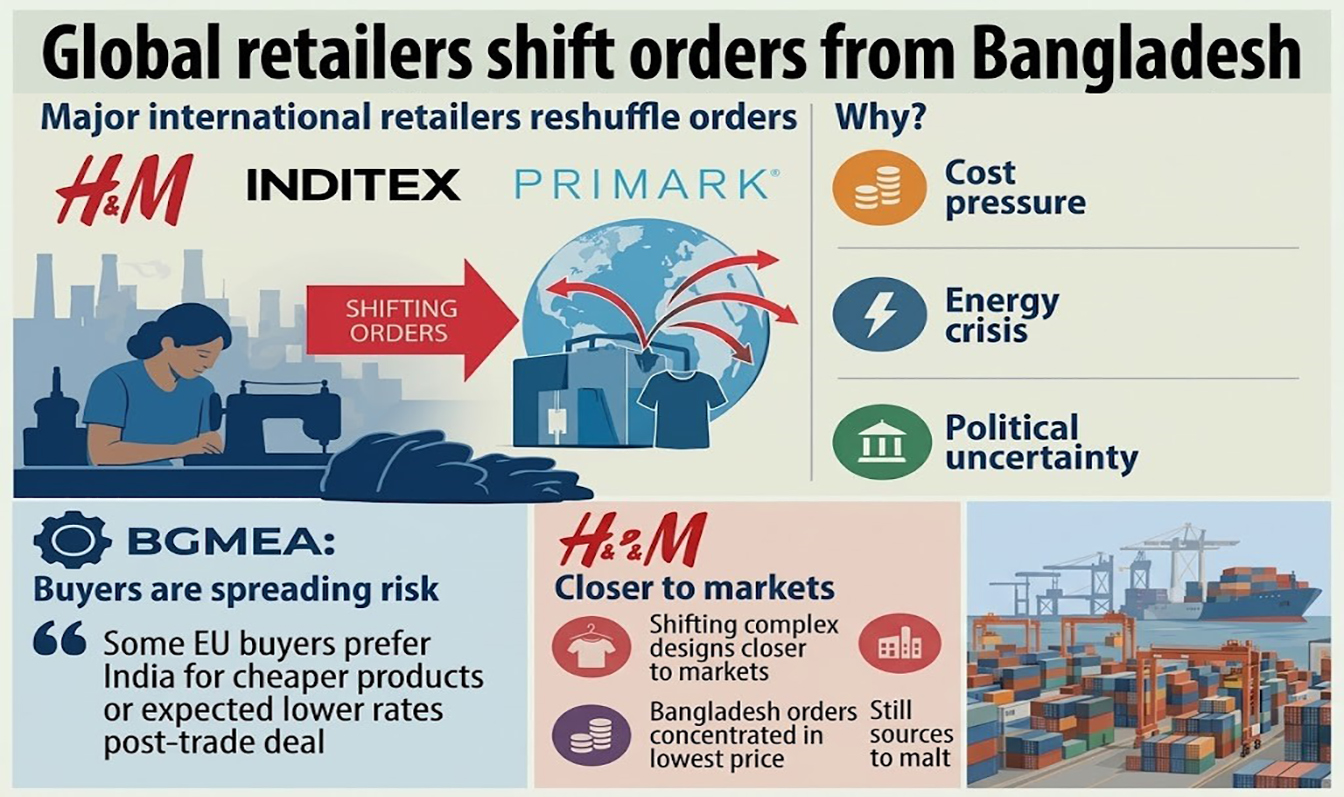
Mahmud Hasan Khan, president of the Bangladesh Garment Manufacturers and Exporters Association (BGMEA), said uncertainty surrounding evolving US tariff regimes has dampened demand across major sourcing hubs.

He noted that domestic political developments, including the national election cycle, also contributed to a temporary slowdown, with some buyers delaying work orders amid uncertainty.

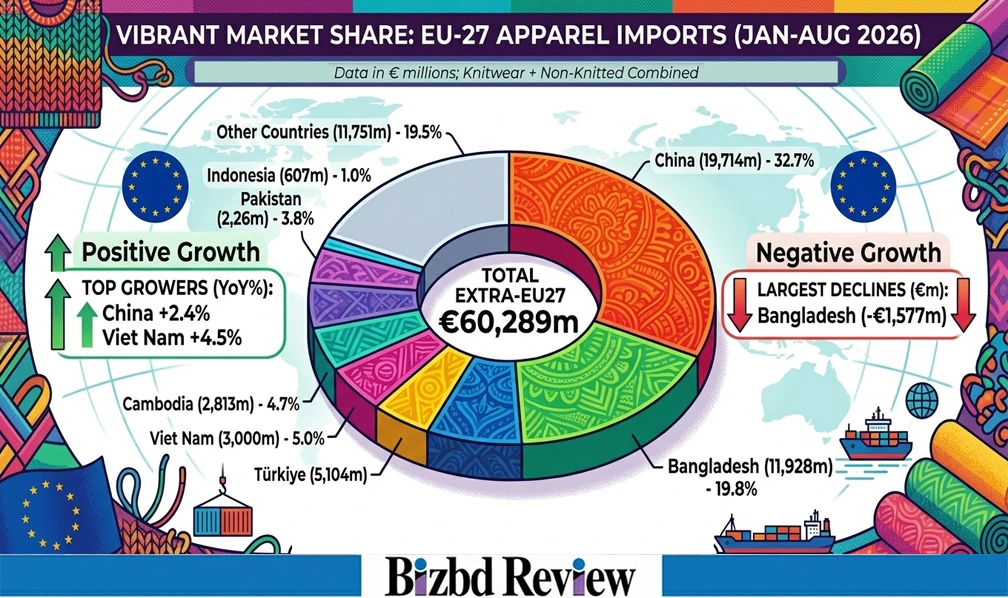
Mahmud Hasan said that Bangladesh is simultaneously facing intensified competition in the European Union market, where China and India are offering aggressively lower prices to capture orders.

Declining purchasing power in both the US and EU markets due to persistent inflation has further weighed on demand, although exporters expect some improvement if geopolitical tensions ease.

Industry observers have cautioned that escalating tensions involving the United States, Israel and Iran could introduce further volatility into global trade flows, potentially affecting sourcing decisions and order volumes in the months ahead.

Bangladesh’s non-apparel exports to the US demonstrated strong growth.

Footwear shipments rose to $72.71 million during January–February 2026, up from $50.58 million in the same period a year earlier.

Exports of travel goods also surged by 66.79 per cent to $26.15 million, according to OTEXA data.

The gains come amid a significant decline in US imports from China. China’s footwear exports to the US dropped by 53.29 per cent to $804.45 million, while Vietnam strengthened its position with a 22.57 per cent increase to $1.68 billion.

In travel goods, imports from China fell by 50.53 per cent to $209.14 million, whereas Vietnam recorded a 13.50 per cent rise to $234.01 million.

Riad Mahmud, managing director of Shoeniverse Footwear Ltd, said demand for footwear remains resilient despite the broader global slowdown.

He noted a rise in enquiries from US buyers, particularly those seeking certified and compliant suppliers in alternative sourcing destinations.

Riad said the company has not experienced order cancellations or deferred shipments, and is taking strategic measures to boost production efficiency, including expanding manufacturing lines and encouraging early shipments.

The firm is also investing in technological upgrades by hiring foreign experts, particularly from China, to strengthen capabilities despite rising costs.

According to Riad, a gradual shift of orders away from China in labour-intensive sectors is creating new opportunities for Bangladesh, supported by its large workforce and competitive production base.

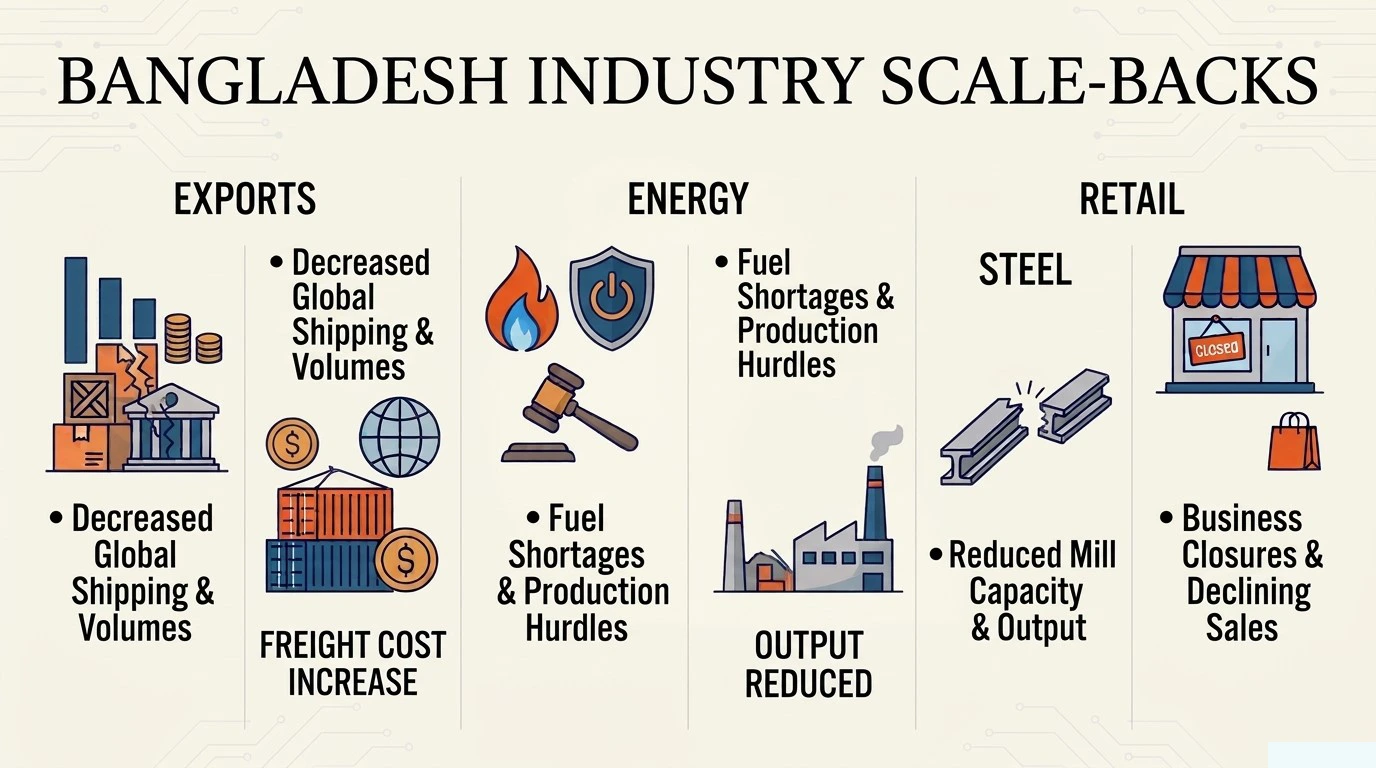
However, industry players emphasised the need for targeted policy support to sustain this momentum. They called for sector-specific incentives, improved access to finance and measures to address logistical bottlenecks, particularly in transportation, where rising fuel costs have increased operational challenges.

While exporters remain cautiously optimistic about a potential recovery later in the year, they warned that the near-term outlook for Bangladesh’s apparel sector remains uncertain, with global demand conditions and geopolitical developments continuing to shape trade prospects.
Bangladesh RMG slips in US while footwear, travel goods surge

Update Time : 09:51:58 am, Sunday, 5 April 2026

Bangladesh’s apparel exports to the United States, its largest single export destination, continued to decline in the opening months of 2026 amid subdued demand and policy uncertainties, while non-apparel segments such as footwear and travel goods recorded strong growth, signalling a gradual shift in export dynamics.

Shipments of readymade garments (RMG) to the US fell sharply by 17.18 per cent year-on-year in February, underscoring persistent pressure on the country’s key export sector.

Export earnings stood at $581.19 million in February 2026, down from $701.71 million in the same month of 2025.

Over the January-February period, Bangladesh’s RMG exports to the US totalled $1.37 billion, compared with $1.50 billion in the corresponding period a year earlier, marking an 8.53 per cent decline, according to data released by the Office of Textiles and Apparel (OTEXA).

In volume terms, shipments dropped by 6.21 per cent to 457.45 million square metres, from 487.75 million square metres in the same period of 2025.

Exporters attributed the downturn largely to the impact of US reciprocal tariff measures, which have raised retail prices and weakened consumer demand.

The decline also reflects broader market conditions, as total US apparel imports fell by 13.47 per cent year-on-year to $11.73 billion during the first two months of 2026, amid elevated inflation and cautious consumer spending.

Despite the contraction, competing suppliers such as Vietnam, Cambodia and Indonesia managed to expand their market share.

OTEXA underscored a clear shift in global apparel sourcing, with Vietnam strengthening its lead through a 2.86 per cent rise in export value to $2.70 billion and a 4.84 per cent increase in volume to 790.23 million square metres, while Bangladesh remained the second-largest supplier.

China, once the dominant supplier to the US market, slipped to third position, with exports plunging by 57.65 per cent in value to $1.17 billion and by 46.01 per cent in volume.

India also faced headwinds, as exports declined by 23.75 per cent to $728.92 million, with shipment volumes falling by around 20 per cent during the same period.

Mahmud Hasan Khan, president of the Bangladesh Garment Manufacturers and Exporters Association (BGMEA), said uncertainty surrounding evolving US tariff regimes has dampened demand across major sourcing hubs.

He noted that domestic political developments, including the national election cycle, also contributed to a temporary slowdown, with some buyers delaying work orders amid uncertainty.

Mahmud Hasan said that Bangladesh is simultaneously facing intensified competition in the European Union market, where China and India are offering aggressively lower prices to capture orders.

Declining purchasing power in both the US and EU markets due to persistent inflation has further weighed on demand, although exporters expect some improvement if geopolitical tensions ease.

Industry observers have cautioned that escalating tensions involving the United States, Israel and Iran could introduce further volatility into global trade flows, potentially affecting sourcing decisions and order volumes in the months ahead.

Bangladesh’s non-apparel exports to the US demonstrated strong growth.

Footwear shipments rose to $72.71 million during January–February 2026, up from $50.58 million in the same period a year earlier.

Exports of travel goods also surged by 66.79 per cent to $26.15 million, according to OTEXA data.

The gains come amid a significant decline in US imports from China. China’s footwear exports to the US dropped by 53.29 per cent to $804.45 million, while Vietnam strengthened its position with a 22.57 per cent increase to $1.68 billion.

In travel goods, imports from China fell by 50.53 per cent to $209.14 million, whereas Vietnam recorded a 13.50 per cent rise to $234.01 million.

Riad Mahmud, managing director of Shoeniverse Footwear Ltd, said demand for footwear remains resilient despite the broader global slowdown.

He noted a rise in enquiries from US buyers, particularly those seeking certified and compliant suppliers in alternative sourcing destinations.

Riad said the company has not experienced order cancellations or deferred shipments, and is taking strategic measures to boost production efficiency, including expanding manufacturing lines and encouraging early shipments.

The firm is also investing in technological upgrades by hiring foreign experts, particularly from China, to strengthen capabilities despite rising costs.

According to Riad, a gradual shift of orders away from China in labour-intensive sectors is creating new opportunities for Bangladesh, supported by its large workforce and competitive production base.

However, industry players emphasised the need for targeted policy support to sustain this momentum. They called for sector-specific incentives, improved access to finance and measures to address logistical bottlenecks, particularly in transportation, where rising fuel costs have increased operational challenges.

While exporters remain cautiously optimistic about a potential recovery later in the year, they warned that the near-term outlook for Bangladesh’s apparel sector remains uncertain, with global demand conditions and geopolitical developments continuing to shape trade prospects.