7:15 pm, Saturday, 25 April 2026

Fuel shortages drag Bangladesh RMG output below capacity levels: BKMEA

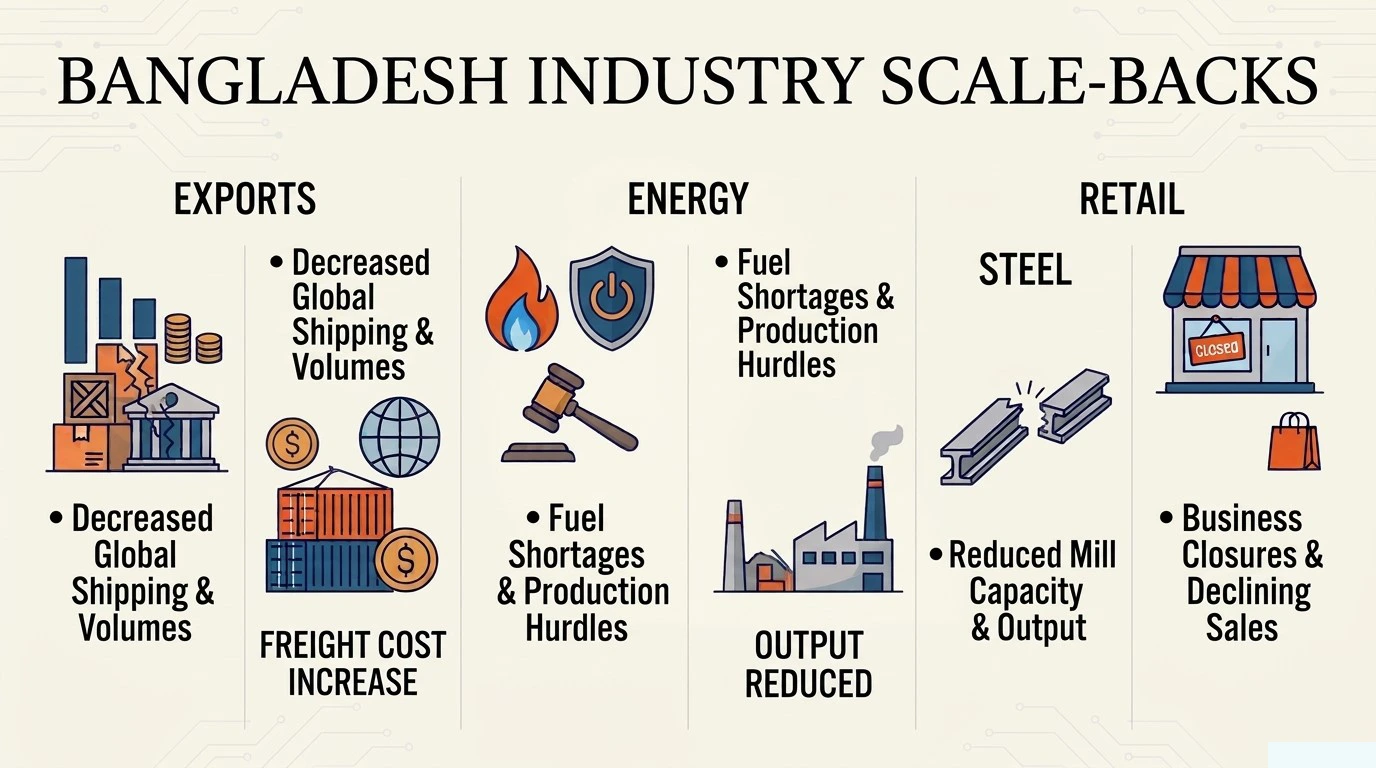
Apparel factories across Bangladesh are struggling to utilise their full production capacity due to persistent power and fuel shortages, industry leaders have warned, contradicting official claims that there is no energy crisis.

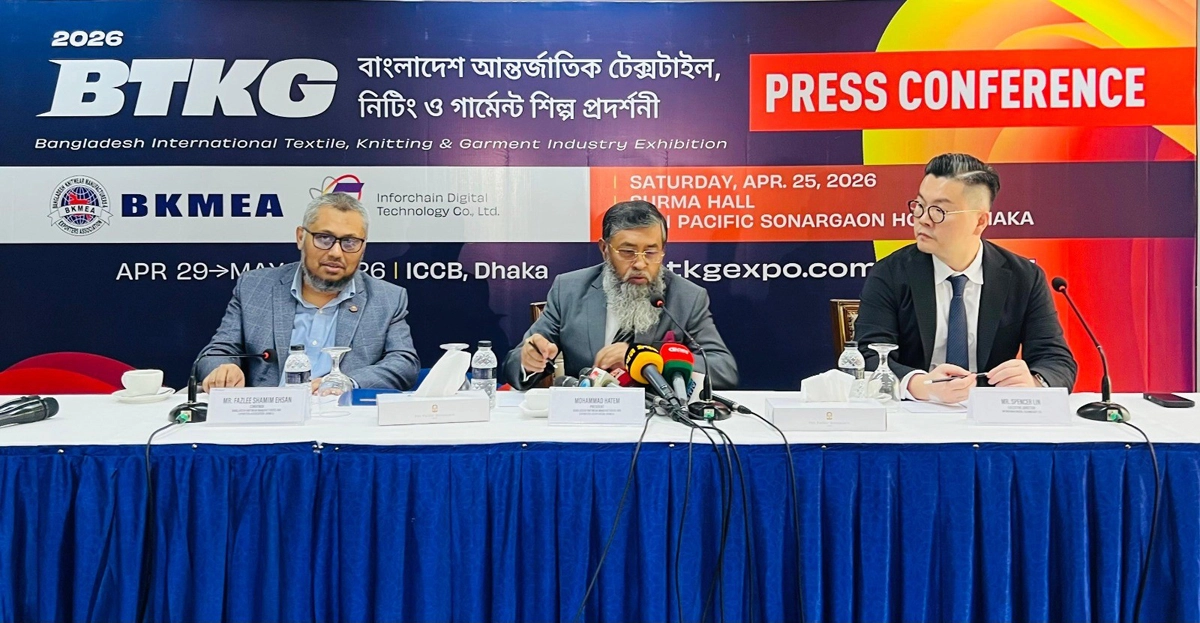
Speaking at a press conference in Dhaka on Saturday, Mohammad Hatem, president of the Bangladesh Knitwear Manufacturers and Exporters Association (BKMEA), said manufacturers were facing acute difficulties in securing fuel from filling stations.

‘Right now, energy shortage is one of the biggest problems. The government says there is no shortage, but in reality we are not getting fuel at filling stations,’ he said.

According to Hatem, factories are experiencing two to three hours of load-shedding during working hours, while units located in industrial belts such as Gazipur and in areas served by rural electricity distribution networks are facing outages of up to seven hours a day.

The situation has been exacerbated by restrictions on fuel supply in containers, which has made it difficult for factories to operate generators during power cuts. Many industrial units rely on such backup systems to maintain production continuity.

Hatem said that the restrictions stem from directives issued by the Bangladesh Petroleum Corporation, with local administrations actively monitoring compliance and imposing fines where necessary.

‘In such circumstances, transporting generators to filling stations to collect fuel is not a practical solution,’ he said.

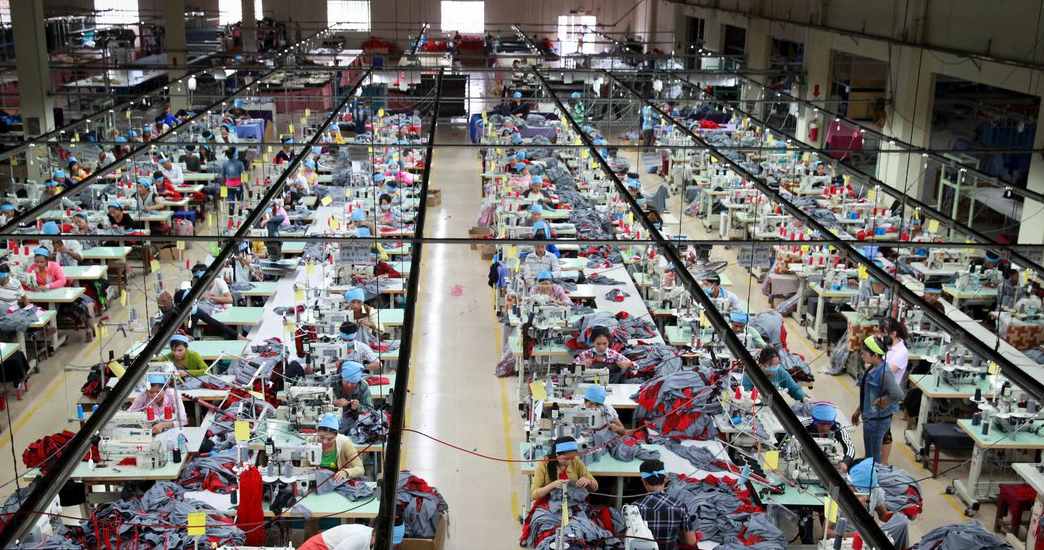
As a result, factories are being forced to scale back operations, with many running at only 50–60 per cent of their installed capacity. Industry leaders warn that prolonged disruptions could undermine Bangladesh’s competitiveness in the global apparel market.

The concerns were raised ahead of the Bangladesh International Textile, Knitting and Garment Industry Exhibition (BTKG Expo 2026), which is set to begin in the capital on 29 April.

The four-day exhibition will be held at the International Convention City Bashundhara (ICCB) and continue until 2 May.

The event is being jointly organised by BKMEA and Inforchain Digital Technology Co Ltd.

Organisers said more than 1,000 exhibitors from around 30 countries are expected to participate, showcasing a wide array of machinery and technological innovations across nearly 1,800 booths.

Hatem emphasised that despite the current challenges, the industry must accelerate its transition towards more technology-driven, efficient and sustainable production systems in order to remain competitive in an increasingly demanding global market.

He said that in previous years the exhibition had been organised by a different association, but industry stakeholders felt it was essential to continue such initiatives regardless of prevailing business conditions.

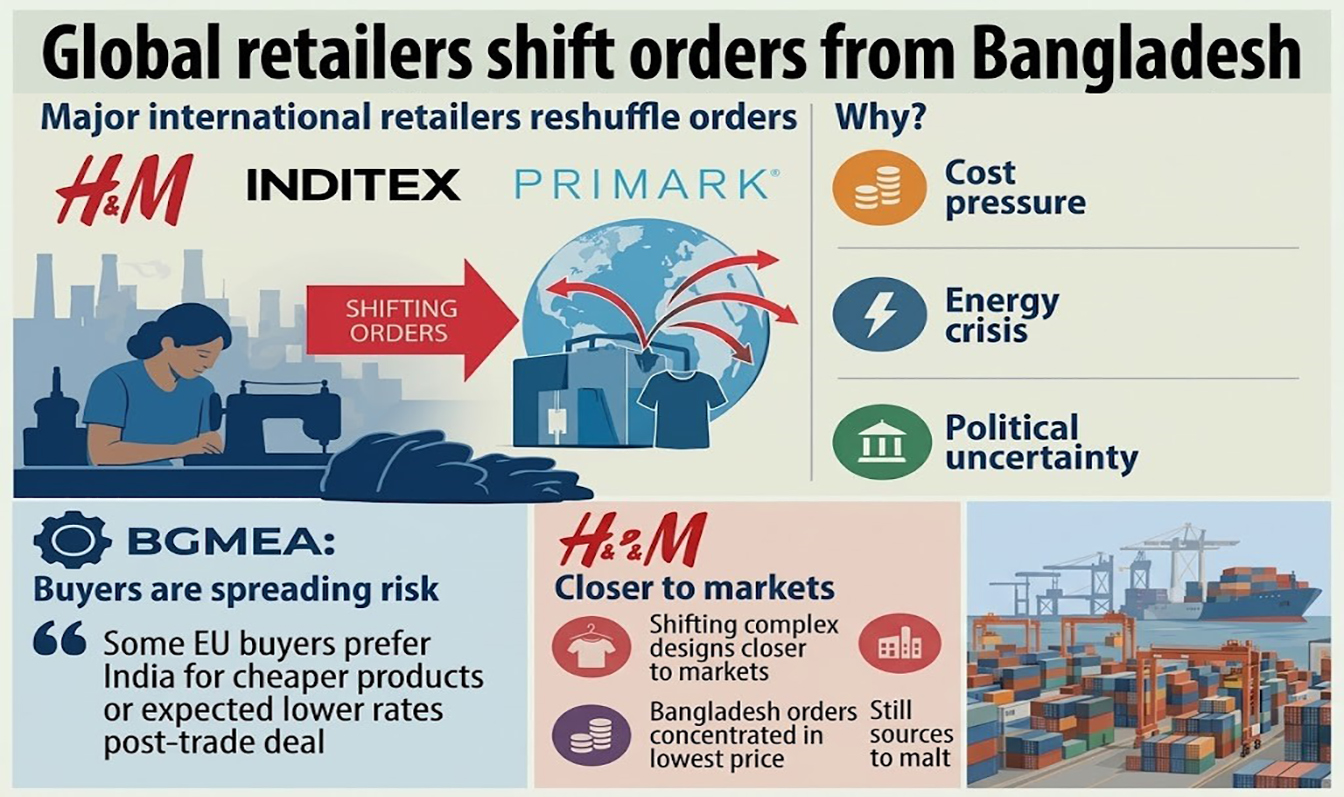
‘Failing to keep pace with modern technologies would result in Bangladesh losing market share, with export orders shifting to competing countries,’ he warned.

Also speaking at the press conference, Fazlee Shamim Ehsan, executive president of BKMEA and convenor of the expo, said the global fashion industry is undergoing rapid transformation, driven by trends such as fast fashion, recycling and circularity.

He said the primary objective of the exhibition is to familiarise local entrepreneurs with these emerging technologies and production models, enabling them to adapt to changing market demands.

‘Despite the ongoing challenges, such initiatives can encourage investment and inspire the emergence of new entrepreneurs,’ Ehsan said.

Industry leaders also pointed to broader economic headwinds affecting the sector.

Hatem said the global economy remains volatile due to lingering post-pandemic effects, the Russia–Ukraine war and other geopolitical tensions, all of which have dampened consumer demand in key export markets.

Exporters in Bangladesh are facing multiple operational challenges, including difficulties in opening letters of credit, conducting import-export transactions and accessing credit facilities from banks, he said.

He further alleged that complexities in customs procedures, along with instances of arbitrary practices, are creating additional barriers to trade.

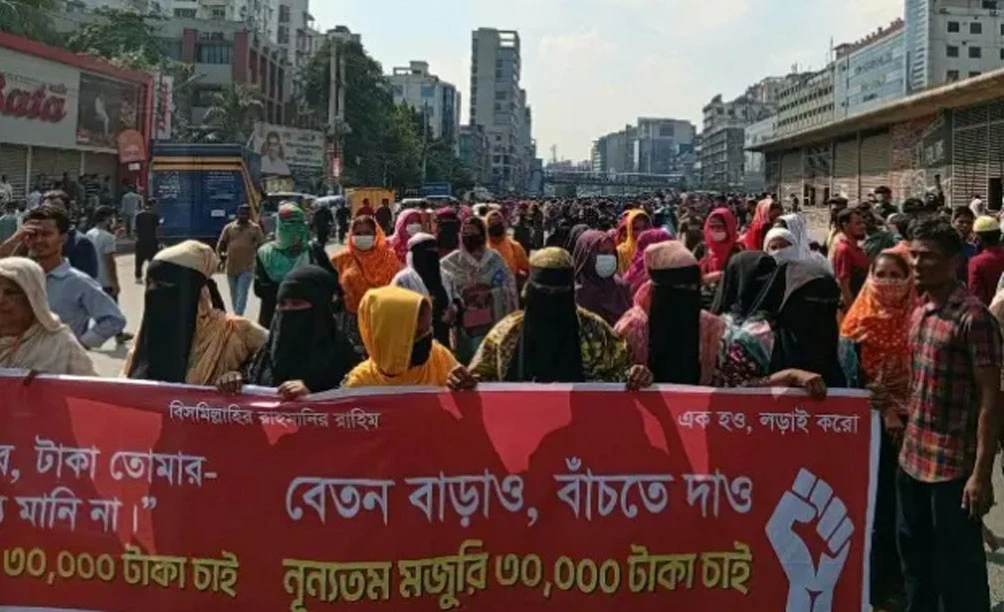
At the same time, production costs have increased by at least 20 per cent, driven by higher energy prices and other input costs.

However, exporters are often unable to pass these increases on to international buyers, as prices are typically fixed in advance.

This has placed further pressure on already thin profit margins, particularly at a time when global demand has weakened and buyers are reducing order volumes.

Ehsan added that although fuel cards have been introduced in an attempt to streamline supply, distribution remains uneven across the country. While some areas have seen improvements, shortages persist in others.

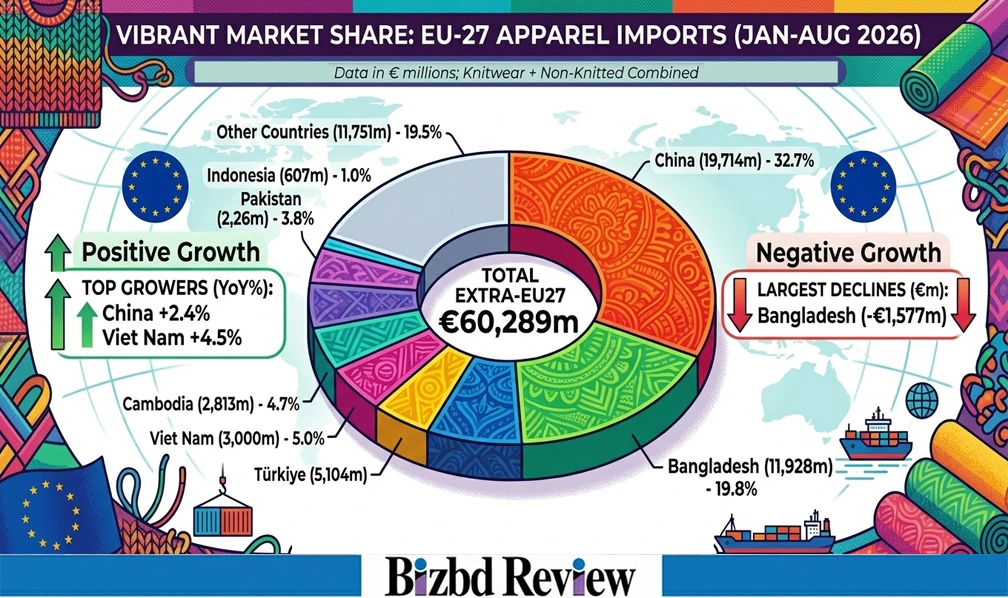
He also highlighted declining consumer spending in major markets, including the European Union, which has had a direct impact on apparel demand worldwide.

‘As a result, order volumes have decreased globally, not just in Bangladesh,’ Ehsan said, expressing cautious optimism that demand could recover in the next season if global conditions stabilise.

The exhibition will feature companies from Bangladesh as well as Canada, China, Taiwan, Belgium, France, Hong Kong, India, Indonesia, Japan, Vietnam, Malaysia, Turkey and the United Arab Emirates.

Displayed products and services will include modern textile machinery, dyes and chemicals, knitting and weaving technologies, embroidery systems, cutting and sewing equipment, as well as washing and dry-cleaning solutions.

In addition to the exhibition, three seminars will be held in collaboration with Bangladesh University of Textiles and Textile Today, focusing on the current state of the industry, technological advancements and future strategies.

The exhibition will remain open to visitors daily from 11:00 to 19:00.
Fuel shortages drag Bangladesh RMG output below capacity levels: BKMEA

Update Time : 05:38:11 pm, Saturday, 25 April 2026

Apparel factories across Bangladesh are struggling to utilise their full production capacity due to persistent power and fuel shortages, industry leaders have warned, contradicting official claims that there is no energy crisis.

Speaking at a press conference in Dhaka on Saturday, Mohammad Hatem, president of the Bangladesh Knitwear Manufacturers and Exporters Association (BKMEA), said manufacturers were facing acute difficulties in securing fuel from filling stations.

‘Right now, energy shortage is one of the biggest problems. The government says there is no shortage, but in reality we are not getting fuel at filling stations,’ he said.

According to Hatem, factories are experiencing two to three hours of load-shedding during working hours, while units located in industrial belts such as Gazipur and in areas served by rural electricity distribution networks are facing outages of up to seven hours a day.

The situation has been exacerbated by restrictions on fuel supply in containers, which has made it difficult for factories to operate generators during power cuts. Many industrial units rely on such backup systems to maintain production continuity.

Hatem said that the restrictions stem from directives issued by the Bangladesh Petroleum Corporation, with local administrations actively monitoring compliance and imposing fines where necessary.

‘In such circumstances, transporting generators to filling stations to collect fuel is not a practical solution,’ he said.

As a result, factories are being forced to scale back operations, with many running at only 50–60 per cent of their installed capacity. Industry leaders warn that prolonged disruptions could undermine Bangladesh’s competitiveness in the global apparel market.

The concerns were raised ahead of the Bangladesh International Textile, Knitting and Garment Industry Exhibition (BTKG Expo 2026), which is set to begin in the capital on 29 April.

The four-day exhibition will be held at the International Convention City Bashundhara (ICCB) and continue until 2 May.

The event is being jointly organised by BKMEA and Inforchain Digital Technology Co Ltd.

Organisers said more than 1,000 exhibitors from around 30 countries are expected to participate, showcasing a wide array of machinery and technological innovations across nearly 1,800 booths.

Hatem emphasised that despite the current challenges, the industry must accelerate its transition towards more technology-driven, efficient and sustainable production systems in order to remain competitive in an increasingly demanding global market.

He said that in previous years the exhibition had been organised by a different association, but industry stakeholders felt it was essential to continue such initiatives regardless of prevailing business conditions.

‘Failing to keep pace with modern technologies would result in Bangladesh losing market share, with export orders shifting to competing countries,’ he warned.

Also speaking at the press conference, Fazlee Shamim Ehsan, executive president of BKMEA and convenor of the expo, said the global fashion industry is undergoing rapid transformation, driven by trends such as fast fashion, recycling and circularity.

He said the primary objective of the exhibition is to familiarise local entrepreneurs with these emerging technologies and production models, enabling them to adapt to changing market demands.

‘Despite the ongoing challenges, such initiatives can encourage investment and inspire the emergence of new entrepreneurs,’ Ehsan said.

Industry leaders also pointed to broader economic headwinds affecting the sector.

Hatem said the global economy remains volatile due to lingering post-pandemic effects, the Russia–Ukraine war and other geopolitical tensions, all of which have dampened consumer demand in key export markets.

Exporters in Bangladesh are facing multiple operational challenges, including difficulties in opening letters of credit, conducting import-export transactions and accessing credit facilities from banks, he said.

He further alleged that complexities in customs procedures, along with instances of arbitrary practices, are creating additional barriers to trade.

At the same time, production costs have increased by at least 20 per cent, driven by higher energy prices and other input costs.

However, exporters are often unable to pass these increases on to international buyers, as prices are typically fixed in advance.

This has placed further pressure on already thin profit margins, particularly at a time when global demand has weakened and buyers are reducing order volumes.

Ehsan added that although fuel cards have been introduced in an attempt to streamline supply, distribution remains uneven across the country. While some areas have seen improvements, shortages persist in others.

He also highlighted declining consumer spending in major markets, including the European Union, which has had a direct impact on apparel demand worldwide.

‘As a result, order volumes have decreased globally, not just in Bangladesh,’ Ehsan said, expressing cautious optimism that demand could recover in the next season if global conditions stabilise.

The exhibition will feature companies from Bangladesh as well as Canada, China, Taiwan, Belgium, France, Hong Kong, India, Indonesia, Japan, Vietnam, Malaysia, Turkey and the United Arab Emirates.

Displayed products and services will include modern textile machinery, dyes and chemicals, knitting and weaving technologies, embroidery systems, cutting and sewing equipment, as well as washing and dry-cleaning solutions.

In addition to the exhibition, three seminars will be held in collaboration with Bangladesh University of Textiles and Textile Today, focusing on the current state of the industry, technological advancements and future strategies.

The exhibition will remain open to visitors daily from 11:00 to 19:00.