3:54 pm, Friday, 24 April 2026

Rana Plaza survivors still await justice 13 years on

Thirteen years after the Rana Plaza building collapse, survivors and families of victims are still awaiting justice, adequate compensation and long-term rehabilitation, speakers said at a discussion in Dhaka.

The programme, titled ‘13 Years of Rana Plaza Disaster: Ensuring Justice, Compensation and Rehabilitation,’ was organised by the Labour Safety Forum at the National Press Club in the city on April 21.

It marked the anniversary of one of the world’s worst industrial disasters and called attention to the continuing plight of affected workers.

Representatives of national and sector-based trade unions, labour rights organisations, advocacy groups, injured workers from various industrial accidents and their families took part in the event.

They collectively demanded stronger action to ensure accountability and protection for workers.

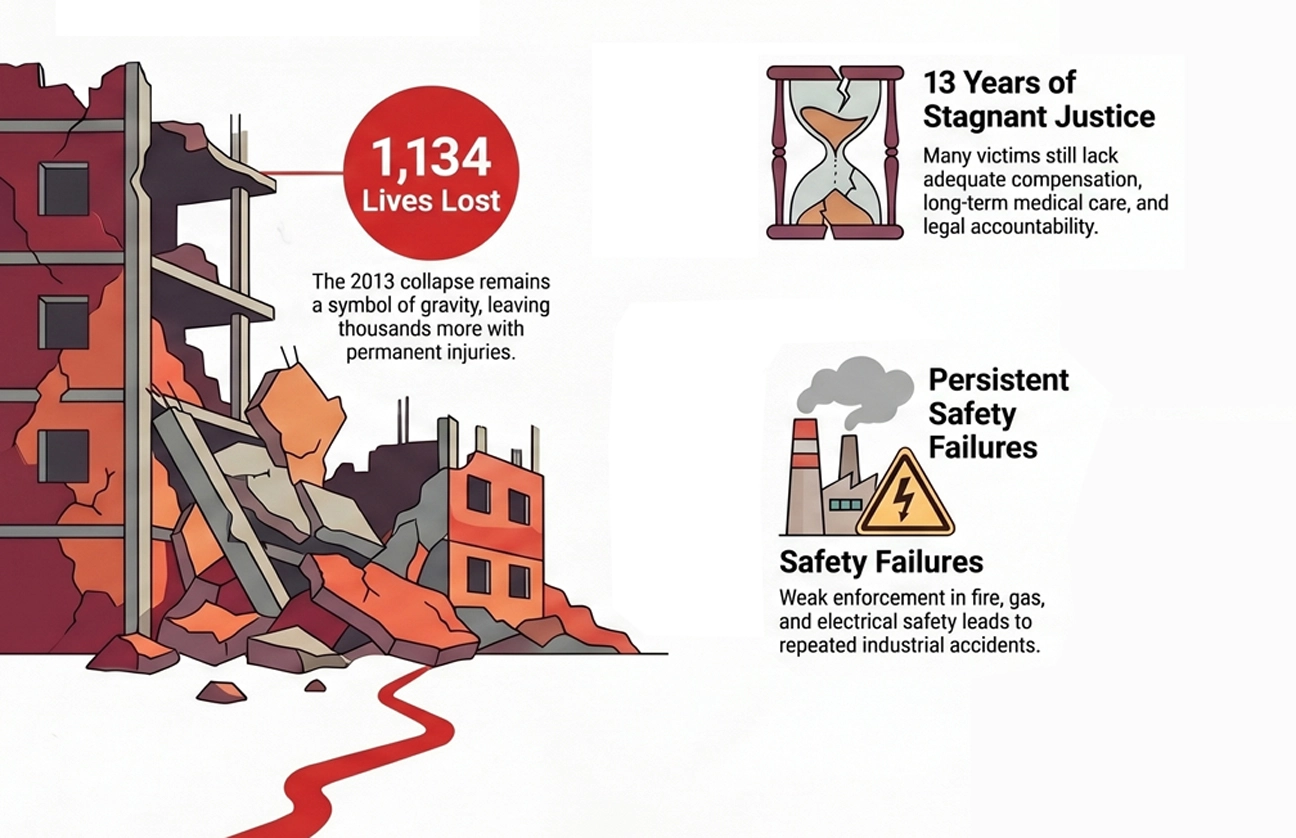
Speakers said repeated industrial accidents in Bangladesh, including those at Tazreen Fashions, Spectrum, Hashem Foods, Mirpur-based factories, and the recent Narayanganj gaslighter factory incident, highlight persistent safety failures in workplaces.

They pointed to weak enforcement of safety regulations, lack of accountability in fire safety, gas cylinder management, electrical systems and chemical handling, as well as overall negligence as key causes of such tragedies.

They noted that despite 13 years having passed since the Rana Plaza collapse, many victims and their families are still without adequate compensation, rehabilitation support, medical care and justice.

They also said progress in improving workplace safety and labour rights has been limited, while barriers to trade union activities have weakened workers’ ability to organise and demand their rights.

Participants said that although some affected families have recently received government-issued support cards, comprehensive rehabilitation remains largely unfulfilled.

They said that the failure to bring those responsible for industrial disasters to justice has deepened frustration among victims.

Speakers further stressed that without stronger enforcement of labour laws, improved safety standards and meaningful government intervention, industrial accidents would continue.

They also said responsible conduct from factory owners is essential to prevent further tragedies.
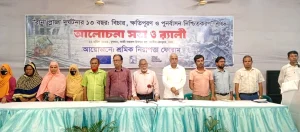
The speakers called for a coordinated approach involving the government, employers, trade unions and civil society to ensure justice, fair compensation and sustainable rehabilitation for all industrial accident victims. They also emphasised the need for stronger monitoring, effective enforcement mechanisms and increased awareness among workers.

The discussion was chaired by Anwar Hossain, Vice-Chairman of BILS, and conducted by Ahsan Habib Bulbul, General Secretary of the Socialist Labour Front.

Key speakers included Mejbah Uddin Ahmed, Senior Joint Convener of the National Labour Rights Advocacy Alliance; Syed Sultan Uddin Ahmed, Executive Director of BILS; ASM Fayez Hossain, Joint Coordinator of SCOP; Abdul Kader Howlader, Joint Coordinator of the Labour Employees Unity Council; Nurul Amin, General Secretary of the National Labour Alliance; Sekandar Ali Mina, Acting Member Secretary of the Labour Safety Forum; and SM Alamgir Hossain, General Secretary of the Bangladesh Labour Rights Journalists Forum.

Injured workers from Rana Plaza, Tazreen, Hashem Foods and recent industrial accidents also shared testimonies, describing ongoing medical challenges, financial hardship and lack of rehabilitation support.

Trade union leaders from different sectors also spoke, sharing field-level experiences on workers’ rights and safety issues.

Officials from the Department of Inspection for Factories and Establishments, including Assistant Inspector General (Health) Biswajit Roy, provided guidance on future steps to improve workplace safety.

Rana Plaza, an eight-storey commercial building in Savar on the outskirts of Dhaka that housed shops, a bank and garment factories, remains a painful symbol of one of the gravest tragedies faced by garment workers; on April 24, 2013, the structure collapsed, killing 1,134 people and injuring thousands more.

Despite various initiatives since then, many survivors continue to live in difficult conditions, struggling with poverty, inadequate medical care and social insecurity.
Rana Plaza survivors still await justice 13 years on

Update Time : 01:03:29 pm, Wednesday, 22 April 2026

Thirteen years after the Rana Plaza building collapse, survivors and families of victims are still awaiting justice, adequate compensation and long-term rehabilitation, speakers said at a discussion in Dhaka.

The programme, titled ‘13 Years of Rana Plaza Disaster: Ensuring Justice, Compensation and Rehabilitation,’ was organised by the Labour Safety Forum at the National Press Club in the city on April 21.

It marked the anniversary of one of the world’s worst industrial disasters and called attention to the continuing plight of affected workers.

Representatives of national and sector-based trade unions, labour rights organisations, advocacy groups, injured workers from various industrial accidents and their families took part in the event.

They collectively demanded stronger action to ensure accountability and protection for workers.

Speakers said repeated industrial accidents in Bangladesh, including those at Tazreen Fashions, Spectrum, Hashem Foods, Mirpur-based factories, and the recent Narayanganj gaslighter factory incident, highlight persistent safety failures in workplaces.

They pointed to weak enforcement of safety regulations, lack of accountability in fire safety, gas cylinder management, electrical systems and chemical handling, as well as overall negligence as key causes of such tragedies.

They noted that despite 13 years having passed since the Rana Plaza collapse, many victims and their families are still without adequate compensation, rehabilitation support, medical care and justice.

They also said progress in improving workplace safety and labour rights has been limited, while barriers to trade union activities have weakened workers’ ability to organise and demand their rights.

Participants said that although some affected families have recently received government-issued support cards, comprehensive rehabilitation remains largely unfulfilled.

They said that the failure to bring those responsible for industrial disasters to justice has deepened frustration among victims.

Speakers further stressed that without stronger enforcement of labour laws, improved safety standards and meaningful government intervention, industrial accidents would continue.

They also said responsible conduct from factory owners is essential to prevent further tragedies.

The speakers called for a coordinated approach involving the government, employers, trade unions and civil society to ensure justice, fair compensation and sustainable rehabilitation for all industrial accident victims. They also emphasised the need for stronger monitoring, effective enforcement mechanisms and increased awareness among workers.

The discussion was chaired by Anwar Hossain, Vice-Chairman of BILS, and conducted by Ahsan Habib Bulbul, General Secretary of the Socialist Labour Front.

Key speakers included Mejbah Uddin Ahmed, Senior Joint Convener of the National Labour Rights Advocacy Alliance; Syed Sultan Uddin Ahmed, Executive Director of BILS; ASM Fayez Hossain, Joint Coordinator of SCOP; Abdul Kader Howlader, Joint Coordinator of the Labour Employees Unity Council; Nurul Amin, General Secretary of the National Labour Alliance; Sekandar Ali Mina, Acting Member Secretary of the Labour Safety Forum; and SM Alamgir Hossain, General Secretary of the Bangladesh Labour Rights Journalists Forum.

Injured workers from Rana Plaza, Tazreen, Hashem Foods and recent industrial accidents also shared testimonies, describing ongoing medical challenges, financial hardship and lack of rehabilitation support.

Trade union leaders from different sectors also spoke, sharing field-level experiences on workers’ rights and safety issues.

Officials from the Department of Inspection for Factories and Establishments, including Assistant Inspector General (Health) Biswajit Roy, provided guidance on future steps to improve workplace safety.

Rana Plaza, an eight-storey commercial building in Savar on the outskirts of Dhaka that housed shops, a bank and garment factories, remains a painful symbol of one of the gravest tragedies faced by garment workers; on April 24, 2013, the structure collapsed, killing 1,134 people and injuring thousands more.

Despite various initiatives since then, many survivors continue to live in difficult conditions, struggling with poverty, inadequate medical care and social insecurity.