2:24 pm, Friday, 13 March 2026

Bangladesh’s exports down 3.15pc in July-Feb on RMG slump

Bangladesh’s merchandise exports contracted in the first eight months of the current fiscal year, weighed down by weaker shipments of readymade garments, according to data released by the Export Promotion Bureau on March 2.

Export earnings stood at $31.91 billion in July–February of the financial year 2025–26, marking a 3.15 per cent decline from $32.92 billion in the same period a year earlier.

The slowdown became more pronounced in February 2026, when monthly receipts dropped 12.03 per cent year-on-year to $3.50 billion from $3.97 billion.

Exporters attributed the declining trend in exports to buyers holding up work orders during the general election in Bangladesh held in February, the overall slow placement of orders due to sluggish global demand, and trade tensions caused by US tariffs.

They explained that buyers usually withhold some work orders two to three months before a national election and monitor the situation for at least a month after the election.

Exporters also observed that US tariffs had altered market dynamics by reducing sales, which in turn slowed the placement of new orders.

Moreover, exporters said that China and India were capturing work orders by offering aggressively low rates to offset the impact of US tariffs.

The readymade garment (RMG) sector, which accounts for more than four-fifths of Bangladesh’s total export earnings, recorded $25.80 billion during the eight-month period of FY26, down 3.73 per cent from the FY25.

Within the sector, knitwear exports declined 4.56 per cent to $13.69 billion, while woven garment shipments fell 2.79 per cent to $12.11 billion.

Although knitwear maintained its lead over woven garments, both segments experienced pressure, particularly in February.

During the month, RMG exports fell 13.21 per cent to $2.82 billion.

Knitwear shipments plunged 15.46 per cent to $1.40 billion, while woven garment exports dropped 10.86 per cent to $1.42 billion.

Bangladesh Knitwear Manufacturers and Exporters Association (BKMEA) president Mohammad Hatem said that the election-time delay in work orders, combined with slow global demand and trade tensions stemming from US tariffs, was responsible for the downturn.

He said that while the war between Russia and Ukraine had yet to conclude, emerging conflicts between Iran and the US were likely to further weaken global demand.

Hatem expressed concern that export performance could continue to decline in the coming months up to June and noted that the persistent negative trend in export earnings reflected the difficult conditions the industry was facing.

He urged the government to disburse cash incentive payments on time before Eid and to provide soft loans to exporters who were not eligible for cash incentives so that workers’ wages and festival allowances could be paid ahead of the festival.

The leather and leather products sector delivered mixed results. Overall earnings in July-February of FY26 rose 4.41 per cent to $790.90 million, compared with $757.50 million in the corresponding period in FY25.

Growth was driven mainly by leather products, which surged 18.32 per cent to $262.40 million in the first eight months of FY26.

However, leather footwear exports declined 1.32 per cent to $444.93 million in the period.

In February alone, the sector’s exports fell 5.44 per cent to $83.66 million, largely due to a sharp 20.71 per cent drop in leather footwear, although leather products posted a 12.63 per cent increase during the month.

Agricultural product exports faced significant pressure, shrinking 10.01 per cent year-on-year to $668.17 million in the July–February period.

February earnings in the category declined 11.28 per cent to $60.89 million.

Jute and jute goods recorded marginal growth of 0.44 per cent over eight months to reach $550.30 million, but February receipts fell 11.20 per cent to $56.45 million.

Among the brighter performers, pharmaceutical exports rose 6.32 per cent to $154.66 million during the eight-month period, underlining growing overseas demand for Bangladeshi medicines.

In February, the sector registered a strong 19.51 per cent year-on-year increase, with exports reaching $15.56 million.

Frozen and live fish exports increased 3.62 per cent to $327.64 million over the cumulative period, although February earnings declined 7.84 per cent to $30.08 million.

Home textiles posted 2.67 per cent growth to $593.43 million in July–February, though monthly receipts edged down 0.80 per cent to $83.46 million.

Plastic products experienced a 2.23 per cent decline in cumulative exports to $199.11 million, but February shipments rose 15.19 per cent year-on-year to $25.18 million.

Other footwear exports, excluding leather footwear, fell 3.11 per cent to $351.53 million in the eight-month period, with February earnings down 10.59 per cent.

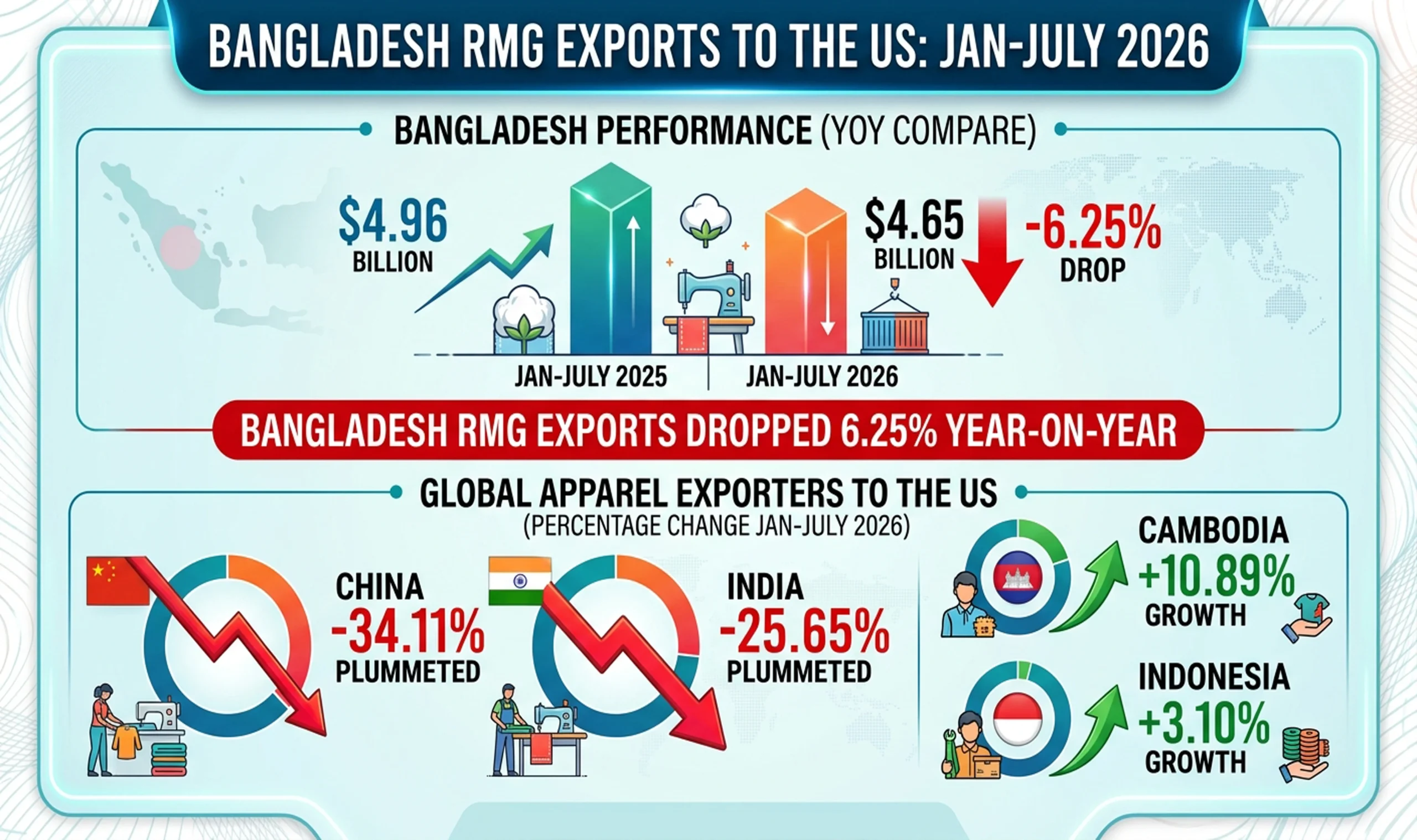
In terms of export destinations, the United States remained Bangladesh’s largest market, with shipments totalling $5.87 billion and registering a modest 0.74 per cent growth.

China recorded the highest growth among major markets, with exports rising 19.12 per cent year-on-year, reflecting expanding trade ties and diversification of export destinations.

Bangladesh’s exports down 3.15pc in July-Feb on RMG slump

Update Time : 05:29:03 pm, Monday, 2 March 2026

Bangladesh’s merchandise exports contracted in the first eight months of the current fiscal year, weighed down by weaker shipments of readymade garments, according to data released by the Export Promotion Bureau on March 2.

Export earnings stood at $31.91 billion in July–February of the financial year 2025–26, marking a 3.15 per cent decline from $32.92 billion in the same period a year earlier.

The slowdown became more pronounced in February 2026, when monthly receipts dropped 12.03 per cent year-on-year to $3.50 billion from $3.97 billion.

Exporters attributed the declining trend in exports to buyers holding up work orders during the general election in Bangladesh held in February, the overall slow placement of orders due to sluggish global demand, and trade tensions caused by US tariffs.

They explained that buyers usually withhold some work orders two to three months before a national election and monitor the situation for at least a month after the election.

Exporters also observed that US tariffs had altered market dynamics by reducing sales, which in turn slowed the placement of new orders.

Moreover, exporters said that China and India were capturing work orders by offering aggressively low rates to offset the impact of US tariffs.

The readymade garment (RMG) sector, which accounts for more than four-fifths of Bangladesh’s total export earnings, recorded $25.80 billion during the eight-month period of FY26, down 3.73 per cent from the FY25.

Within the sector, knitwear exports declined 4.56 per cent to $13.69 billion, while woven garment shipments fell 2.79 per cent to $12.11 billion.

Although knitwear maintained its lead over woven garments, both segments experienced pressure, particularly in February.

During the month, RMG exports fell 13.21 per cent to $2.82 billion.

Knitwear shipments plunged 15.46 per cent to $1.40 billion, while woven garment exports dropped 10.86 per cent to $1.42 billion.

Bangladesh Knitwear Manufacturers and Exporters Association (BKMEA) president Mohammad Hatem said that the election-time delay in work orders, combined with slow global demand and trade tensions stemming from US tariffs, was responsible for the downturn.

He said that while the war between Russia and Ukraine had yet to conclude, emerging conflicts between Iran and the US were likely to further weaken global demand.

Hatem expressed concern that export performance could continue to decline in the coming months up to June and noted that the persistent negative trend in export earnings reflected the difficult conditions the industry was facing.

He urged the government to disburse cash incentive payments on time before Eid and to provide soft loans to exporters who were not eligible for cash incentives so that workers’ wages and festival allowances could be paid ahead of the festival.

The leather and leather products sector delivered mixed results. Overall earnings in July-February of FY26 rose 4.41 per cent to $790.90 million, compared with $757.50 million in the corresponding period in FY25.

Growth was driven mainly by leather products, which surged 18.32 per cent to $262.40 million in the first eight months of FY26.

However, leather footwear exports declined 1.32 per cent to $444.93 million in the period.

In February alone, the sector’s exports fell 5.44 per cent to $83.66 million, largely due to a sharp 20.71 per cent drop in leather footwear, although leather products posted a 12.63 per cent increase during the month.

Agricultural product exports faced significant pressure, shrinking 10.01 per cent year-on-year to $668.17 million in the July–February period.

February earnings in the category declined 11.28 per cent to $60.89 million.

Jute and jute goods recorded marginal growth of 0.44 per cent over eight months to reach $550.30 million, but February receipts fell 11.20 per cent to $56.45 million.

Among the brighter performers, pharmaceutical exports rose 6.32 per cent to $154.66 million during the eight-month period, underlining growing overseas demand for Bangladeshi medicines.

In February, the sector registered a strong 19.51 per cent year-on-year increase, with exports reaching $15.56 million.

Frozen and live fish exports increased 3.62 per cent to $327.64 million over the cumulative period, although February earnings declined 7.84 per cent to $30.08 million.

Home textiles posted 2.67 per cent growth to $593.43 million in July–February, though monthly receipts edged down 0.80 per cent to $83.46 million.

Plastic products experienced a 2.23 per cent decline in cumulative exports to $199.11 million, but February shipments rose 15.19 per cent year-on-year to $25.18 million.

Other footwear exports, excluding leather footwear, fell 3.11 per cent to $351.53 million in the eight-month period, with February earnings down 10.59 per cent.

In terms of export destinations, the United States remained Bangladesh’s largest market, with shipments totalling $5.87 billion and registering a modest 0.74 per cent growth.

China recorded the highest growth among major markets, with exports rising 19.12 per cent year-on-year, reflecting expanding trade ties and diversification of export destinations.