Bizbd Report
The ongoing conflict in the Middle East is exerting multi-layered pressure on Bangladesh’s readymade garment (RMG) sector and its backward linkage industries, with rising raw material prices, logistical disruptions, energy shortages and uncertainty over future work orders, industry insiders have said.
Manufacturers said that the shock has been swift and widespread. Within days of the outbreak of hostilities, letters of credit (LCs) for raw material imports were cancelled under force majeure clauses before being reinstated at higher prices.
Key inputs, including cotton, yarn, polyester and other manmade fibres, have risen by 10 to 15 per cent, while accessories, dyes and chemicals have also recorded sharp increases.
Sayeed Ahmed Chowdhury, director of Square Denim, said Chinese suppliers temporarily halted price quotations for fibres, delaying procurement.
At the same time, international buyers, anticipating longer shipping times to Europe and the United States, have pushed for earlier shipments of orders originally scheduled for May-June.
He warned that accelerated shipment schedules, coupled with broader supply chain disruptions, could create a gap in work orders of 20 to 25 per cent in the next season.
, he noted that fabrics for woven items—often sourced through buyer nominations—have so far been less affected.
Mahmud Hasan Khan, president of the Bangladesh Garment Manufacturers and Exporters Association (BGMEA), said the surge in input costs has driven production expenses up by around 12 per cent, eroding competitiveness.
Prices of accessories such as polybags and cartons have increased by about 10 per cent, while dyes and chemicals are up by 15 to 20 per cent. Yarn, fibre and polyester prices have risen by as much as 20 per cent.
While early shipment requests could result in faster payments, he cautioned that not all factories have the capacity or raw material availability to meet accelerated deadlines.
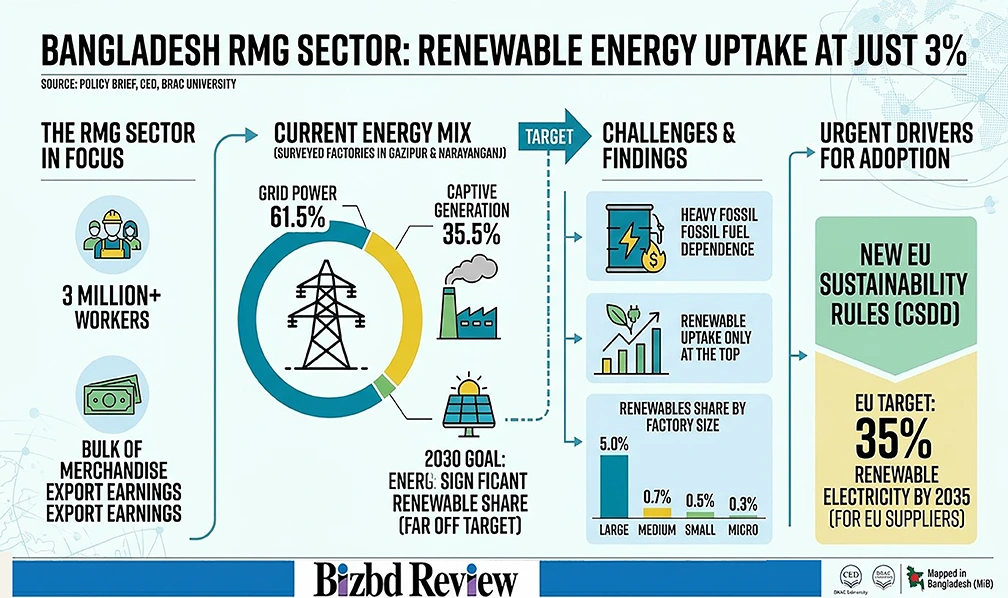
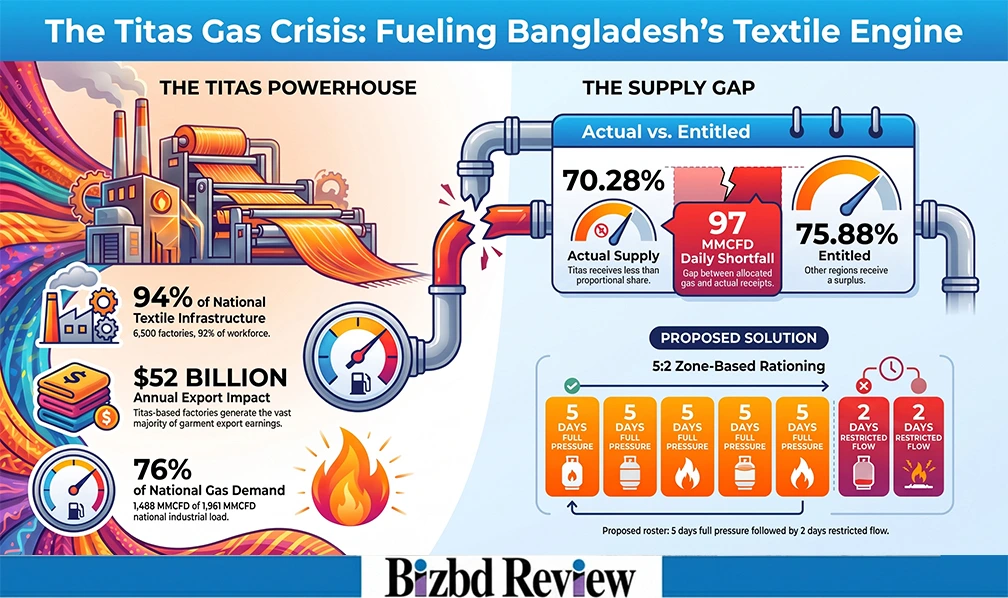
Energy shortages are compounding the crisis. Factories are increasingly reliant on diesel-powered generators to cope with load-shedding, significantly raising operating costs.
According to BGMEA data, 266 factories in Dhaka and surrounding areas require approximately 264,174 litres of diesel daily to offset four hours of power outages.
The impact is also being felt across backward linkage industries. Shamim Ahmed, president of the Bangladesh Plastic Goods Manufacturers and Exporters Association (BPGMEA), said the price of resin, used extensively in packaging materials, has nearly doubled within a month, rising to $1,500-1,800 per tonne from $900-950.
The increase is linked to global oil price volatility, with crude prices surging from around $60-70 per barrel to $115-120.
Plastic manufacturers, who supply packaging materials to sectors including garments, pharmaceuticals and food processing, are facing sharply higher production costs as a result.
Fazlul Hoque, former president of the Bangladesh Knitwear Manufacturers and Exporters Association (BKMEA), said imports have been more severely affected than exports, although shipments to Middle Eastern markets, particularly Dubai, have largely stalled.
Bangladesh remains heavily dependent on raw material imports from China, India, Indonesia and South Korea.
He said that while imports have resumed, they are coming at significantly higher prices, even as order volumes and unit prices decline. Rising global oil prices are also dampening consumer demand in Western markets, further squeezing apparel orders.
SM Khaled, managing director of Snowtex, said his company has experienced steep increases in petrochemical-based raw materials.
Freight costs from China have surged from around $1,600 to $2,600 per container, while local transport costs have risen due to fuel shortages, with trucks often waiting several hours to refuel.
He said that some buyers have either delayed or reduced projected orders by about 10 per cent, reflecting growing uncertainty. At the same time, concerns over rerouted shipping lines have prompted requests for early deliveries.
Industry leaders have urged the government to ensure uninterrupted fuel supply and consider special support measures for export-oriented sectors.
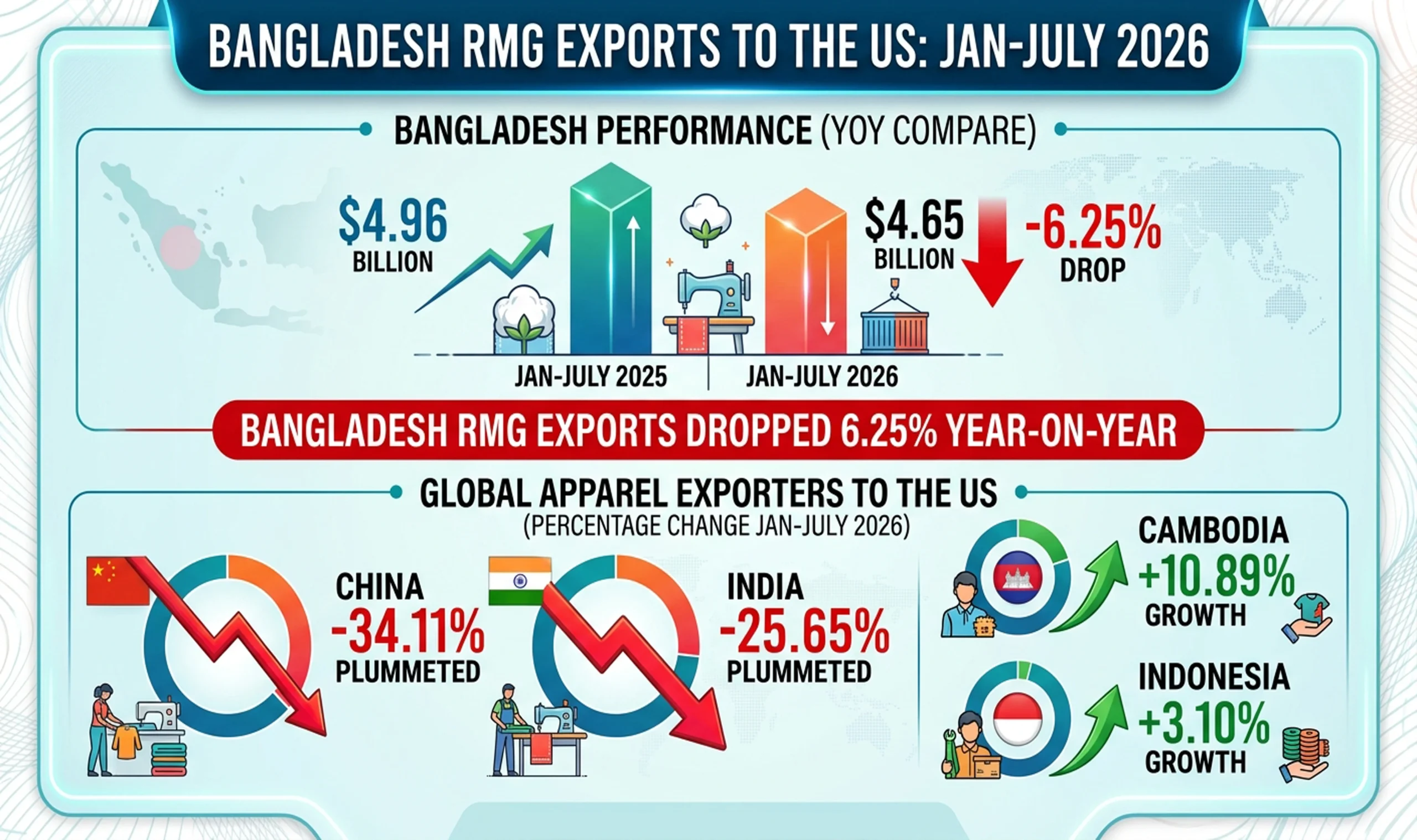
The sector’s external performance has already weakened. According to Export Promotion Bureau data, Bangladesh’s RMG exports have recorded negative growth of 4.75 per cent since August, with a further 13.21 per cent decline in February.
Export earnings stood at $25.79 billion during the first eight months of the current financial year 2025–26, underscoring mounting pressures on the country’s largest export industry.