Bizbd Report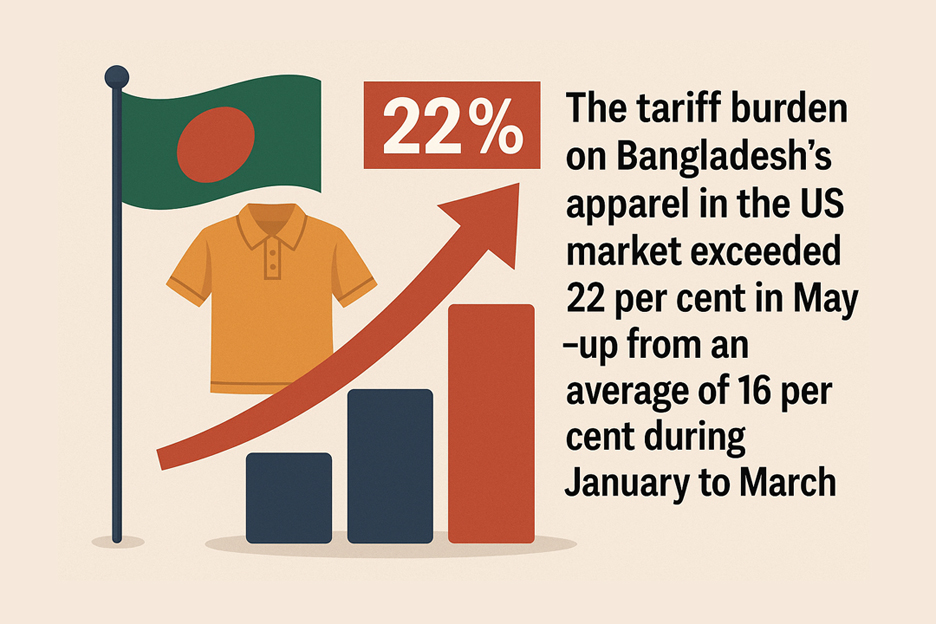
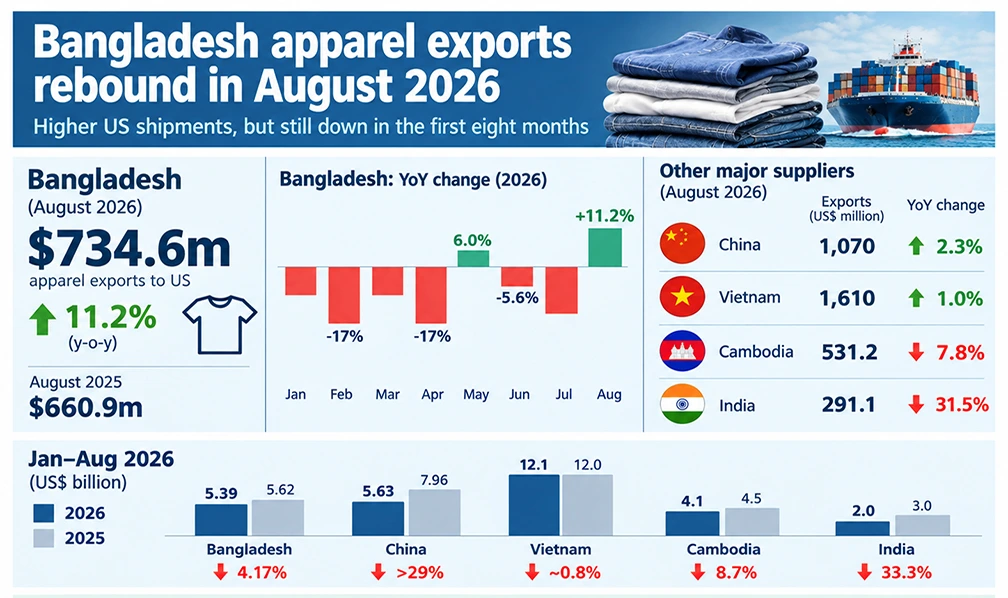
Bangladesh’s apparel exports to the United States suffered a sharp setback in May, as import volumes plunged to their lowest level this year under a steep tariff burden exceeding 22 per cent—up from an average of 16 per cent in the first quarter—following the US administration’s additional 10 per cent duty imposed from April 9.
According to the latest data from the United States International Trade Commission, apparel imports from Bangladesh fell to $523.28 million in May, a 28 per cent drop from $726.84 million in April.
Woven garments saw the steepest decline, falling by 32 per cent to $334.06 million, while knitwear exports dropped by 19 per cent to $189.22 million.
While the total import value declined, the duties paid by US importers remained substantial. In May, total calculated duties on Bangladeshi garments stood at $115.95 million, only slightly lower than April’s $142.20 million due to the lower import base.
The tariff burden had averaged 16.75 per cent in January, 16.32 per cent in February, and 16.62 per cent in March.
The April rate rose to 19.57 per cent after the additional duty took effect mid-month, with May reflecting the full-month impact at over 22 per cent.
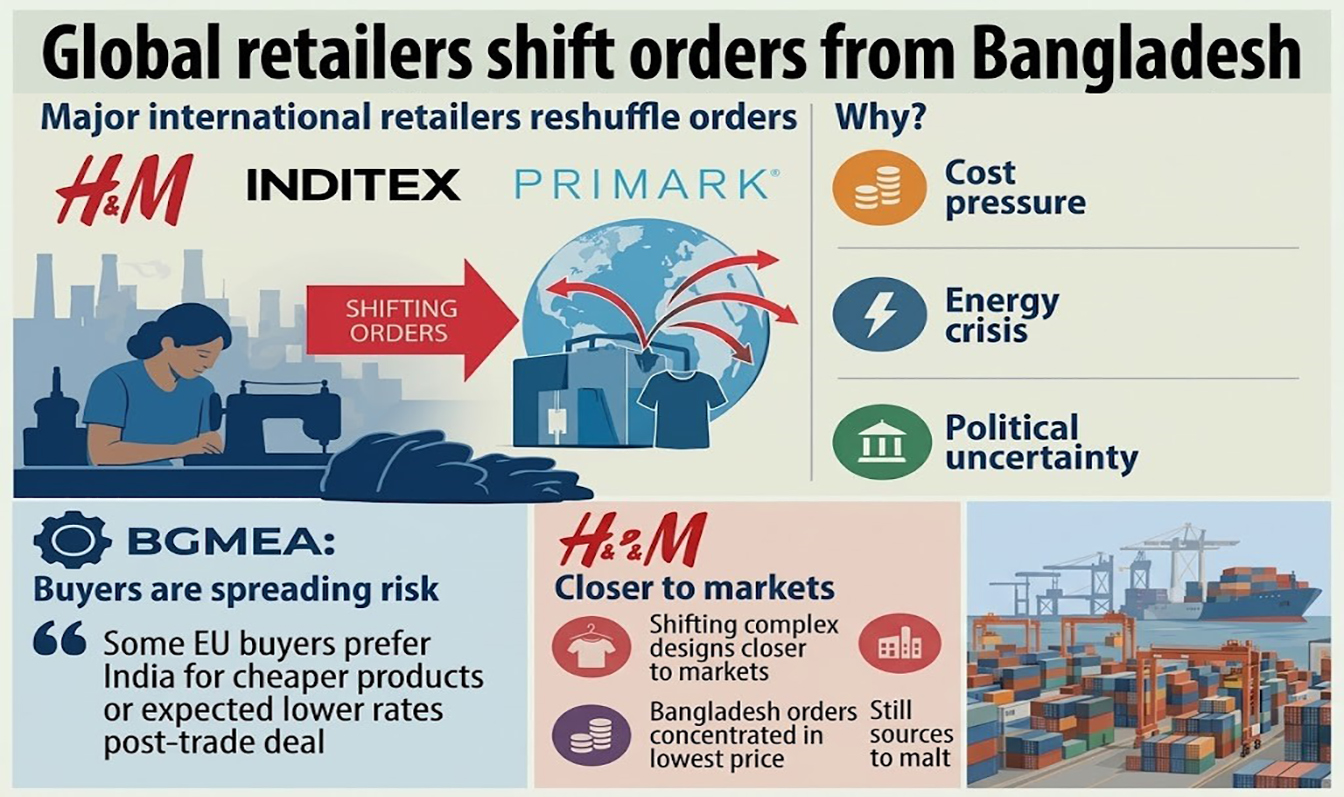
The escalating tariffs have prompted many US retailers and brands to reduce orders or shift sourcing to alternative markets, intensifying pressure on Bangladesh’s apparel industry.
Industry people feared that the situation was likely to worsen in the coming months, as US President Donald Trump had formally notified Bangladesh that a flat 35 per cent tariff would be applied to all Bangladeshi exports starting from August 1.
On April 2, the US announced reciprocal tariffs on several countries, including a 37 per cent duty on Bangladeshi products.
This was followed by a 10 per cent across-the-board duty, initially accompanied by a three-month suspension of other tariffs.
The suspension, which was set to expire on 9 July, has now been extended to August 1.
In a letter dated July 7, US President formally notified Bangladesh that from August 1, a flat 35 per cent tariff would apply to all Bangladeshi exports.
The letter, addressed to Professor Muhammad Yunus, the chief adviser of Bangladesh’s interim government, cited persistent trade imbalances and alleged unfair trade practices by Dhaka.
Similar letters were sent to 14 other countries, including Japan and South Korea, as part of a broader US strategy to rebalance global trade.