6:48 pm, Saturday, 2 May 2026

US tariff uncertainty drives Bangladeshi apparel shift to the EU

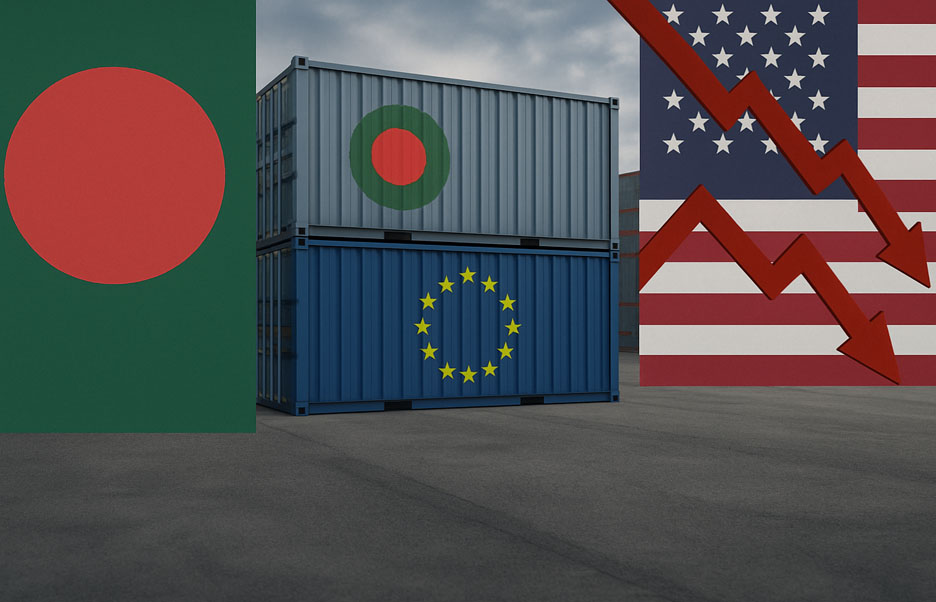
Uncertainty surrounding the future of US tariff regimes—set to change after July 9—has compelled Bangladeshi garment suppliers to diversify their export markets, shifting focus from the United States to the European Union and other non-traditional destinations.

Industry insiders say they remain unclear about Bangladesh’s standing in ongoing tariff negotiations with the US, while communication with American buyers has slowed significantly, with many placing orders cautiously or putting them on hold.

Some of them have already started using their capacity, that used to produce garments for US, for other markets mostly EU, they added.

Sayeed Ahmad Chowdhury, Director of Operations at Square Denim, said the company has already redirected part of its production capacity towards EU clients due to the ambiguity over the new US tariffs.

‘We recently began working with EU buyer Inditex, which offers a steady flow of work orders throughout the year, fewer lean periods, and more favourable pricing,’ he said.

According to Sayeed, suppliers are under constant price pressure from the US market and are now bearing half the cost of an additional 10 per cent tariff imposed on exports.

‘This is uncomfortable for us, and if the proposed 37 per cent tariff takes effect after 9 July, it will be another major blow,’ he said.

Sayeed said that many US buyers are currently holding off on confirming new orders as both sides remain unsure about future tariff rates and trade terms.

Additionally, closures of major factories operated by conglomerates such as Beximco, Nassa, and Mahmud Group have created a gap in capacity, encouraging others to shift towards the EU market.

Mohammed Sohel, Managing Director of Bangla Poshak, said the EU market is also under pressure as many long-standing companies have shut down or changed ownership, causing a decline in overall demand.

He added that several Bangladeshi suppliers are now exploring alternative markets beyond traditional destinations.

Khan Monirul Alam Shuvo, Managing Director of Fashion.Com, said one of his two factories, which produces garments from man-made fibres, is primarily focused on the US market. While the factory saw strong orders between January and March, the order pipeline has weakened for July and August due to uncertainty over future tariffs.

‘This is the same situation for many large suppliers who rely heavily on the US, which offers high-volume orders. But shifting our entire production capacity away from the US is not something we can do overnight. Despite the 10 per cent tariff and uncertainty over future rates, many of us are continuing to take risks,’ Shuvo said.

He emphasised the need for more proactive and visible efforts from stakeholders to support negotiations with buyers. “Right now, no one really knows what changes are coming,” he added.

Exporters estimate that 20 to 30 per cent of potential orders are either on hold or awaiting confirmation due to the current ambiguity.

Asif Ashraf, Managing Director of Urmi Group, acknowledged the rising pressure from buyers.

He believes that while bearing part of the additional tariffs poses a challenge, exporters can minimise the damage through strategic negotiation.

Despite the ongoing challenges, Bangladesh holds significant potential, said AKM Saifur Rahman Farhad, Vice President of the Bangladesh Garment Buying House Association.

He noted that the prolonged US–China trade conflict is encouraging many buyers to shift sourcing away from China, which could benefit Bangladesh in the long term.

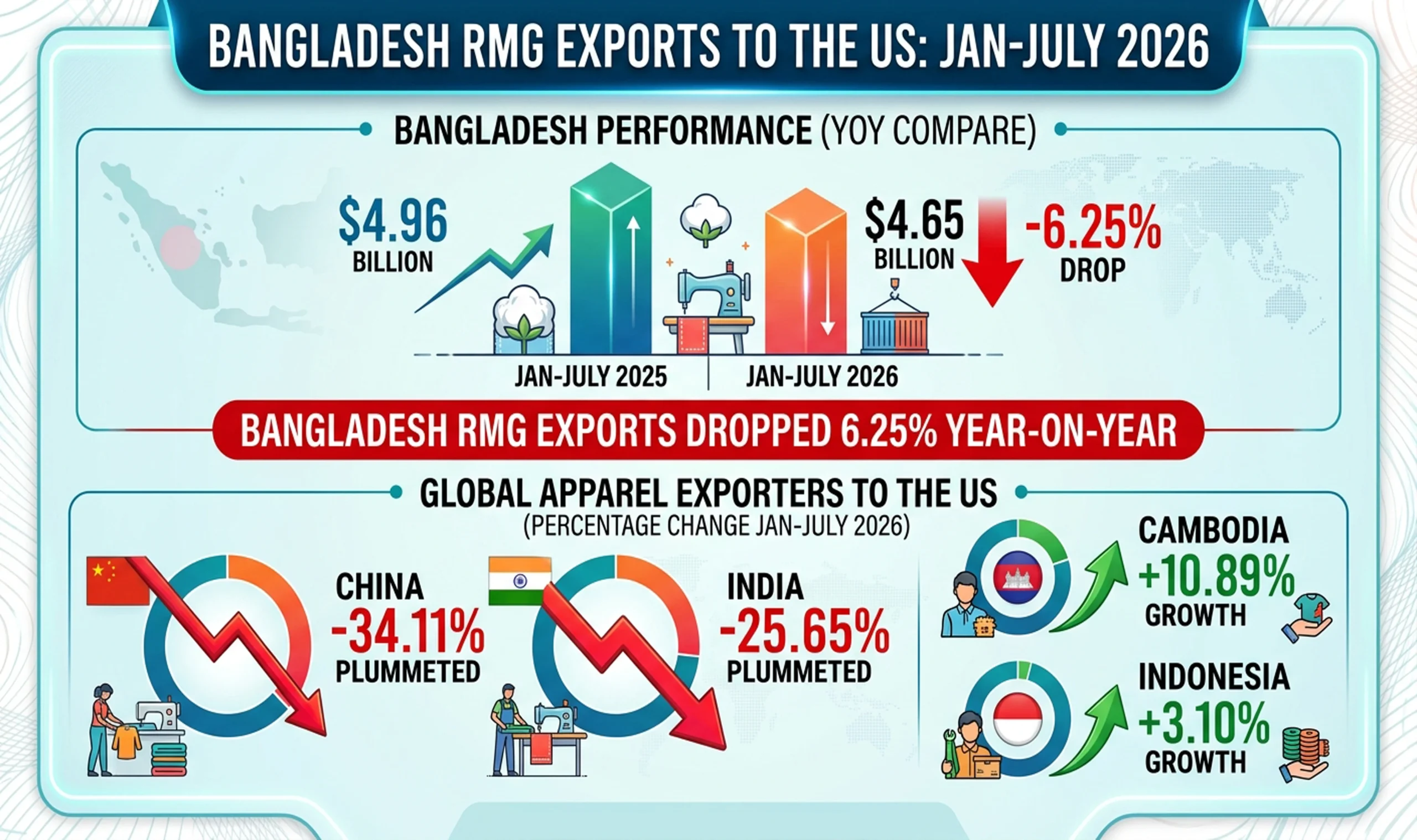
The United States remains Bangladesh’s largest export market. In 2024, the country earned $7.34 billion from garment exports to the US, out of a total US$38.48 billion in ready-made garment shipments.

On April 2, the US imposed higher reciprocal tariffs on several countries, including a 37 per cent duty on Bangladesh.

The Trump administration later introduced an additional 10 per cent tariff while suspending the rest of the increase for three months, a grace period set to end on July 9.

During this window, several countries, including Bangladesh, have entered negotiations with Washington to seek tariff relief.

Vietnam—one of Bangladesh’s key competitors—has already succeeded in reducing its tariff rate from 46 per cent to 20 per cent after agreeing to lift certain duties on US goods.
Most Viewed

US tariff uncertainty drives Bangladeshi apparel shift to the EU

Update Time : 11:11:43 pm, Monday, 7 July 2025

Uncertainty surrounding the future of US tariff regimes—set to change after July 9—has compelled Bangladeshi garment suppliers to diversify their export markets, shifting focus from the United States to the European Union and other non-traditional destinations.

Industry insiders say they remain unclear about Bangladesh’s standing in ongoing tariff negotiations with the US, while communication with American buyers has slowed significantly, with many placing orders cautiously or putting them on hold.

Some of them have already started using their capacity, that used to produce garments for US, for other markets mostly EU, they added.

Sayeed Ahmad Chowdhury, Director of Operations at Square Denim, said the company has already redirected part of its production capacity towards EU clients due to the ambiguity over the new US tariffs.

‘We recently began working with EU buyer Inditex, which offers a steady flow of work orders throughout the year, fewer lean periods, and more favourable pricing,’ he said.

According to Sayeed, suppliers are under constant price pressure from the US market and are now bearing half the cost of an additional 10 per cent tariff imposed on exports.

‘This is uncomfortable for us, and if the proposed 37 per cent tariff takes effect after 9 July, it will be another major blow,’ he said.

Sayeed said that many US buyers are currently holding off on confirming new orders as both sides remain unsure about future tariff rates and trade terms.

Additionally, closures of major factories operated by conglomerates such as Beximco, Nassa, and Mahmud Group have created a gap in capacity, encouraging others to shift towards the EU market.

Mohammed Sohel, Managing Director of Bangla Poshak, said the EU market is also under pressure as many long-standing companies have shut down or changed ownership, causing a decline in overall demand.

He added that several Bangladeshi suppliers are now exploring alternative markets beyond traditional destinations.

Khan Monirul Alam Shuvo, Managing Director of Fashion.Com, said one of his two factories, which produces garments from man-made fibres, is primarily focused on the US market. While the factory saw strong orders between January and March, the order pipeline has weakened for July and August due to uncertainty over future tariffs.

‘This is the same situation for many large suppliers who rely heavily on the US, which offers high-volume orders. But shifting our entire production capacity away from the US is not something we can do overnight. Despite the 10 per cent tariff and uncertainty over future rates, many of us are continuing to take risks,’ Shuvo said.

He emphasised the need for more proactive and visible efforts from stakeholders to support negotiations with buyers. “Right now, no one really knows what changes are coming,” he added.

Exporters estimate that 20 to 30 per cent of potential orders are either on hold or awaiting confirmation due to the current ambiguity.

Asif Ashraf, Managing Director of Urmi Group, acknowledged the rising pressure from buyers.

He believes that while bearing part of the additional tariffs poses a challenge, exporters can minimise the damage through strategic negotiation.

Despite the ongoing challenges, Bangladesh holds significant potential, said AKM Saifur Rahman Farhad, Vice President of the Bangladesh Garment Buying House Association.

He noted that the prolonged US–China trade conflict is encouraging many buyers to shift sourcing away from China, which could benefit Bangladesh in the long term.

The United States remains Bangladesh’s largest export market. In 2024, the country earned $7.34 billion from garment exports to the US, out of a total US$38.48 billion in ready-made garment shipments.

On April 2, the US imposed higher reciprocal tariffs on several countries, including a 37 per cent duty on Bangladesh.

The Trump administration later introduced an additional 10 per cent tariff while suspending the rest of the increase for three months, a grace period set to end on July 9.

During this window, several countries, including Bangladesh, have entered negotiations with Washington to seek tariff relief.

Vietnam—one of Bangladesh’s key competitors—has already succeeded in reducing its tariff rate from 46 per cent to 20 per cent after agreeing to lift certain duties on US goods.