2:29 am, Friday, 7 November 2025

Tariff fallout shifts US sourcing from Bangladesh to India, Indonesia, Cambodia

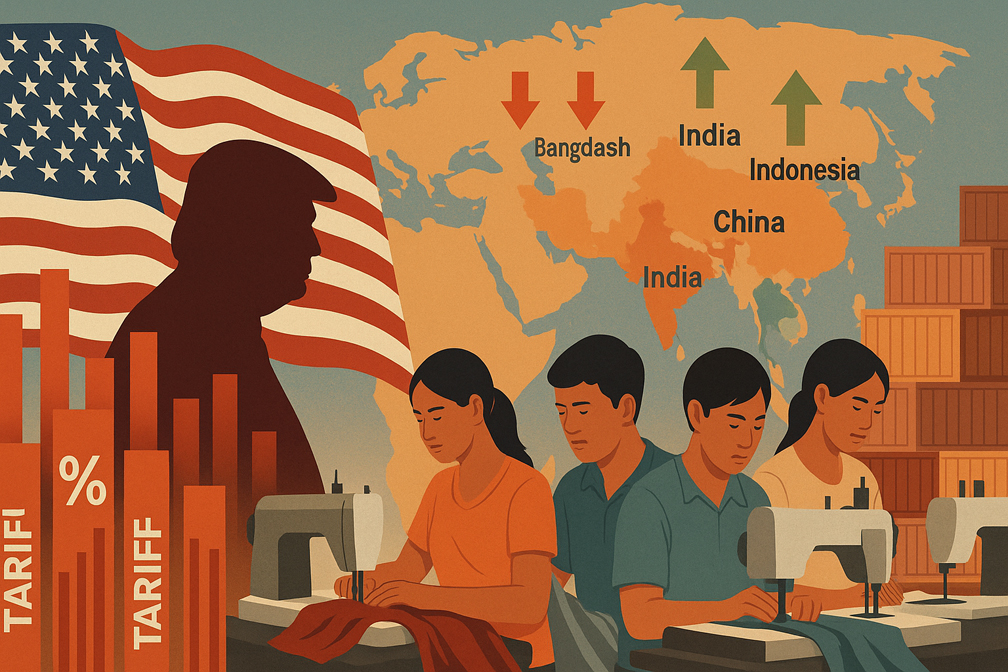
A growing number of US fashion companies are turning to India, Indonesia, and Cambodia as preferred sourcing destinations, bypassing traditional suppliers such as Bangladesh, Vietnam, and China, amid mounting trade tensions and tariffs imposed by the Trump Administration.

This shift is highlighted in the 2025 Fashion Industry Benchmarking Study, released on July 29 by the United States Fashion Industry Association (USFIA) in collaboration with the University of Delaware.

The twelfth annual edition of the study surveyed executives from 25 leading American fashion brands, retailers, importers, and wholesalers between April and June this year.

According to the findings, over 60 per cent of respondents indicated plans to expand apparel sourcing from Indonesia, India, and Cambodia within the next two years.

These countries, the report states, have already established significant apparel production capacities, making them viable alternatives to traditional suppliers.

‘Respondents generally believe that these countries have already developed considerable apparel production capacity and can serve as immediate alternatives to the traditional top three suppliers—China, Vietnam and Bangladesh,’ the report says.

Bangladesh’s Position Under Scrutiny

While Bangladesh remains a major player in the US apparel market, the outlook is mixed. The study reveals that 53 per cent of respondents plan to expand sourcing from Bangladesh over the next two years—slightly up from 48 per cent in the 2024 survey.

However, concerns over future US trade restrictions on Bangladeshi apparel, due to the country’s widening trade surplus with the United States and its continued reliance on Chinese textile inputs, have tempered enthusiasm.

‘These concerns appear to hold US fashion companies back from substantially increasing their apparel sourcing from Bangladesh in the context of sourcing diversification and reducing China exposure,’ the report warns.

On July 7, US President Donald Trump officially notified the Bangladesh government of a flat 35 per cent tariff on all Bangladeshi exports to the US.

This followed an earlier tariff adjustment in April when the US imposed reciprocal duties on several countries, including a 37 per cent levy on Bangladeshi products.

A temporary 10 per cent flat tariff was applied for three months, ending on 9 July, and was subsequently extended until 1 August.

Despite these challenges, Bangladesh accounted for approximately 10.6 per cent of total US apparel imports by value during the first five months of 2025—up from 9.2 per cent over the same period in 2024.

Emerging Players Gain Ground

In contrast, India, Indonesia, and Cambodia collectively supplied 18.5 per cent of US apparel imports during the January–May 2025 period, up from 17.1 per cent in the same timeframe last year.

The report highlights that these emerging suppliers offer comparatively lower sourcing risks than China, making them increasingly attractive to fashion companies looking to diversify supply chains and reduce over-reliance on any single source.

In 2025, more than 60 per cent of respondents allocated over 30 per cent of their apparel sourcing orders to Vietnam and Bangladesh combined—up from one-third in 2024.

However, it has also become more common for companies to dedicate more than 10 per cent of their sourcing to India, Cambodia, and Indonesia, indicating improved production capacity and a larger role in global apparel trade.

Tariffs Reshape Supply Chains

The Trump administration’s tariffs are significantly reshaping supply chain strategies.

Over 70 per cent of surveyed companies reported increased sourcing costs, squeezed profit margins, and higher consumer prices due to elevated duties.

Nearly half of the respondents reported falling sales, while 22 per cent acknowledged having to lay off employees.

The report also notes that more than two-thirds of companies have either delayed or cancelled orders in response to the tariff environment. Suppliers who agreed to share the burden of tariffs are struggling to stay afloat.

Looking ahead, 60 per cent of respondents said they plan to source apparel from a broader range of countries—excluding China—as part of long-term risk mitigation strategies.

Bangladesh: Value and Vulnerability

Despite rising sourcing costs globally, Bangladesh remains a favoured destination for basic, low-cost, bulk apparel items such as knit cotton shirts and trousers.

However, persistent concerns regarding labour and environmental compliance continue to weigh on its reputation.

The report concludes that while Bangladesh still holds competitive advantages in price and volume, fashion companies are increasingly considering other options that combine compliance, resilience, and proximity to raw materials, in light of the changing geopolitical and economic landscape.
Tariff fallout shifts US sourcing from Bangladesh to India, Indonesia, Cambodia

Update Time : 08:43:54 am, Thursday, 31 July 2025

A growing number of US fashion companies are turning to India, Indonesia, and Cambodia as preferred sourcing destinations, bypassing traditional suppliers such as Bangladesh, Vietnam, and China, amid mounting trade tensions and tariffs imposed by the Trump Administration.

This shift is highlighted in the 2025 Fashion Industry Benchmarking Study, released on July 29 by the United States Fashion Industry Association (USFIA) in collaboration with the University of Delaware.

The twelfth annual edition of the study surveyed executives from 25 leading American fashion brands, retailers, importers, and wholesalers between April and June this year.

According to the findings, over 60 per cent of respondents indicated plans to expand apparel sourcing from Indonesia, India, and Cambodia within the next two years.

These countries, the report states, have already established significant apparel production capacities, making them viable alternatives to traditional suppliers.

‘Respondents generally believe that these countries have already developed considerable apparel production capacity and can serve as immediate alternatives to the traditional top three suppliers—China, Vietnam and Bangladesh,’ the report says.

Bangladesh’s Position Under Scrutiny

While Bangladesh remains a major player in the US apparel market, the outlook is mixed. The study reveals that 53 per cent of respondents plan to expand sourcing from Bangladesh over the next two years—slightly up from 48 per cent in the 2024 survey.

However, concerns over future US trade restrictions on Bangladeshi apparel, due to the country’s widening trade surplus with the United States and its continued reliance on Chinese textile inputs, have tempered enthusiasm.

‘These concerns appear to hold US fashion companies back from substantially increasing their apparel sourcing from Bangladesh in the context of sourcing diversification and reducing China exposure,’ the report warns.

On July 7, US President Donald Trump officially notified the Bangladesh government of a flat 35 per cent tariff on all Bangladeshi exports to the US.

This followed an earlier tariff adjustment in April when the US imposed reciprocal duties on several countries, including a 37 per cent levy on Bangladeshi products.

A temporary 10 per cent flat tariff was applied for three months, ending on 9 July, and was subsequently extended until 1 August.

Despite these challenges, Bangladesh accounted for approximately 10.6 per cent of total US apparel imports by value during the first five months of 2025—up from 9.2 per cent over the same period in 2024.

Emerging Players Gain Ground

In contrast, India, Indonesia, and Cambodia collectively supplied 18.5 per cent of US apparel imports during the January–May 2025 period, up from 17.1 per cent in the same timeframe last year.

The report highlights that these emerging suppliers offer comparatively lower sourcing risks than China, making them increasingly attractive to fashion companies looking to diversify supply chains and reduce over-reliance on any single source.

In 2025, more than 60 per cent of respondents allocated over 30 per cent of their apparel sourcing orders to Vietnam and Bangladesh combined—up from one-third in 2024.

However, it has also become more common for companies to dedicate more than 10 per cent of their sourcing to India, Cambodia, and Indonesia, indicating improved production capacity and a larger role in global apparel trade.

Tariffs Reshape Supply Chains

The Trump administration’s tariffs are significantly reshaping supply chain strategies.

Over 70 per cent of surveyed companies reported increased sourcing costs, squeezed profit margins, and higher consumer prices due to elevated duties.

Nearly half of the respondents reported falling sales, while 22 per cent acknowledged having to lay off employees.

The report also notes that more than two-thirds of companies have either delayed or cancelled orders in response to the tariff environment. Suppliers who agreed to share the burden of tariffs are struggling to stay afloat.

Looking ahead, 60 per cent of respondents said they plan to source apparel from a broader range of countries—excluding China—as part of long-term risk mitigation strategies.

Bangladesh: Value and Vulnerability

Despite rising sourcing costs globally, Bangladesh remains a favoured destination for basic, low-cost, bulk apparel items such as knit cotton shirts and trousers.

However, persistent concerns regarding labour and environmental compliance continue to weigh on its reputation.

The report concludes that while Bangladesh still holds competitive advantages in price and volume, fashion companies are increasingly considering other options that combine compliance, resilience, and proximity to raw materials, in light of the changing geopolitical and economic landscape.