Bizbd Report
Business leaders on Tuesday expressed serious concern over the imposition of additional US tariffs on Bangladeshi goods and urged the government to strengthen its negotiation efforts to ensure that tariffs on Bangladeshi exports do not exceed those faced by competitor countries.
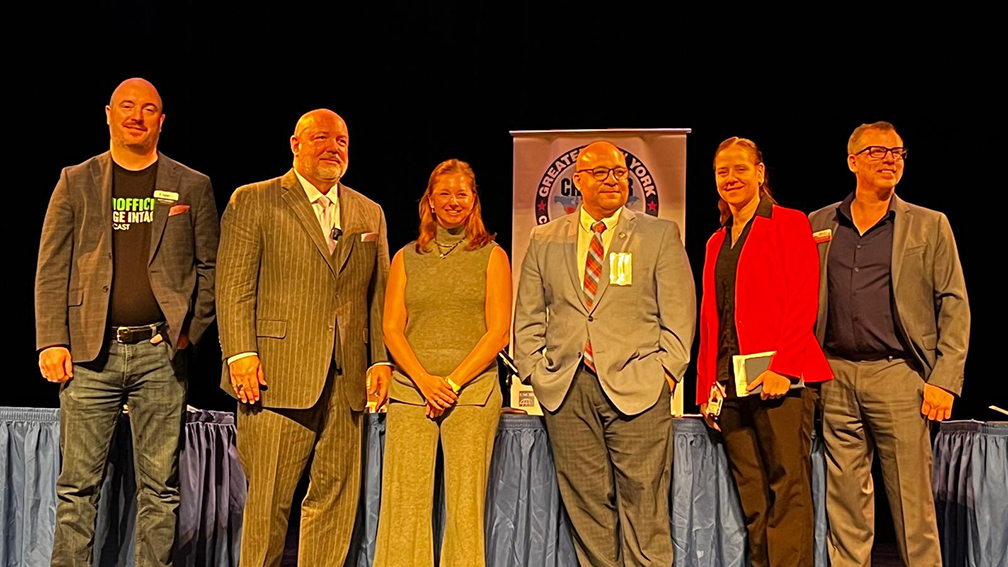
In a meeting with Bangladesh Nationalist Party standing committee member Amir Khasru Mahmud Chowdhury at a hotel in Dhaka, the business community also requested the government not to keep them in the dark regarding such critical trade issues.
They further emphasised the need to appoint professional lobbyists to represent Bangladesh’s interests effectively in Washington.
According to meeting sources, several top business leaders criticised what they saw as a dismissive attitude within certain segments of the government, where the impact on $8 billion worth of exports was considered insignificant.
They argued that the consequences extend far beyond the export figure, with potential job losses and disruptions across backward and forward linkages, especially in the textile and garment sectors and related services.
Among those present were International Chamber of Commerce in Bangladesh President Mahbubur Rahman, Metropolitan Chamber of Commerce and Industry President Kamran T Rahman, Bangladesh Chamber of Industries President Anwar-ul-Alam Chowdhury, Leathergoods and Footwear Manufacturers and Exporters Association President Syed Nasim Manzur, BGMEA representative Mahmud Hasan Khan, BKMEA Executive President Mohammad Hatem, former FBCCI President AK Azad, BTMA former President Tapan Chowdhury, and former Terry Towel Association Chairman Shahadat Hossain Sohel.
Meeting sources also mentioned that there was a proposal to involve Kihak Sung, Chairman of Youngone Corporation and a pioneer in Bangladesh’s RMG and textile sectors, in the ongoing negotiations with the United States.
Following the meeting, Amir Khasru told reporters that resolving the tariff issue required inclusive dialogue involving government, political parties, industry leaders, and the business community.
He warned that failure to effectively address the matter would have serious repercussions for the economy, employment, and the industrial ecosystem.
He stressed that the issue affects not just $8 billion in exports, but also 1.5 million workers and their families who depend on the export-oriented sectors.
Export industries, he noted, have played a major role in helping Bangladesh reach a GDP of $400 billion.
Khosru said there was a need for coordinated national efforts and political consensus, especially if the tariff discussions involved sensitive matters such as security, procurement or policy.
While citing media reports that suggested such issues may be part of the negotiation, he refrained from giving further details due to what he described as a non-disclosure agreement between the US and Bangladesh.
He assured that BNP would engage with the interim government to share insights from the business community and support a unified approach to resolving the tariff challenge.