Bizbd Report
Bangladeshi exporters may need to shoulder nearly 40 per cent of post-graduation tariff costs to stay competitive in the European Union, according to a recent study.
Following Bangladesh’s graduation from least developed country (LDC) status, the country is set to lose duty-free access to the EU market after the transition period ends in 2029.
As a result, apparel exports are expected to face tariffs of around 12 per cent under EU safeguard measures.
A study conducted by Research and Development Integration for Development (RAPID) found that for the top ten garment products, Bangladesh’s average weighted export price was about 36 per cent lower than those of China and Vietnam.
‘Even Cambodia, another LDC, secures a higher average price than Bangladesh,’ said Md Deen Islam, RAPID’s research director.
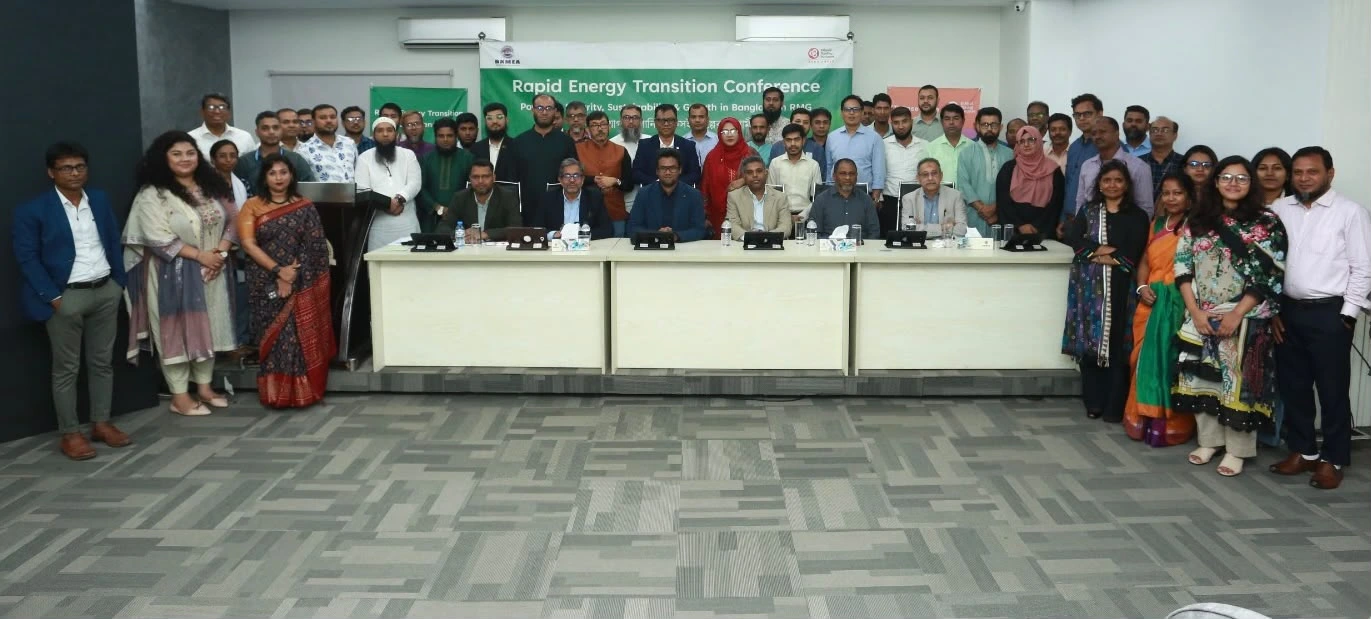
He presented the findings at a consultation held on December 29 at the Department of Development Studies, Faculty of Social Sciences, Dhaka University.
He said that garment exporters were already operating on very slim margins, leaving limited room to absorb additional tariff burdens without serious financial pressure.
He explained that for every 10 per cent tariff imposed by the EU, exporters would need to cut pre-tariff prices by roughly 4 per cent to maintain competitiveness.
The study also examined exporters’ ability to adjust prices in response to exchange rate movements, highlighting that currency appreciation has weakened competitiveness.
Between 2012 and 2022, the taka appreciated significantly in real terms against currencies of major competitors such as China, Vietnam and Cambodia.
This prolonged trend has gradually made Bangladeshi exports more expensive relative to rivals, eroding cost competitiveness even before the anticipated tariff shock.
The woven garment segment is particularly exposed due to its dependence on imported inputs like fabrics.
Deen Islam said depreciation of the taka raises input costs, offsetting potential gains and limiting exporters’ capacity to reduce euro-denominated prices.
The study recommended stronger diplomatic efforts to secure GSP Plus status and push for easing safeguard provisions in the EU’s proposed GSP framework.
It also urged coordination with other beneficiary countries to lobby for more favourable terms.
Additional suggestions included improving competitiveness by strengthening backward linkages through incentives for domestic fabric production, dyeing and finishing, attracting technology-driven foreign investment, and providing targeted financing to firms increasing local sourcing.
The report further emphasised the need to enhance firm-level resilience by moving up the value chain, shifting from low-priced basic items to higher-value apparel, and supporting investment in design, branding and product development.