6:25 pm, Saturday, 8 November 2025

Asia-Pacific social progress at risk amid persistent inequalities, ILO warns

  • Bizbd Report
  • Update Time : 11:18:39 pm, Tuesday, 23 September 2025
  • 254

A New report by the International Labour Organization (ILO) warned that, despite decades of economic growth and social advancement, deep-seated inequalities continued to undermine progress in poverty reduction, education, and productivity across the Asia-Pacific region.

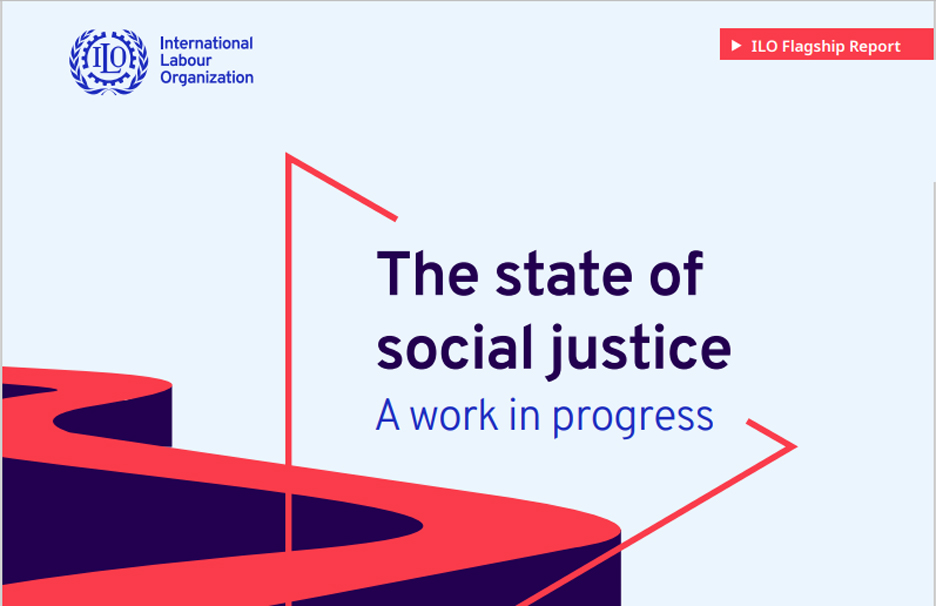
The report ‘The State of Social Justice: A Work in Progress,’ was launched on September 23 at the UN General Assembly in New York.

Published ahead of the World Social Summit in Doha, Qatar, in November 2025, the study, offered a sobering assessment of the region’s social landscape three decades after the 1995 Copenhagen Summit on Social Development.

The report revealed that one in four people worldwide does not have access to clean water, highlighting deep disparities in wealth and resource distribution.

Gender inequality in pay remains stark, with women earning just 78 per cent of men’s wages in 2025, it said.

According to the report, at the current pace, closing the global gender earnings gap could take between 50 and 100 years, with slower progress in low- and lower-middle-income countries.

It said that child labour remains a serious concern, affecting 138 million children aged 5–17 in 2024, nearly half of whom were engaged in hazardous work.

Although global child labour has declined significantly since 1995, sub-Saharan Africa continues to bear a disproportionate burden, with 21 per cent of children affected.

The report said that, although Asia and the Pacific had experienced considerable progress, the benefits of growth had not been shared equally.

It said that income concentration remained high, with the top ten per cent of earners holding 58 per cent of income in 2022, compared with 57 per cent in 1995.

In major middle-income economies, including China and India, it observed that rapid economic growth had coincided with rising internal inequality, suggesting that national prosperity did not automatically translate into fairer wealth distribution.

The report also pointed out that the region had made notable strides in reducing child labour, which had fallen from 13.3 per cent in 2008 to 5.5 per cent in 2024, though this issue continued to impede equitable access to education and opportunities.

It said that legal protections for workers and equality remained inconsistent across the region.

While 97 per cent of countries in Asia and the Pacific had constitutional provisions for general equality, only a few explicitly guaranteed equal pay, safe working conditions, or collective bargaining rights.

The report observed that compliance with fundamental labour standards, including freedom of association, had worsened between 2015 and 2023, creating barriers to fair wage distribution and social justice, and underscored that legal frameworks alone were insufficient without robust enforcement mechanisms.

The report also draws attention to the risks posed by technological and demographic changes. The digital transition, particularly the rise of generative Artificial Intelligence, threatens to exacerbate gender inequalities in employment.

In Asia and the Pacific, 24 per cent of women’s jobs—186 million positions—are potentially exposed to automation, compared with 21 per cent of men’s employment.

Women are disproportionately concentrated in roles most susceptible to displacement, highlighting the need for targeted policies to ensure that technological advances do not deepen existing inequities.

Furthermore, the region is highly vulnerable to climate-related challenges, with countries such as India and Thailand already implementing adaptation measures to address heat stress.

Low-income workers, who contribute minimally to global emissions, face disproportionate losses in income and productivity as environmental shocks intensify.

Low- and lower-middle-income countries in the region were projected to see their labour forces grow by approximately 30 per cent between 2030 and 2050, necessitating the creation of hundreds of millions of productive jobs to avoid increased migratory pressures.

Conversely, upper-middle-income nations faced declining workforces, raising concerns over labour shortages and the need to transition workers from informal, low-productivity jobs into higher-value sectors.

The report said that, despite these challenges, Asia and the Pacific had contributed to the decline in global inequality between countries, driven by the economic catch-up of low- and middle-income nations in Eastern and Southern Asia.

It observed that improvements in labour productivity in these regions had helped reduce disparities at the international level, even as internal inequalities persisted.

At the global level, the report emphasised that social justice remained an unfinished project. It indicated that extreme poverty had fallen from 39 per cent in 1995 to 10 per cent in 2023, while working poverty had declined from 27.9 per cent in 2000 to 6.9 per cent in 2024.

Labour productivity inequality between countries had fallen by 40 per cent, reflecting the benefits of economic convergence among middle-income nations, it said.

The report also said that globally, the top one per cent of earners controlled 20 per cent of income and 38 per cent of wealth, while the top ten per cent’s share of total income had fallen only slightly to 53 per cent.

Over 800 million people still lived on less than $3 a day, and at least 71 per cent of an individual’s earnings were determined by circumstances of birth, including nationality and sex.

The report further observed that the gender pay gap remained pronounced, with women earning just 78 per cent of men’s wages in 2025, and projected that, at the current pace, closing this gap could take between 50 and 100 years.

It said that compliance with freedom of association and collective bargaining had stalled globally since 2015, and forced labour continued to affect roughly 3.5 per cent of the world’s population.

‘The world has made undeniable progress, but we cannot ignore that millions remain excluded from opportunity and dignity at work,’ said ILO Director-General Gilbert F Houngbo.

He said that social justice was not only a moral imperative but was also essential for economic security, social cohesion, and peace.

The ILO emphasised that four foundational pillars were essential to advancing social justice: upholding fundamental human rights, ensuring equal access to opportunities, achieving fair distribution of economic benefits, and managing fair transitions in response to environmental, digital, and demographic shifts.

It said that these pillars required bold, coordinated action, integrating labour policies with wider social, industrial, and environmental strategies.
Asia-Pacific social progress at risk amid persistent inequalities, ILO warns

Update Time : 11:18:39 pm, Tuesday, 23 September 2025

A New report by the International Labour Organization (ILO) warned that, despite decades of economic growth and social advancement, deep-seated inequalities continued to undermine progress in poverty reduction, education, and productivity across the Asia-Pacific region.

The report ‘The State of Social Justice: A Work in Progress,’ was launched on September 23 at the UN General Assembly in New York.

Published ahead of the World Social Summit in Doha, Qatar, in November 2025, the study, offered a sobering assessment of the region’s social landscape three decades after the 1995 Copenhagen Summit on Social Development.

The report revealed that one in four people worldwide does not have access to clean water, highlighting deep disparities in wealth and resource distribution.

Gender inequality in pay remains stark, with women earning just 78 per cent of men’s wages in 2025, it said.

According to the report, at the current pace, closing the global gender earnings gap could take between 50 and 100 years, with slower progress in low- and lower-middle-income countries.

It said that child labour remains a serious concern, affecting 138 million children aged 5–17 in 2024, nearly half of whom were engaged in hazardous work.

Although global child labour has declined significantly since 1995, sub-Saharan Africa continues to bear a disproportionate burden, with 21 per cent of children affected.

The report said that, although Asia and the Pacific had experienced considerable progress, the benefits of growth had not been shared equally.

It said that income concentration remained high, with the top ten per cent of earners holding 58 per cent of income in 2022, compared with 57 per cent in 1995.

In major middle-income economies, including China and India, it observed that rapid economic growth had coincided with rising internal inequality, suggesting that national prosperity did not automatically translate into fairer wealth distribution.

The report also pointed out that the region had made notable strides in reducing child labour, which had fallen from 13.3 per cent in 2008 to 5.5 per cent in 2024, though this issue continued to impede equitable access to education and opportunities.

It said that legal protections for workers and equality remained inconsistent across the region.

While 97 per cent of countries in Asia and the Pacific had constitutional provisions for general equality, only a few explicitly guaranteed equal pay, safe working conditions, or collective bargaining rights.

The report observed that compliance with fundamental labour standards, including freedom of association, had worsened between 2015 and 2023, creating barriers to fair wage distribution and social justice, and underscored that legal frameworks alone were insufficient without robust enforcement mechanisms.

The report also draws attention to the risks posed by technological and demographic changes. The digital transition, particularly the rise of generative Artificial Intelligence, threatens to exacerbate gender inequalities in employment.

In Asia and the Pacific, 24 per cent of women’s jobs—186 million positions—are potentially exposed to automation, compared with 21 per cent of men’s employment.

Women are disproportionately concentrated in roles most susceptible to displacement, highlighting the need for targeted policies to ensure that technological advances do not deepen existing inequities.

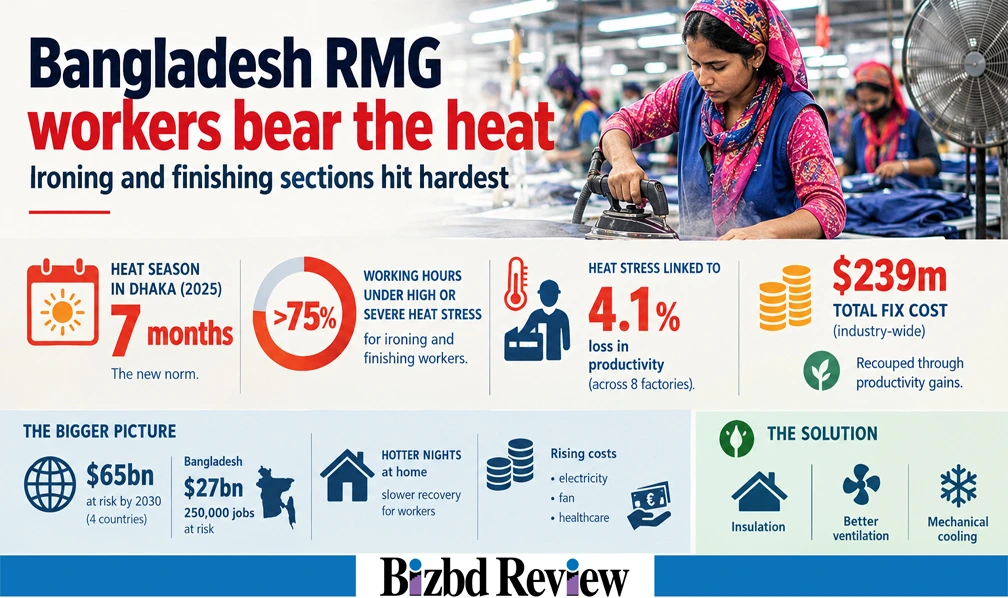
Furthermore, the region is highly vulnerable to climate-related challenges, with countries such as India and Thailand already implementing adaptation measures to address heat stress.

Low-income workers, who contribute minimally to global emissions, face disproportionate losses in income and productivity as environmental shocks intensify.

Low- and lower-middle-income countries in the region were projected to see their labour forces grow by approximately 30 per cent between 2030 and 2050, necessitating the creation of hundreds of millions of productive jobs to avoid increased migratory pressures.

Conversely, upper-middle-income nations faced declining workforces, raising concerns over labour shortages and the need to transition workers from informal, low-productivity jobs into higher-value sectors.

The report said that, despite these challenges, Asia and the Pacific had contributed to the decline in global inequality between countries, driven by the economic catch-up of low- and middle-income nations in Eastern and Southern Asia.

It observed that improvements in labour productivity in these regions had helped reduce disparities at the international level, even as internal inequalities persisted.

At the global level, the report emphasised that social justice remained an unfinished project. It indicated that extreme poverty had fallen from 39 per cent in 1995 to 10 per cent in 2023, while working poverty had declined from 27.9 per cent in 2000 to 6.9 per cent in 2024.

Labour productivity inequality between countries had fallen by 40 per cent, reflecting the benefits of economic convergence among middle-income nations, it said.

The report also said that globally, the top one per cent of earners controlled 20 per cent of income and 38 per cent of wealth, while the top ten per cent’s share of total income had fallen only slightly to 53 per cent.

Over 800 million people still lived on less than $3 a day, and at least 71 per cent of an individual’s earnings were determined by circumstances of birth, including nationality and sex.

The report further observed that the gender pay gap remained pronounced, with women earning just 78 per cent of men’s wages in 2025, and projected that, at the current pace, closing this gap could take between 50 and 100 years.

It said that compliance with freedom of association and collective bargaining had stalled globally since 2015, and forced labour continued to affect roughly 3.5 per cent of the world’s population.

‘The world has made undeniable progress, but we cannot ignore that millions remain excluded from opportunity and dignity at work,’ said ILO Director-General Gilbert F Houngbo.

He said that social justice was not only a moral imperative but was also essential for economic security, social cohesion, and peace.

The ILO emphasised that four foundational pillars were essential to advancing social justice: upholding fundamental human rights, ensuring equal access to opportunities, achieving fair distribution of economic benefits, and managing fair transitions in response to environmental, digital, and demographic shifts.

It said that these pillars required bold, coordinated action, integrating labour policies with wider social, industrial, and environmental strategies.