Bizbd Report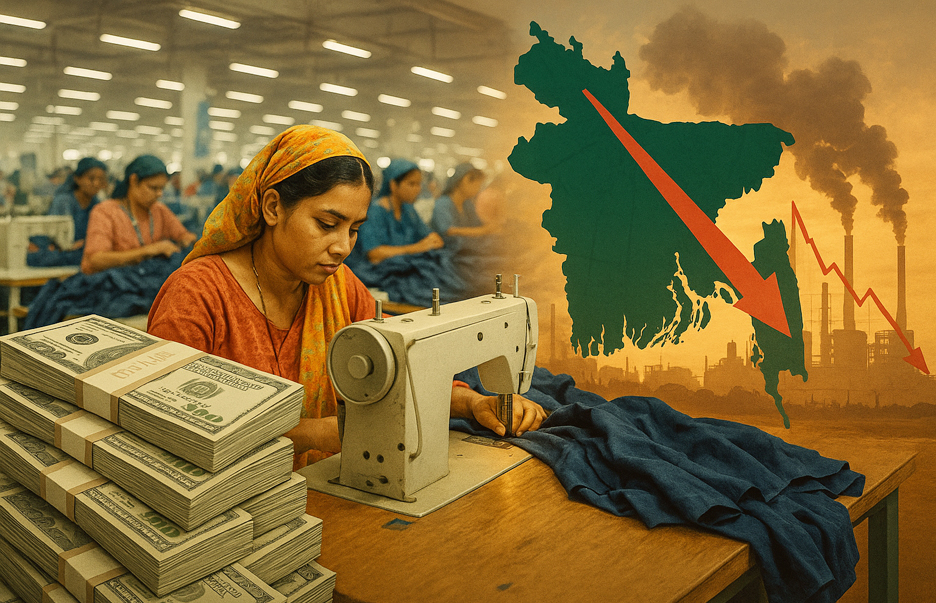
Bangladesh’s apparel industry, the second-largest in the world by exports, is at a critical turning point in its quest to cut greenhouse gas emissions by half by 2030.
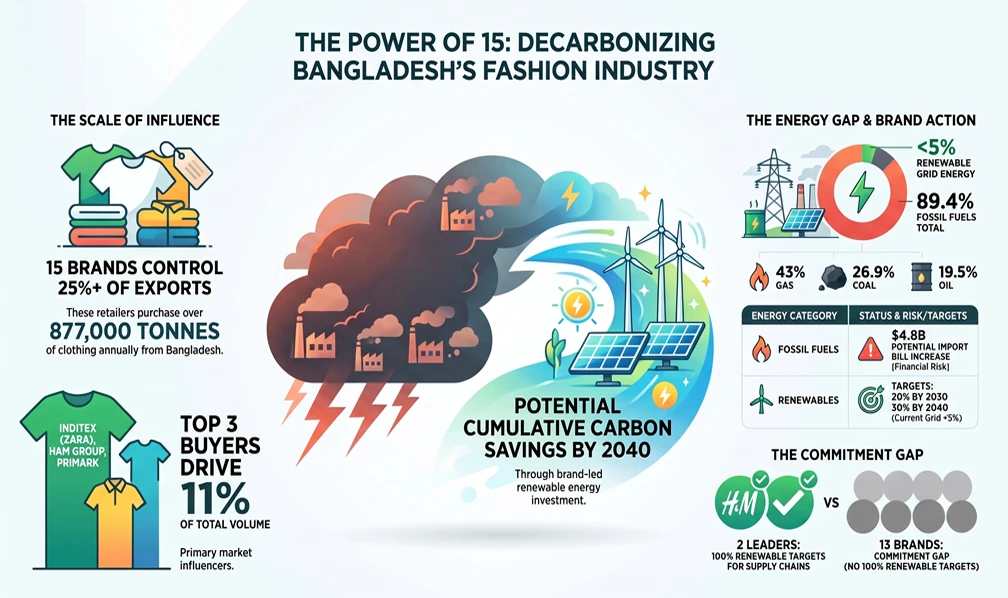
A new report warned that this ambition was being undermined by a staggering $4.8 billion financing gap and a lack of meaningful support from global fashion brands.
Without stronger collaboration and immediate financial mobilisation, the industry’s climate targets and future competitiveness might have been in jeopardy, it said.
The report, titled ‘Landscape and Opportunities to Finance the Decarbonization of Bangladesh’s Apparel Manufacturing Sector,’ estimated that the sector required $6.6 billion to implement energy efficiency and renewable energy upgrades across 1,750 high-emitting factories.
These interventions, which included retrofitting machinery, installing solar power systems and improving process efficiency, were deemed necessary to deliver a 50 per cent emissions cut by the end of the decade.
Yet, only $1.775 billion had been mobilised at the time, comprising $1.6 billion in confirmed funds and an additional $175 million expected from international financial institutions and local banks.
The report found that much of the shortfall was linked to the structural challenges facing small and medium-sized manufacturers, who made up the majority of Bangladesh’s textile sector.
For these businesses, securing loans remained a significant hurdle. High interest rates, stringent collateral requirements and complex application processes were deterring investment in green upgrades.

Energy audits alone cost around $10,000 per facility—double the cost in neighbouring India—due to a lack of trained energy professionals in Bangladesh.
The absence of harmonised standards on what qualified as a green investment further compounded the financing bottleneck, leaving many lenders hesitant to support even high-potential decarbonisation projects.
The Apparel Impact Institute (Aii), in collaboration with Development Finance International, Inc. (DFI), published a report on 8 May outlining how the country could close that gap and realise its decarbonisation potential through strategic finance tools.
The report also cast a critical light on the role of global fashion brands. While these companies increasingly demanded lower emissions from their suppliers—often citing regulations such as the European Union’s Carbon Border Adjustment Mechanism—they fell short of providing the financial and contractual support necessary to achieve these targets.
Many factories reported that they were expected to meet ambitious climate goals without being offered long-term contracts, volume guarantees, or co-investment arrangements.
This disconnect forced manufacturers to choose between staying compliant and staying afloat.
Industry stakeholders argued that without real financial engagement from buyers, manufacturers were left carrying the full burden of climate compliance.
Unpredictable order volumes and razor-thin profit margins further undermined the business case for long-term sustainability investments.
In many cases, the fear of failing to repay loans if contracts were cancelled became a greater deterrent than environmental concerns.
The risks were not just financial—they were systemic. The report pointed out that load-shedding and unreliable grid infrastructure threatened the viability of renewable energy investments.
Moreover, restrictive policies such as the 70 per cent cap on net metering, high import duties on solar components, and the exclusion of Export Processing Zones from key renewable energy incentives stalled progress.
There was also no legal framework to support corporate power purchase agreements, making it difficult for manufacturers to secure long-term, off-site renewable energy contracts.
To address these issues, the report outlined a series of recommendations. It called on fashion brands to shift from rhetoric to responsibility by offering co-financing, longer-term sourcing agreements and risk-sharing mechanisms.

Financial institutions were urged to simplify green loan processes, offer guarantees and standardise green investment classifications to reduce uncertainty for both borrowers and lenders.
The government, too, was urged to play a pivotal role by reforming tariffs on imported renewable energy equipment, expanding eligibility for net metering and fast-tracking regulatory support for energy purchase agreements.
The report underscored the need for collective action. Decarbonising Bangladesh’s apparel industry would not be achieved in isolation. It required alignment and cooperation between manufacturers, brands, financiers, and policymakers.
As the global fashion industry moved toward stricter sustainability benchmarks, countries that could not keep pace risked being locked out of premium markets.
‘This is not just about emissions—it is about the future of Bangladesh’s most critical industry,’ the report concluded.
Shams Mahmud, managing director of Shasha Denims Ltd, said that the industry has already invested in emissions reduction measures in response to EU regulations. However, small and medium enterprises (SMEs) struggle to access available funds due to limited capacity, lengthy documentation processes, and high interest rates comparable to commercial loans.
He criticised the green transition fund as not being industry-friendly and highlighted challenges in measuring decarbonisation progress and a shortage of skilled manpower in relevant government agencies.
To reduce emissions, his factory has implemented energy-efficient technologies, decreased water and chemical usage, and adopted a trigeneration power system, improving efficiency from 60 per cent two years ago to 85 per cent today.