10:30 pm, Sunday, 19 April 2026

RMG exports may hit $94b by 2029 on MMF, market expansion

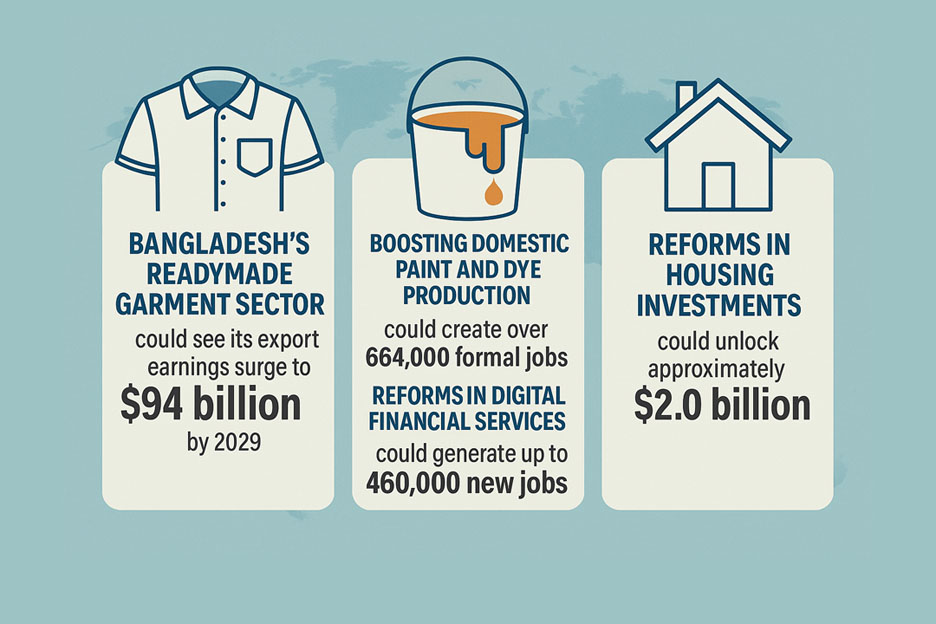
Bangladesh’s readymade garment (RMG) sector could see its export earnings surge to $94 billion by 2029, driven by expansion into non-traditional markets and greater adoption of manmade fibres (MMF), according to a new report.

The report also projects that boosting domestic paint and dye production could create over 664,000 formal jobs, while reforms in digital financial services could generate up to 460,000 new jobs through the formalisation of informal employment.

Reforms addressing regulatory, supply-side, and demand-side constraints that currently hinder private investment in housing could unlock investment opportunities worth approximately $2.0 billion in the construction and allied industries.

These findings were presented on Tuesday during a dissemination event for the report titled ‘Bangladesh: Country Private Sector Diagnostic (CPSD)’, jointly prepared by the World Bank, IFC and MIGA, and held at a hotel in the capital.

Suhail Kassim, Senior Operations Officer at the World Bank, shared the sectoral analysis virtually during the event.

Other speakers included Martin Holtmann, IFC Country Manager; Jean Pesme, the World Bank’s new Country Director for Bangladesh and Bhutan; Hosna Ferdous Sumi, Senior Private Sector Specialist; Miah Rahmat Ali, IFC Operations Officer; and Noor Ahmed Naveed, Operations Analyst, among others.

The CPSD provides a comprehensive analysis identifying four priority sectors with high growth potential where private investment can significantly drive economic growth and development.

These are: greening the RMG sector, housing for the middle-income segment, paint and textile dye production, and digital financial services.

The report also includes an overview of the broader country context, including trends in foreign direct investment (FDI), the business environment, cross-cutting constraints to private investment, and the strength of institutional frameworks supporting private sector development.

Electricity was identified as the most significant obstacle in the business environment, followed by limited access to finance, corruption, the informal sector, and high tax rates.

Speaking at the event, Mr Kassim noted that high duties on non-cotton materials or MMF, absence of regulations on fabric waste and groundwater use, and low levels of technological sophistication and investment are major barriers to greening the RMG sector.

He recommended adopting measures to improve market access, including aligning labour laws to retain EU market access post-LDC graduation, complying with the EU’s Ecodesign for Sustainable Products Regulation, and adhering to other environmental standards.

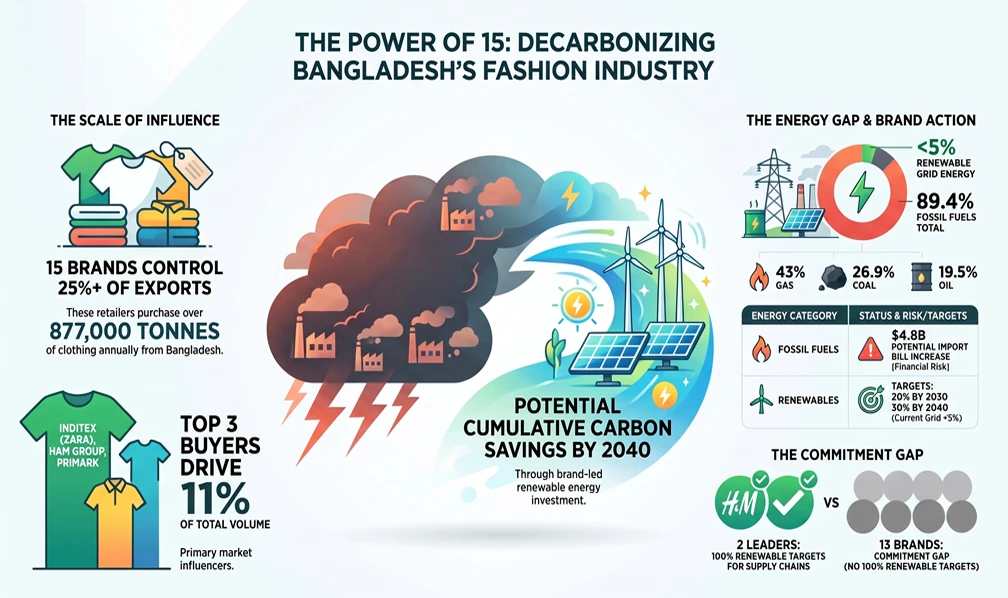
Other suggestions included removing market distortions—such as eliminating cash incentives for polyethylene terephthalate (PET) bottle and flake exports—equalising import duties on solar inverters and solar panels in a fiscally neutral manner, and introducing water efficiency certification for RMG firms to promote sustainable production practices.

Regarding the paint and dye sector, the report highlighted inconsistent customs classifications on imported inputs and the capital burden of inventory costs as key constraints.

To address these, it recommended digitising customs processes for faster clearance, revising the bonded warehouse policy to permit third-party management of bonded facilities, and streamlining trade logistics.

For the housing sector, the report pointed to high development costs, and cumbersome procedures for land registration, clearance, and sales. It called for expanding access to land and municipal services, improving housing finance, and reducing construction costs by digitalising land-related processes.

Recommendations for digital financial services (DFS) included facilitating mobile financial services for wholesale transactions by establishing appropriate protocols, and removing tax barriers to enable asset transfers from originators to structured finance vehicles.
RMG exports may hit $94b by 2029 on MMF, market expansion

Update Time : 12:36:07 am, Wednesday, 2 July 2025

Bangladesh’s readymade garment (RMG) sector could see its export earnings surge to $94 billion by 2029, driven by expansion into non-traditional markets and greater adoption of manmade fibres (MMF), according to a new report.

The report also projects that boosting domestic paint and dye production could create over 664,000 formal jobs, while reforms in digital financial services could generate up to 460,000 new jobs through the formalisation of informal employment.

Reforms addressing regulatory, supply-side, and demand-side constraints that currently hinder private investment in housing could unlock investment opportunities worth approximately $2.0 billion in the construction and allied industries.

These findings were presented on Tuesday during a dissemination event for the report titled ‘Bangladesh: Country Private Sector Diagnostic (CPSD)’, jointly prepared by the World Bank, IFC and MIGA, and held at a hotel in the capital.

Suhail Kassim, Senior Operations Officer at the World Bank, shared the sectoral analysis virtually during the event.

Other speakers included Martin Holtmann, IFC Country Manager; Jean Pesme, the World Bank’s new Country Director for Bangladesh and Bhutan; Hosna Ferdous Sumi, Senior Private Sector Specialist; Miah Rahmat Ali, IFC Operations Officer; and Noor Ahmed Naveed, Operations Analyst, among others.

The CPSD provides a comprehensive analysis identifying four priority sectors with high growth potential where private investment can significantly drive economic growth and development.

These are: greening the RMG sector, housing for the middle-income segment, paint and textile dye production, and digital financial services.

The report also includes an overview of the broader country context, including trends in foreign direct investment (FDI), the business environment, cross-cutting constraints to private investment, and the strength of institutional frameworks supporting private sector development.

Electricity was identified as the most significant obstacle in the business environment, followed by limited access to finance, corruption, the informal sector, and high tax rates.

Speaking at the event, Mr Kassim noted that high duties on non-cotton materials or MMF, absence of regulations on fabric waste and groundwater use, and low levels of technological sophistication and investment are major barriers to greening the RMG sector.

He recommended adopting measures to improve market access, including aligning labour laws to retain EU market access post-LDC graduation, complying with the EU’s Ecodesign for Sustainable Products Regulation, and adhering to other environmental standards.

Other suggestions included removing market distortions—such as eliminating cash incentives for polyethylene terephthalate (PET) bottle and flake exports—equalising import duties on solar inverters and solar panels in a fiscally neutral manner, and introducing water efficiency certification for RMG firms to promote sustainable production practices.

Regarding the paint and dye sector, the report highlighted inconsistent customs classifications on imported inputs and the capital burden of inventory costs as key constraints.

To address these, it recommended digitising customs processes for faster clearance, revising the bonded warehouse policy to permit third-party management of bonded facilities, and streamlining trade logistics.

For the housing sector, the report pointed to high development costs, and cumbersome procedures for land registration, clearance, and sales. It called for expanding access to land and municipal services, improving housing finance, and reducing construction costs by digitalising land-related processes.

Recommendations for digital financial services (DFS) included facilitating mobile financial services for wholesale transactions by establishing appropriate protocols, and removing tax barriers to enable asset transfers from originators to structured finance vehicles.