9:57 am, Friday, 23 October 2026

Narrowing tariff gap draws US buyers back to China

Fuel crisis linked to Strait of Hormuz initially disrupts Southeast Asian production, while nearshoring remains limited

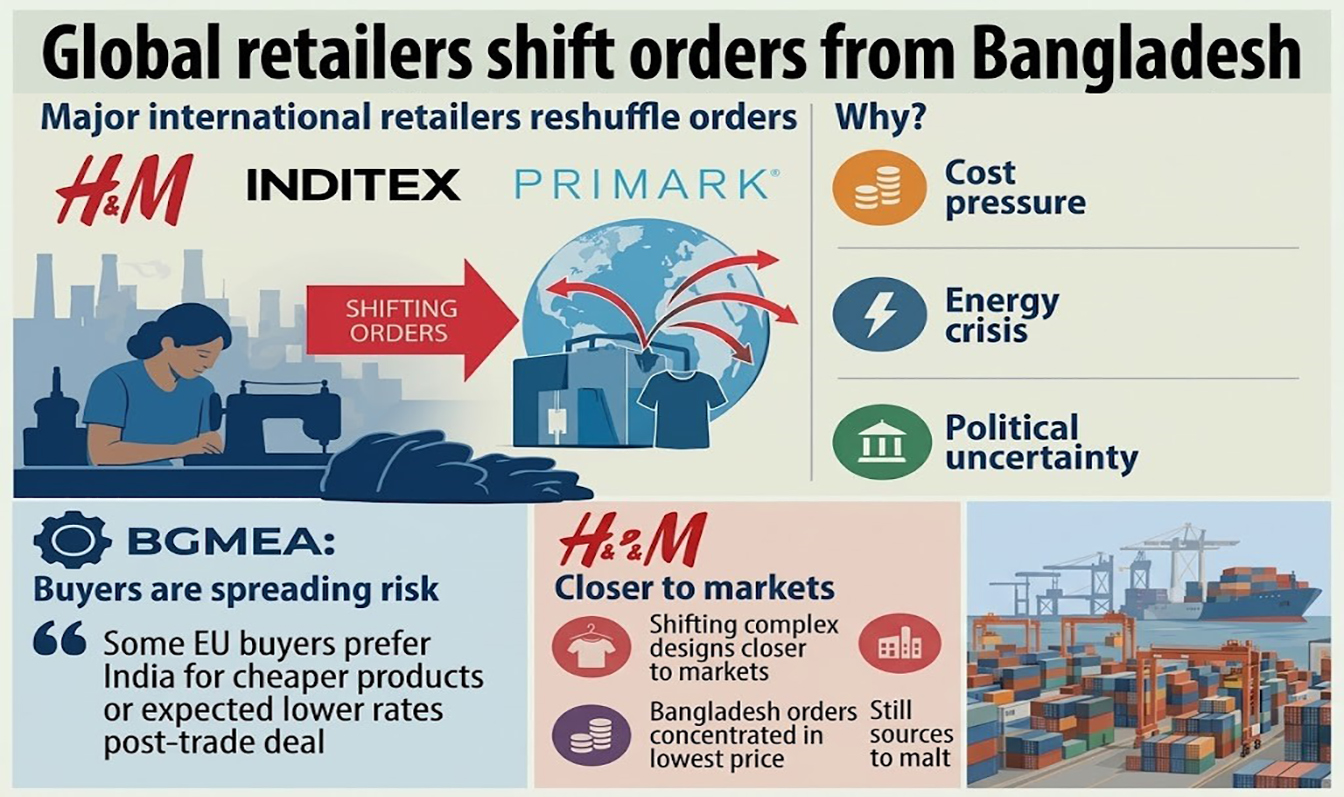
US buyers are shifting part of their sourcing back to China as the narrowing tariff gap between China and Southeast Asian manufacturing hubs reduces the cost advantage of alternative production destinations, according to a report by quality-control and supply chain audit firm QIMA.

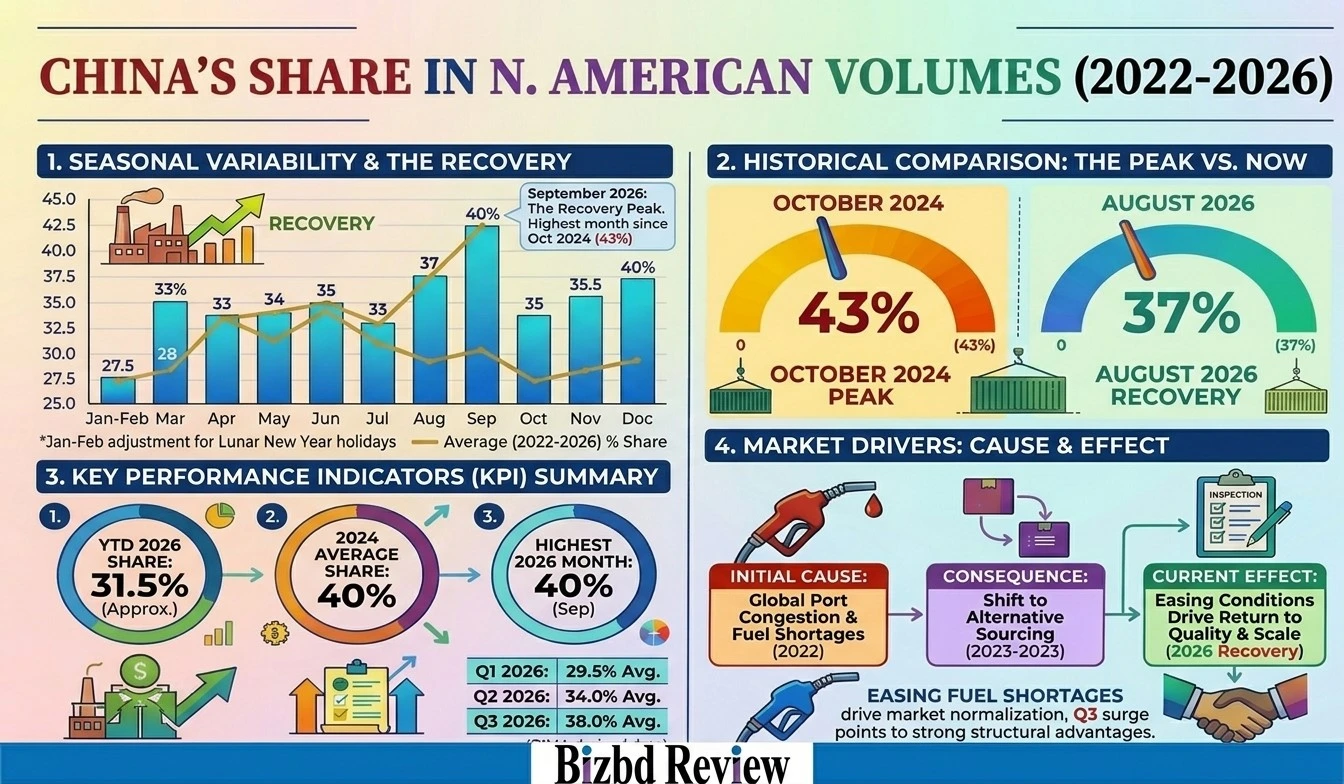
The shift followed a fuel crisis linked to the Strait of Hormuz that disrupted production in parts of Southeast Asia in the second quarter of 2026, prompting Western buyers to divert orders to China.

Although fuel shortages began to ease in the third quarter, North American buyers continued to move towards China as tariff differences and manufacturing capabilities increasingly influenced sourcing decisions.

Although the report did not mention Bangladesh by name, its findings indicate important implications for the country’s apparel industry.

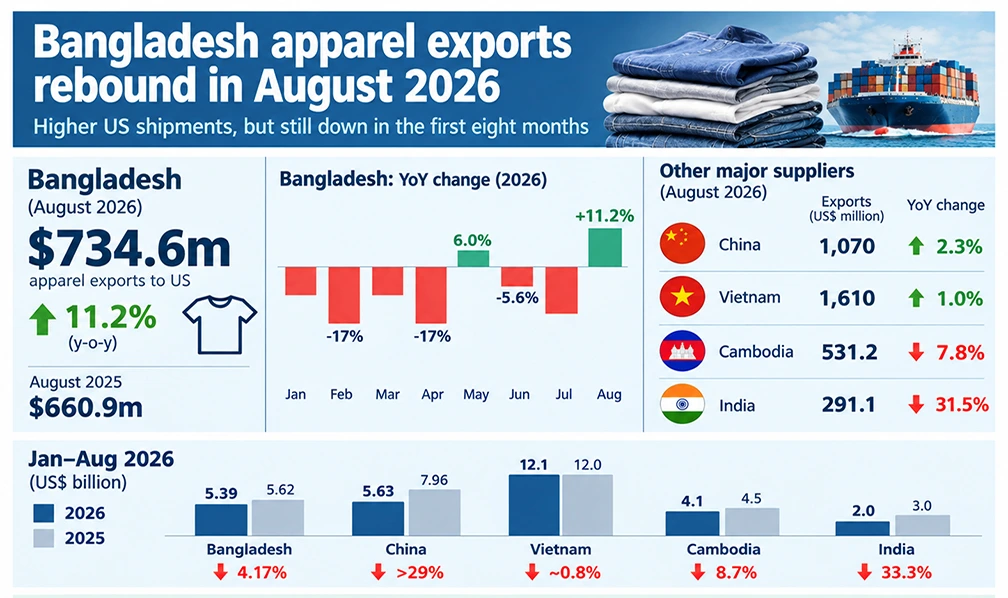
Bangladesh faces a 10 per cent additional US tariff under a forced-labour-related trade measure, compared with 12.5 per cent for China and Vietnam.

However, buyers’ continued return to China suggests that tariff advantages alone may not be enough to attract orders, as production capacity, reliable energy supplies, factory infrastructure and delivery performance also influence sourcing decisions.

Meanwhile, the limited expansion of nearshoring suggests that buyers have not substantially shifted away from established global manufacturing networks, underscoring the importance for Bangladesh of strengthening its competitiveness beyond pricing advantages.

QIMA’s fourth-quarter 2026 barometer, published on October 20, found that China’s share of North American inspection and audit volumes reached 40 per cent in September, the highest monthly level since October 2024. China’s share increased in five of the six months from April to September.

The report is based on QIMA’s product inspections and supplier audits rather than national customs or export statistics. Its findings indicate changes in sourcing behaviour but do not directly measure Bangladesh’s apparel exports or its share of the US market.

Narrowing tariff gap favours China

China’s inspection volumes under QIMA’s North American business increased 51 per cent year on year in the third quarter of 2026. The growth partly reflected a weak comparison base, following a sharp decline in sourcing from China during the US tariff escalation in 2025.

Compared with the third quarter of 2024, inspection volumes increased by 15 per cent. Across the first nine months of 2026, however, volumes remained unchanged from the same period in 2024.

QIMA projected that China’s share of North American inspection and audit volumes would reach 34–36 per cent for the full year, up from 31 per cent in 2025. The projected share would remain below the average recorded between 2019 and 2024.

The report attributed the earlier decline to US tariff increases that encouraged buyers to shift orders towards Southeast Asia. The subsequent recovery suggests that some of those decisions were driven by immediate cost considerations rather than a permanent restructuring of supply chains.

The tariff gap narrowed further after the United States imposed additional tariffs under a Section 301 measure related to forced labour on Cambodia, Indonesia, Malaysia, the Philippines, Singapore, Thailand and Vietnam.

As the relative tariff advantage of several Southeast Asian destinations diminished, China’s established factory infrastructure, skilled workforce and reliable energy supply became more important in buyers’ sourcing calculations.

QIMA noted that inspections generally take place after orders are placed. September’s figures therefore reflected sourcing decisions made during July and August, when production capacity in Southeast Asia was already recovering. This suggests that buyers continued choosing China even after the immediate production disruptions began to ease.

Strait of Hormuz crisis disrupts production

The sourcing shift initially gathered pace during the second quarter, when a fuel crisis linked to the Strait of Hormuz disrupted manufacturing in parts of Southeast Asia.

According to QIMA, Western buyers redirected orders to China as factories in the region faced fuel shortages and production constraints. China’s manufacturing capacity and comparatively reliable energy supplies helped it accommodate orders when alternative production centres struggled to maintain output.

QIMA chief executive Sébastien Breteau identified fuel shortages across Southeast Asia as a likely driver of the shift, according to the report’s account of his comments to The New York Times.

At that stage, buyers’ decisions were primarily driven by production capacity and the need to meet delivery schedules. The persistence of the shift after fuel shortages began to ease, however, pointed to the growing importance of relative tariffs and other commercial considerations.

European buyers’ sourcing mix stabilised in the third quarter, while North American buyers continued moving towards China. QIMA interpreted the difference as an indication that sourcing decisions were increasingly shaped by changing cost calculations rather than the initial energy disruption alone.

The episode demonstrates how energy shortages in one manufacturing region can redirect international orders towards competing suppliers. It also shows how quickly those changes can occur when buyers prioritise production continuity, although the resulting sourcing gains may not last once operating conditions and relative costs change.

Nearshoring makes little progress

Despite growing concerns about supply chain risks, nearshoring and reshoring remained limited among North American buyers in the third quarter of 2026.

The two strategies together accounted for just 6 per cent of North American buyers’ service volumes, unchanged from the first half of the year.

Within North American home-region sourcing, reshoring accounted for 37 per cent, while nearshoring represented the remaining 63 per cent. Reshoring’s share was roughly double its 2022 level, but the overall contribution of both strategies remained small.

Policy uncertainty was one factor limiting domestic sourcing in the United States. A Reshoring Initiative survey cited by QIMA found that 57 per cent of US respondents identified policy uncertainty as a dominant concern.

The European Union also recorded little overall change, with nearshoring and reshoring together accounting for 12 per cent of buyers’ volumes in the third quarter.

However, sourcing activity shifted towards the Mediterranean. Inspection demand in Mediterranean markets outside Turkey increased 10 per cent year on year. Egypt recorded 11 per cent growth, Morocco 12 per cent and Tunisia 20 per cent.

The three North African countries accounted for more than half of EU nearshoring activity. QIMA described them as lower-cost textile manufacturing alternatives to Turkey, supported by sustained foreign investment.

The findings indicate that buyers are pursuing proximity selectively rather than replacing global sourcing on a broad scale. For Bangladesh, this suggests that distant manufacturing destinations can remain relevant, provided they offer competitive prices, reliable production and consistent delivery. However, the growth of North African suppliers also highlights the need to monitor emerging competition in the European market.

Bangladesh’s tariff advantage is not enough

Bangladesh’s 10 per cent additional US tariff rate compares favourably with the 12.5 per cent rate applicable to China and Vietnam under the measure described in the accompanying material.

The additional duty applies on top of normal most-favoured-nation tariffs, although the final rate varies by product classification and applicable exemptions. A trade-industry estimate puts the combined US tariff burden on Bangladeshi apparel at about 26.5 per cent, based on an average MFN duty of 16.5 per cent and the additional 10 per cent tariff. This is an estimate rather than a uniform rate for all products.

The tariff difference offers Bangladesh a potential advantage, but QIMA’s findings show that buyers consider a broader range of factors when selecting suppliers. China’s recovery indicates that established manufacturing infrastructure and production reliability can offset some of the additional tariff cost.

The report does not establish whether Bangladesh gained or lost orders during the period. Its findings nevertheless suggest that exporters need to combine any tariff advantage with improvements in productivity, energy reliability, quality, compliance and shipment performance.

Global sourcing remains fluid

QIMA also found that buyers in South and Latin America were moving some sourcing towards Southeast Asia, in contrast to the shift towards China among North American buyers.

China accounted for 79 per cent of South and Latin American service volumes in the third quarter, down from 81 per cent. Mexico’s demand for Southeast Asian inspections and audits increased 102 per cent year on year, while Vietnam recorded 99 per cent growth.

South and Latin America accounted for 14 per cent of Southeast Asia’s buyer-region volumes, up from 7.5 per cent a year earlier.

The report’s findings suggest that global sourcing is changing unevenly across regions, with tariff differences, energy disruptions and manufacturing capabilities influencing buyers’ decisions. The fourth-quarter data should indicate whether the return towards China continues or proves to be a temporary adjustment.

For Bangladesh, the central challenge is to remain competitive as buyers reassess their sourcing strategies. A favourable tariff differential may help attract orders, but retaining them will depend on the country’s ability to deliver reliably, control costs and meet international buyers’ requirements.

Narrowing tariff gap draws US buyers back to China

Update Time : 08:15:34 am, Friday, 23 October 2026

Fuel crisis linked to Strait of Hormuz initially disrupts Southeast Asian production, while nearshoring remains limited

US buyers are shifting part of their sourcing back to China as the narrowing tariff gap between China and Southeast Asian manufacturing hubs reduces the cost advantage of alternative production destinations, according to a report by quality-control and supply chain audit firm QIMA.

The shift followed a fuel crisis linked to the Strait of Hormuz that disrupted production in parts of Southeast Asia in the second quarter of 2026, prompting Western buyers to divert orders to China.

Although fuel shortages began to ease in the third quarter, North American buyers continued to move towards China as tariff differences and manufacturing capabilities increasingly influenced sourcing decisions.

Although the report did not mention Bangladesh by name, its findings indicate important implications for the country’s apparel industry.

Bangladesh faces a 10 per cent additional US tariff under a forced-labour-related trade measure, compared with 12.5 per cent for China and Vietnam.

However, buyers’ continued return to China suggests that tariff advantages alone may not be enough to attract orders, as production capacity, reliable energy supplies, factory infrastructure and delivery performance also influence sourcing decisions.

Meanwhile, the limited expansion of nearshoring suggests that buyers have not substantially shifted away from established global manufacturing networks, underscoring the importance for Bangladesh of strengthening its competitiveness beyond pricing advantages.

QIMA’s fourth-quarter 2026 barometer, published on October 20, found that China’s share of North American inspection and audit volumes reached 40 per cent in September, the highest monthly level since October 2024. China’s share increased in five of the six months from April to September.

The report is based on QIMA’s product inspections and supplier audits rather than national customs or export statistics. Its findings indicate changes in sourcing behaviour but do not directly measure Bangladesh’s apparel exports or its share of the US market.

Narrowing tariff gap favours China

China’s inspection volumes under QIMA’s North American business increased 51 per cent year on year in the third quarter of 2026. The growth partly reflected a weak comparison base, following a sharp decline in sourcing from China during the US tariff escalation in 2025.

Compared with the third quarter of 2024, inspection volumes increased by 15 per cent. Across the first nine months of 2026, however, volumes remained unchanged from the same period in 2024.

QIMA projected that China’s share of North American inspection and audit volumes would reach 34–36 per cent for the full year, up from 31 per cent in 2025. The projected share would remain below the average recorded between 2019 and 2024.

The report attributed the earlier decline to US tariff increases that encouraged buyers to shift orders towards Southeast Asia. The subsequent recovery suggests that some of those decisions were driven by immediate cost considerations rather than a permanent restructuring of supply chains.

The tariff gap narrowed further after the United States imposed additional tariffs under a Section 301 measure related to forced labour on Cambodia, Indonesia, Malaysia, the Philippines, Singapore, Thailand and Vietnam.

As the relative tariff advantage of several Southeast Asian destinations diminished, China’s established factory infrastructure, skilled workforce and reliable energy supply became more important in buyers’ sourcing calculations.

QIMA noted that inspections generally take place after orders are placed. September’s figures therefore reflected sourcing decisions made during July and August, when production capacity in Southeast Asia was already recovering. This suggests that buyers continued choosing China even after the immediate production disruptions began to ease.

Strait of Hormuz crisis disrupts production

The sourcing shift initially gathered pace during the second quarter, when a fuel crisis linked to the Strait of Hormuz disrupted manufacturing in parts of Southeast Asia.

According to QIMA, Western buyers redirected orders to China as factories in the region faced fuel shortages and production constraints. China’s manufacturing capacity and comparatively reliable energy supplies helped it accommodate orders when alternative production centres struggled to maintain output.

QIMA chief executive Sébastien Breteau identified fuel shortages across Southeast Asia as a likely driver of the shift, according to the report’s account of his comments to The New York Times.

At that stage, buyers’ decisions were primarily driven by production capacity and the need to meet delivery schedules. The persistence of the shift after fuel shortages began to ease, however, pointed to the growing importance of relative tariffs and other commercial considerations.

European buyers’ sourcing mix stabilised in the third quarter, while North American buyers continued moving towards China. QIMA interpreted the difference as an indication that sourcing decisions were increasingly shaped by changing cost calculations rather than the initial energy disruption alone.

The episode demonstrates how energy shortages in one manufacturing region can redirect international orders towards competing suppliers. It also shows how quickly those changes can occur when buyers prioritise production continuity, although the resulting sourcing gains may not last once operating conditions and relative costs change.

Nearshoring makes little progress

Despite growing concerns about supply chain risks, nearshoring and reshoring remained limited among North American buyers in the third quarter of 2026.

The two strategies together accounted for just 6 per cent of North American buyers’ service volumes, unchanged from the first half of the year.

Within North American home-region sourcing, reshoring accounted for 37 per cent, while nearshoring represented the remaining 63 per cent. Reshoring’s share was roughly double its 2022 level, but the overall contribution of both strategies remained small.

Policy uncertainty was one factor limiting domestic sourcing in the United States. A Reshoring Initiative survey cited by QIMA found that 57 per cent of US respondents identified policy uncertainty as a dominant concern.

The European Union also recorded little overall change, with nearshoring and reshoring together accounting for 12 per cent of buyers’ volumes in the third quarter.

However, sourcing activity shifted towards the Mediterranean. Inspection demand in Mediterranean markets outside Turkey increased 10 per cent year on year. Egypt recorded 11 per cent growth, Morocco 12 per cent and Tunisia 20 per cent.

The three North African countries accounted for more than half of EU nearshoring activity. QIMA described them as lower-cost textile manufacturing alternatives to Turkey, supported by sustained foreign investment.

The findings indicate that buyers are pursuing proximity selectively rather than replacing global sourcing on a broad scale. For Bangladesh, this suggests that distant manufacturing destinations can remain relevant, provided they offer competitive prices, reliable production and consistent delivery. However, the growth of North African suppliers also highlights the need to monitor emerging competition in the European market.

Bangladesh’s tariff advantage is not enough

Bangladesh’s 10 per cent additional US tariff rate compares favourably with the 12.5 per cent rate applicable to China and Vietnam under the measure described in the accompanying material.

The additional duty applies on top of normal most-favoured-nation tariffs, although the final rate varies by product classification and applicable exemptions. A trade-industry estimate puts the combined US tariff burden on Bangladeshi apparel at about 26.5 per cent, based on an average MFN duty of 16.5 per cent and the additional 10 per cent tariff. This is an estimate rather than a uniform rate for all products.

The tariff difference offers Bangladesh a potential advantage, but QIMA’s findings show that buyers consider a broader range of factors when selecting suppliers. China’s recovery indicates that established manufacturing infrastructure and production reliability can offset some of the additional tariff cost.

The report does not establish whether Bangladesh gained or lost orders during the period. Its findings nevertheless suggest that exporters need to combine any tariff advantage with improvements in productivity, energy reliability, quality, compliance and shipment performance.

Global sourcing remains fluid

QIMA also found that buyers in South and Latin America were moving some sourcing towards Southeast Asia, in contrast to the shift towards China among North American buyers.

China accounted for 79 per cent of South and Latin American service volumes in the third quarter, down from 81 per cent. Mexico’s demand for Southeast Asian inspections and audits increased 102 per cent year on year, while Vietnam recorded 99 per cent growth.

South and Latin America accounted for 14 per cent of Southeast Asia’s buyer-region volumes, up from 7.5 per cent a year earlier.

The report’s findings suggest that global sourcing is changing unevenly across regions, with tariff differences, energy disruptions and manufacturing capabilities influencing buyers’ decisions. The fourth-quarter data should indicate whether the return towards China continues or proves to be a temporary adjustment.

For Bangladesh, the central challenge is to remain competitive as buyers reassess their sourcing strategies. A favourable tariff differential may help attract orders, but retaining them will depend on the country’s ability to deliver reliably, control costs and meet international buyers’ requirements.