Bizbd Report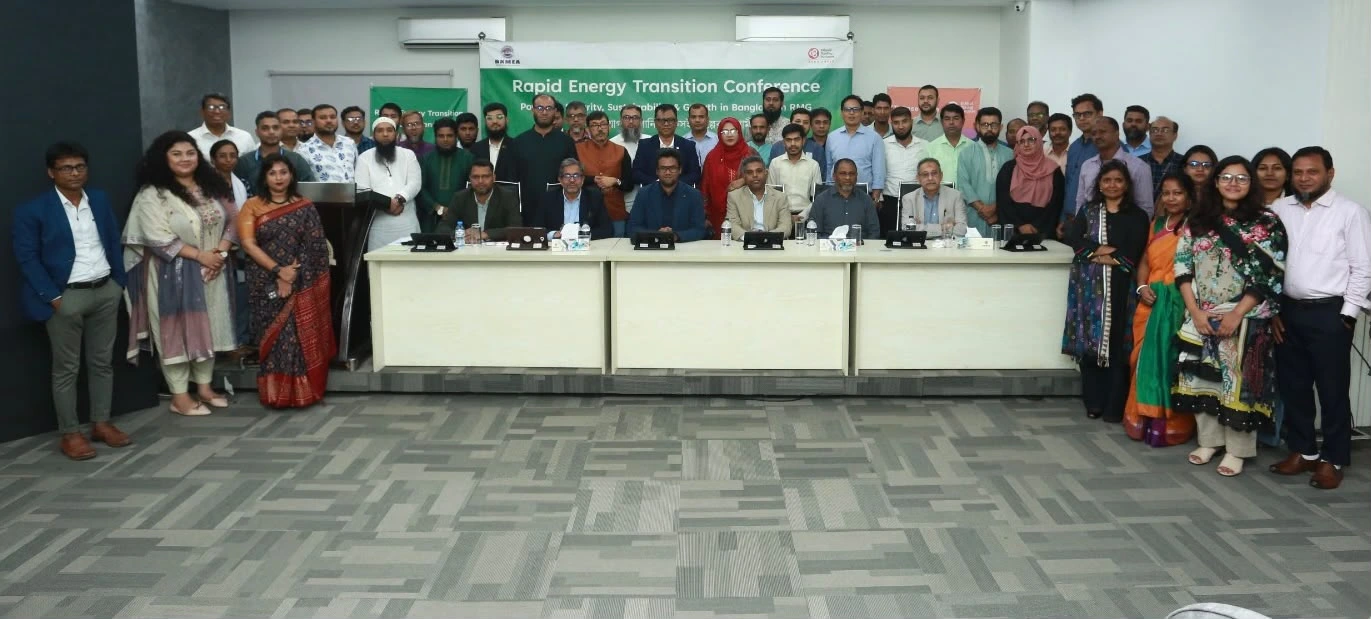
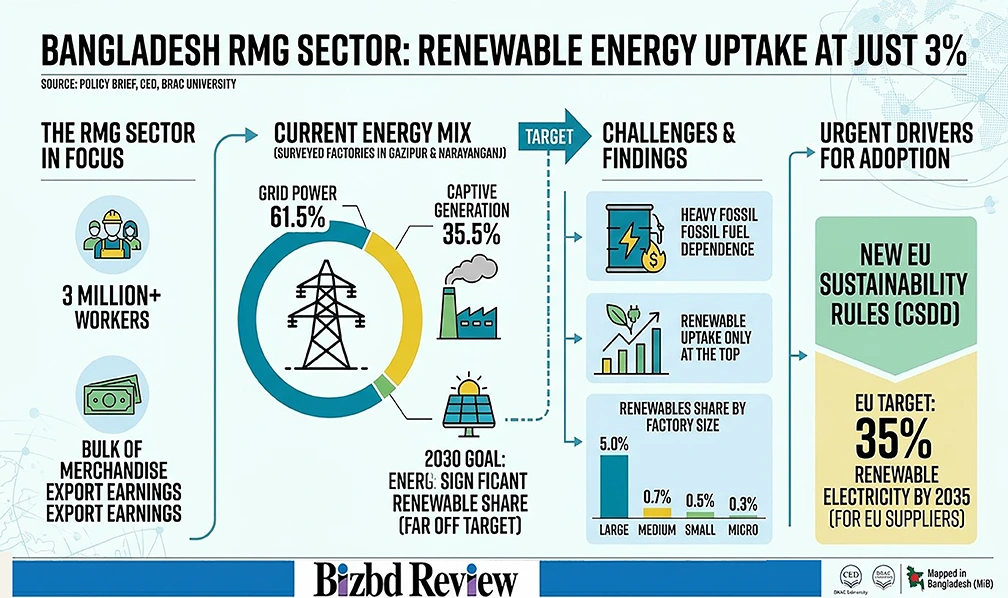
Bangladesh’s garment and textile industry must accelerate the adoption of renewable energy and decarbonisation to protect export markets and strengthen its long-term competitiveness, industry leaders said on Wednesday.
They made the call at the ‘Rapid Energy Transition Conference: Powering Security, Sustainability & Growth in Bangladesh RMG’, jointly organised by the Bangladesh Knitwear Manufacturers and Exporters Association (BKMEA) and Ethical Trading Initiative (ETI) Bangladesh.
BKMEA president Mohammad Hatem urged manufacturers to make carbon reduction an integral part of factory planning and take advantage of emerging policy and financing opportunities to expand the use of renewable energy.
He highlighted the potential for rooftop solar installations at factories, financing initiatives offered by Bangladesh Bank and commercial banks, and BKMEA’s efforts to simplify VAT and tax arrangements for solar projects.
Hatem also stressed the need for stronger preparations for Bangladesh’s graduation from the least developed country (LDC) category and evolving sustainability requirements in the European Union market.
BKMEA director Imran Kader Turjo warned that failure to respond to changing market expectations could put long-established export relationships at risk.
He said early progress in decarbonisation and renewable energy could also give Bangladesh an advantage over competing sourcing destinations such as India and Pakistan.
Other BKMEA leaders called for greater energy efficiency, improved energy security and wider adoption of solar power as part of long-term business planning.
BKMEA director Minhazul Hoque said sustainability requirements were increasingly becoming matters of business competitiveness.
He also pointed to emerging requirements relating to Digital Product Passports and the Corporate Sustainability Due Diligence Directive, stressing the importance of maintaining credible environmental and carbon data.
ETI Bangladesh executive director Abil Bin Amin said reducing dependence on fossil fuels and increasing the use of renewable energy could become a business strength and a selling point for Bangladesh’s readymade garment sector.
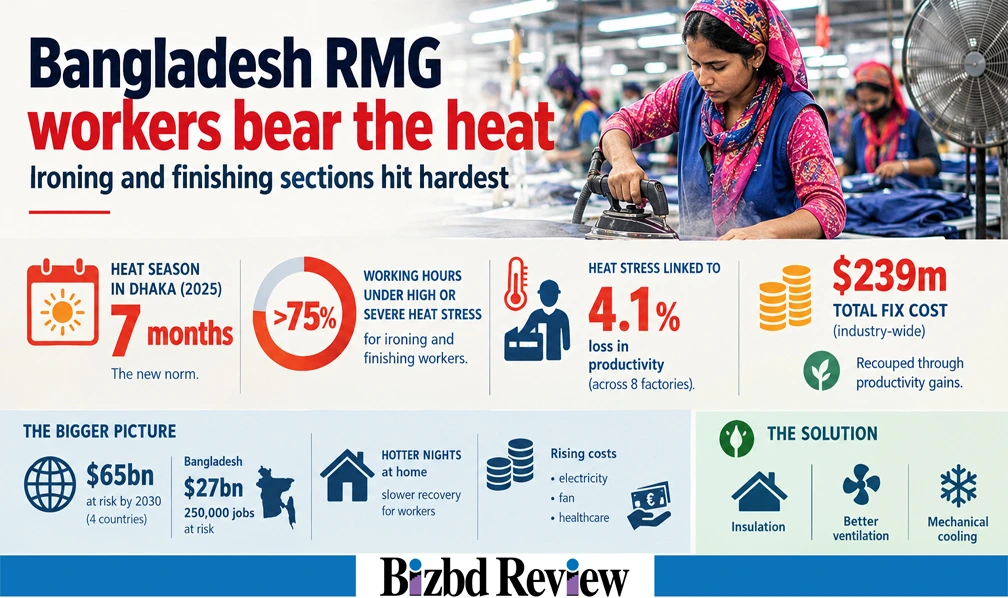
Speakers also emphasised factory-level energy efficiency through the use of efficient machinery, rooftop solar and appropriate battery storage, as well as greater worker participation in identifying and reducing energy waste.
The conference identified delays in financing and approvals, along with gaps between projected and actual solar performance, as key challenges to the energy transition.
Participants recommended faster approval of green financing, simpler net-metering procedures, stronger technical assessments and cluster-based renewable-energy solutions for small and medium-sized factories.
They also called for greater involvement of workers in energy-saving initiatives.
The conference was attended by factory representatives, BKMEA leaders, brands, banks and renewable-energy service providers, who discussed ways to accelerate the sector’s transition towards cleaner and more secure energy.