Bizbd Report
Bangladesh needs favourable trade access to the European Union, reliable energy supplies and accelerated economic reforms to realise its ambition of becoming a trillion-dollar economy, Danish Ambassador to Bangladesh Christian Brix Moller said on Monday.
He also stressed the need for product and market diversification, job creation for young people and women, stronger support for economic reforms and the development of an inclusive democracy.
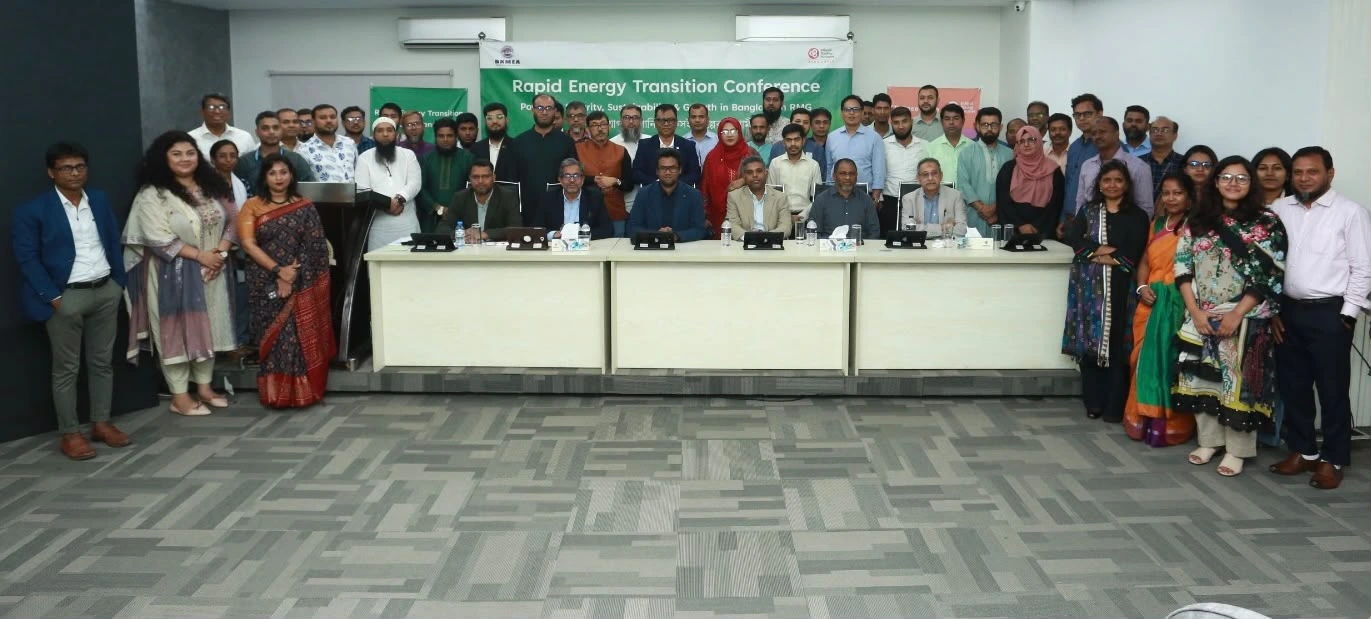
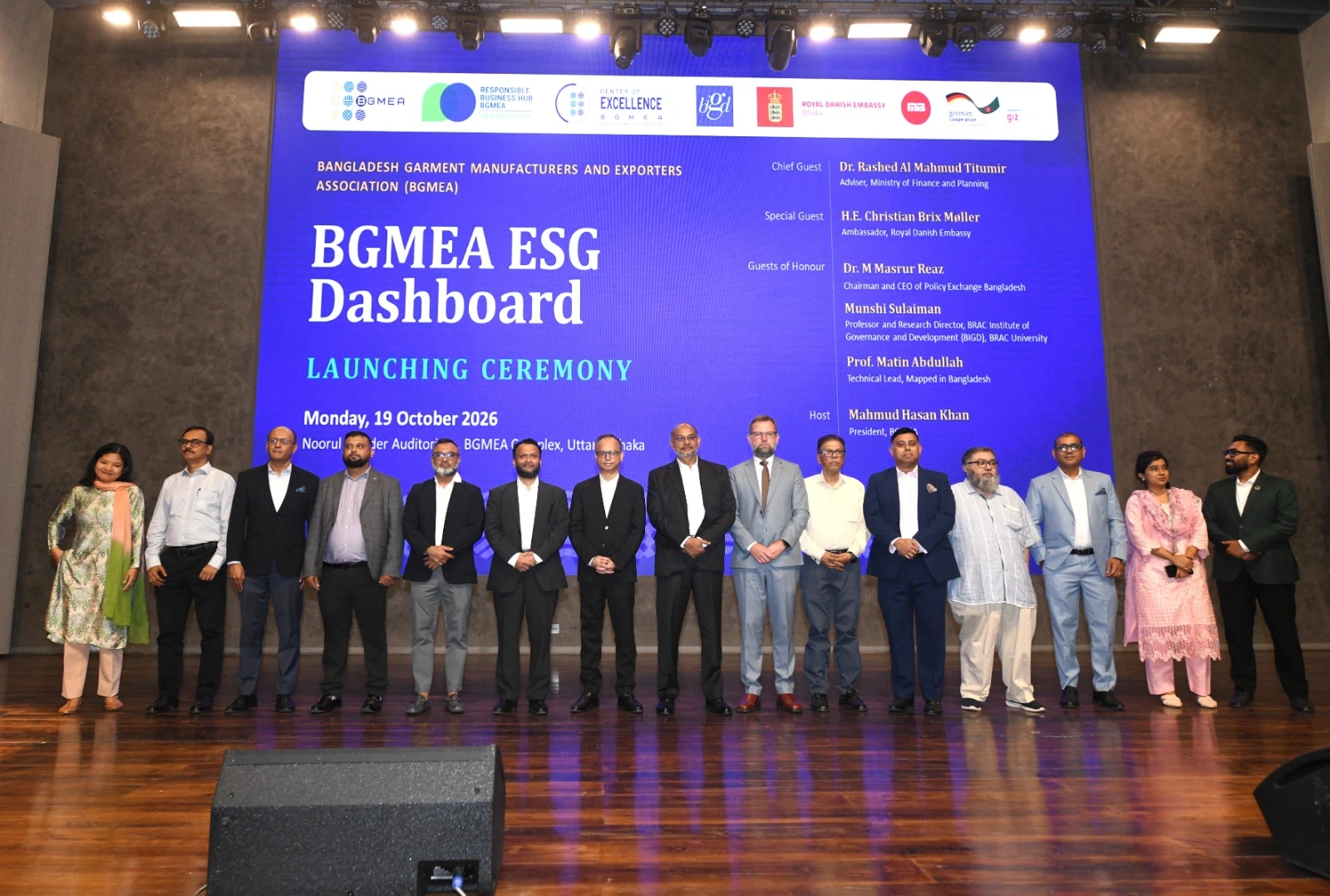
The ambassador made the remarks at the launching ceremony of the ESG Platform at the Bangladesh Garment Manufacturers and Exporters Association complex in Uttara, Dhaka.
Prime Minister’s Adviser on Finance and Planning Rashed Al Mahmud Titumir attended the event as the chief guest.
Moller said pursuing a free trade agreement with the EU should be a key priority for Bangladesh to secure favourable market access and sustain future economic growth.
He also highlighted energy security as a major concern, suggesting regional cooperation to ensure reliable supplies and facilitate the transition to renewable electricity.
Investment in renewable energy, energy storage and energy efficiency could reduce dependence on expensive imported fuels, he said, adding that solar power and cleaner electricity would help factories meet buyers’ environmental, social and governance (ESG) requirements and carbon-reduction targets while potentially lowering production costs.
On economic reforms, the ambassador called for full support for the government’s reform agenda, citing a recent International Monetary Fund assessment that projected Bangladesh’s economic growth at around 3.5 per cent in the 2027 financial year and warned that growth could fall below 3 per cent over the medium term without decisive reforms.
The projections underline the urgency of measures to restore confidence, unlock investment, including domestic investment, and put the economy on a stronger and more sustainable green-transition pathway, he said.
Moller also emphasised job creation for young people and women, arguing that a stronger wage system could prevent buyers from exploiting competition among suppliers over labour costs while boosting domestic consumption and reducing reliance on remittances.
Highlighting the political dimension of economic development, he urged Bangladesh to use the current constitutional moment to build an inclusive democracy.
Achieving a trillion-dollar economy would require reconciliation, healing and a stable, well-functioning parliamentary democracy, he said.
He expressed hope that the government would successfully implement the July Charter, with opposition parties also feeling represented in the process.
Foreign investors could be more reluctant to invest in a country facing not only low domestic investment but also a fragile political system, he cautioned.
The ambassador said the ESG dashboard being launched would help track progress on the five priorities and support partnerships for sustainable development.
Policy Exchange Bangladesh chairman Masrur Reaz delivered the keynote presentation at the event.
He said several challenges across the readymade garment sector needed to be addressed to realise the full potential of the ESG Platform.
Coverage remained limited, with only about 13 per cent, or 326, of BGMEA member factories participating in the initial phase, leaving smaller factories in need of clearer pathways to access the platform, he said.
Reaz also identified data depth and quality as major concerns, while overlapping audits by the BGMEA and the Bangladesh Knitwear Manufacturers and Exporters Association were causing considerable audit fatigue.
Factory records also lacked transparency regarding the origins of upstream supplies, including cotton, yarn and fabric, he added.
BGMEA president Mahmud Hasan Khan said the trade body would make ESG reporting mandatory for all its member factories.
The ESG Platform was jointly developed by the BGMEA, the United Nations Development Programme, GIZ, the Danish Embassy, BGID and Mapping of Industry in Bangladesh, with the aim of improving data quality, consistency and independent verification to strengthen international trust and transparency.