4:38 am, Friday, 16 October 2026

Wage board move amid spreading garment workers’ unrest

Garment workers’ protests over wages, unpaid dues and rising living costs have spread across industrial areas in and outside Dhaka, raising concerns over industrial stability as the government begins the process of reconstituting the minimum wage board.

On Thursday, the Department of Labour asked the Bangladesh Employers’ Federation to propose three nominees to represent employers on the board, according to an official letter dated October 15. The federation was asked to submit the candidates’ names, photographs, national identity cards and curricula vitae urgently.

The move follows the labour ministry’s decision on October 14 to seek nominations for the board, which will comprise an independent member, an employers’ representative and a workers’ representative.

Three candidates are to be proposed for each position for government consideration under Sections 138(2) and 138(4) of the Bangladesh Labour Act 2006, as amended in 2026.

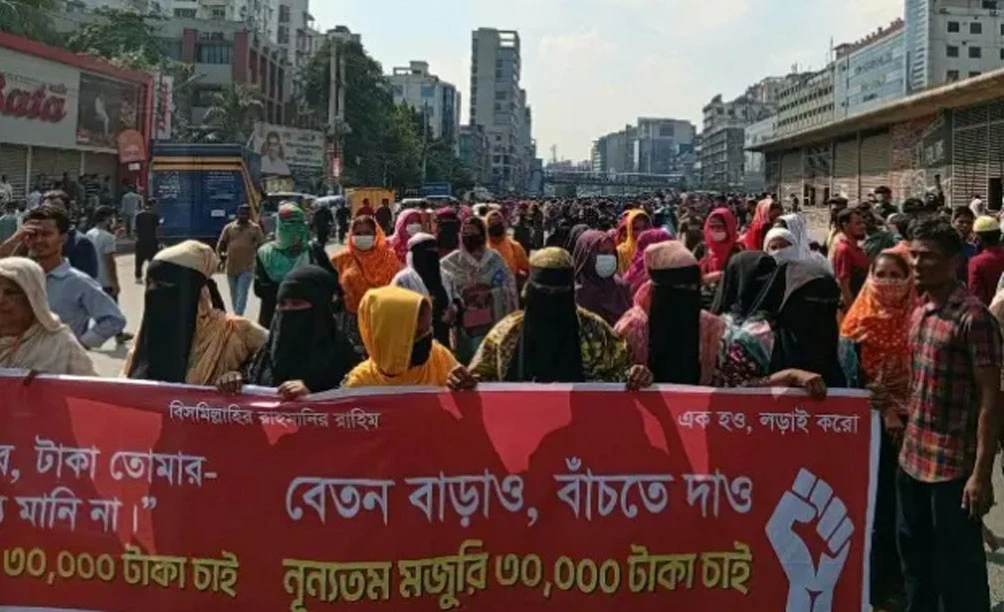
The development comes amid mounting worker discontent over wages, arrears and job insecurity. Workers blocked roads in Uttara for four consecutive days from October 12, demanding a minimum monthly wage of Tk 30,000, higher allowances and payment of outstanding dues.

In Gazipur’s Sreepur, more than 1,000 workers of C-Stage (BD) Ltd blocked a highway over unpaid September wages after finding that a general holiday had been declared at the factory.

Police used batons and sound grenades to disperse workers blocking the Dhaka-Mymensingh highway in Uttara on Thursday.

Samajtantrik Sramik Front president Razekuzzaman Ratan said the protests reflected several grievances, including factory closures without payment of outstanding dues and expectations of wage revision under labour law.

‘It must be made absolutely clear that workers’ concerns have to be heard. It is because their voices go unheard that distrust, a lack of confidence and, at times, tension develop among them,’ he said.

Ratan said rising prices had made it increasingly difficult for workers to meet basic living costs, while the government’s announcement of a new pay scale for public employees had strengthened the case for higher garment wages.

‘Workers sweat to produce goods, but have to shed blood to secure higher wages. They must be freed from this situation so that they receive the value of their labour without having to struggle for it,’ he said.

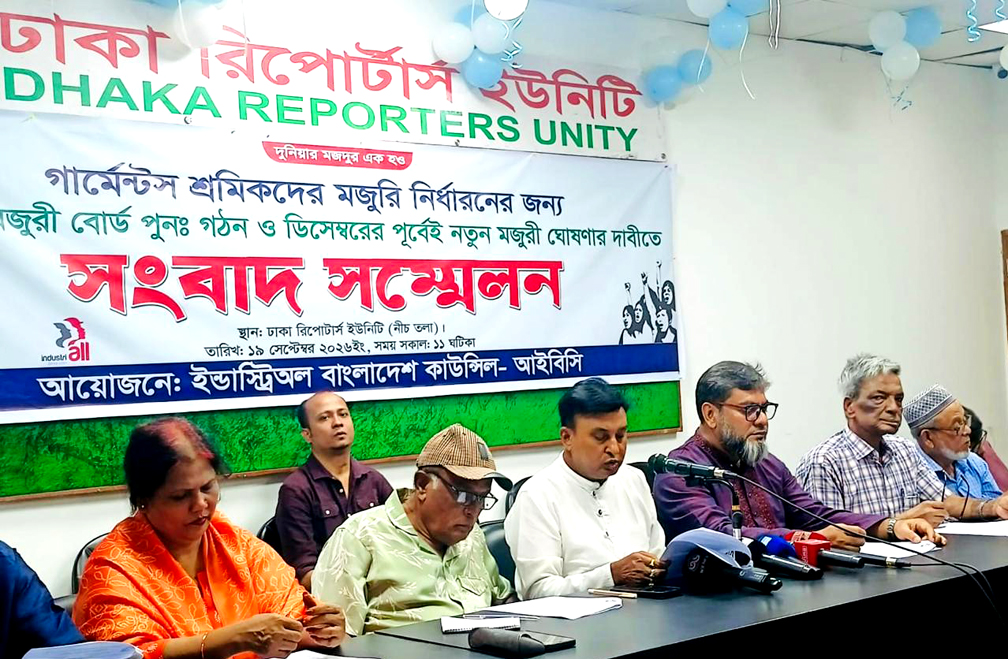
Industrial Bangladesh Council general secretary Salahuddin Shapon called for the immediate formation of the board and stressed that workers’ representatives should be selected through a fair, participatory process rather than appointed from organisations favoured by the authorities.

The IBC submitted a memorandum to the labour ministry on October 4. Labour Minister Ariful Islam Chowdhury announced on the same day that the board would be formed within October.

Shapon said six labour platforms, including the IBC, would consult one another and other organisations to reach a consensus on a common minimum wage demand by October 25.

He clarified that Tk 30,000, a figure being discussed in some quarters, had not been adopted as a collective demand by the six platforms.

Under amendments to the Bangladesh Labour Act made in 2026, the interval between minimum wage revisions was reduced from five years to three.

The current minimum wage for garment workers is Tk 12,500, and three years since the last increase will have passed in December.

Labour leaders have warned that the process of holding meetings, submitting recommendations, obtaining government approval and issuing a gazette notification could take months, making the formation of the board urgent.

Bangladesh Garment Manufacturers and Exporters Association president Mahmud Hasan Khan told New Age that manufacturers supported the formation of the board and expected to receive a request to nominate their representative shortly.

He alleged that some people were attempting to create disturbances despite the government’s announcement, adding that the unrest should subside if workers’ concerns were its genuine cause. Continued disruption, he warned, would harm the sector.

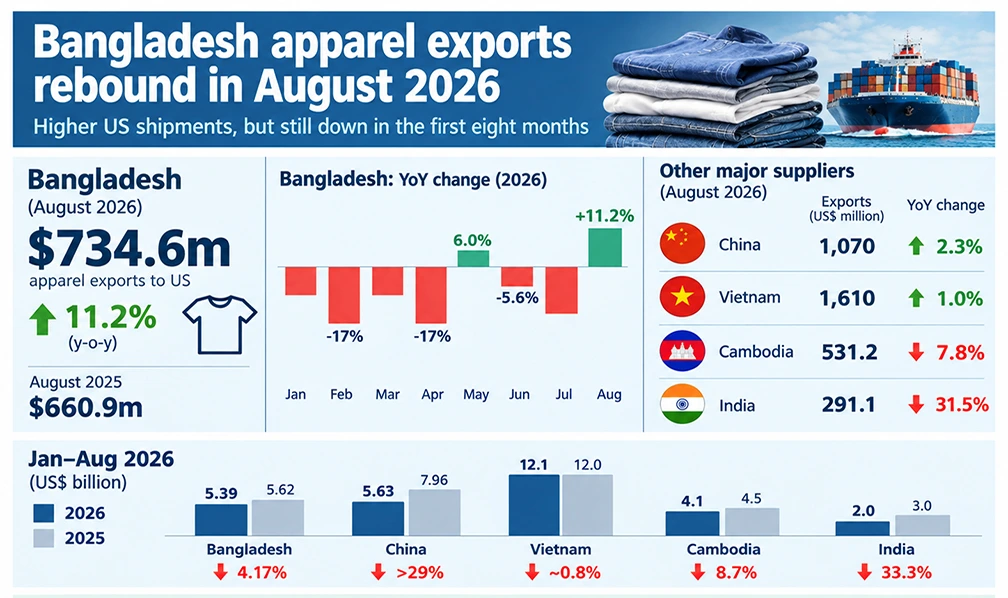
The garment industry employs more than four million workers across around 4,000 registered factories and generated $38.70 billion in exports in the financial year 2025-26, according to the figures provided.

Employers and labour representatives have warned that prolonged unrest could disrupt the country’s largest export-oriented industry and damage the wider economy.

The recent protests and wage demands are also expected to be discussed at a meeting of the Tripartite Consultative Committee for the ready-made garment sector scheduled for October 27.
Wage board move amid spreading garment workers’ unrest

Update Time : 01:11:17 am, Friday, 16 October 2026

Garment workers’ protests over wages, unpaid dues and rising living costs have spread across industrial areas in and outside Dhaka, raising concerns over industrial stability as the government begins the process of reconstituting the minimum wage board.

On Thursday, the Department of Labour asked the Bangladesh Employers’ Federation to propose three nominees to represent employers on the board, according to an official letter dated October 15. The federation was asked to submit the candidates’ names, photographs, national identity cards and curricula vitae urgently.

The move follows the labour ministry’s decision on October 14 to seek nominations for the board, which will comprise an independent member, an employers’ representative and a workers’ representative.

Three candidates are to be proposed for each position for government consideration under Sections 138(2) and 138(4) of the Bangladesh Labour Act 2006, as amended in 2026.

The development comes amid mounting worker discontent over wages, arrears and job insecurity. Workers blocked roads in Uttara for four consecutive days from October 12, demanding a minimum monthly wage of Tk 30,000, higher allowances and payment of outstanding dues.

In Gazipur’s Sreepur, more than 1,000 workers of C-Stage (BD) Ltd blocked a highway over unpaid September wages after finding that a general holiday had been declared at the factory.

Police used batons and sound grenades to disperse workers blocking the Dhaka-Mymensingh highway in Uttara on Thursday.

Samajtantrik Sramik Front president Razekuzzaman Ratan said the protests reflected several grievances, including factory closures without payment of outstanding dues and expectations of wage revision under labour law.

‘It must be made absolutely clear that workers’ concerns have to be heard. It is because their voices go unheard that distrust, a lack of confidence and, at times, tension develop among them,’ he said.

Ratan said rising prices had made it increasingly difficult for workers to meet basic living costs, while the government’s announcement of a new pay scale for public employees had strengthened the case for higher garment wages.

‘Workers sweat to produce goods, but have to shed blood to secure higher wages. They must be freed from this situation so that they receive the value of their labour without having to struggle for it,’ he said.

Industrial Bangladesh Council general secretary Salahuddin Shapon called for the immediate formation of the board and stressed that workers’ representatives should be selected through a fair, participatory process rather than appointed from organisations favoured by the authorities.

The IBC submitted a memorandum to the labour ministry on October 4. Labour Minister Ariful Islam Chowdhury announced on the same day that the board would be formed within October.

Shapon said six labour platforms, including the IBC, would consult one another and other organisations to reach a consensus on a common minimum wage demand by October 25.

He clarified that Tk 30,000, a figure being discussed in some quarters, had not been adopted as a collective demand by the six platforms.

Under amendments to the Bangladesh Labour Act made in 2026, the interval between minimum wage revisions was reduced from five years to three.

The current minimum wage for garment workers is Tk 12,500, and three years since the last increase will have passed in December.

Labour leaders have warned that the process of holding meetings, submitting recommendations, obtaining government approval and issuing a gazette notification could take months, making the formation of the board urgent.

Bangladesh Garment Manufacturers and Exporters Association president Mahmud Hasan Khan told New Age that manufacturers supported the formation of the board and expected to receive a request to nominate their representative shortly.

He alleged that some people were attempting to create disturbances despite the government’s announcement, adding that the unrest should subside if workers’ concerns were its genuine cause. Continued disruption, he warned, would harm the sector.

The garment industry employs more than four million workers across around 4,000 registered factories and generated $38.70 billion in exports in the financial year 2025-26, according to the figures provided.

Employers and labour representatives have warned that prolonged unrest could disrupt the country’s largest export-oriented industry and damage the wider economy.

The recent protests and wage demands are also expected to be discussed at a meeting of the Tripartite Consultative Committee for the ready-made garment sector scheduled for October 27.