Bizbd Report
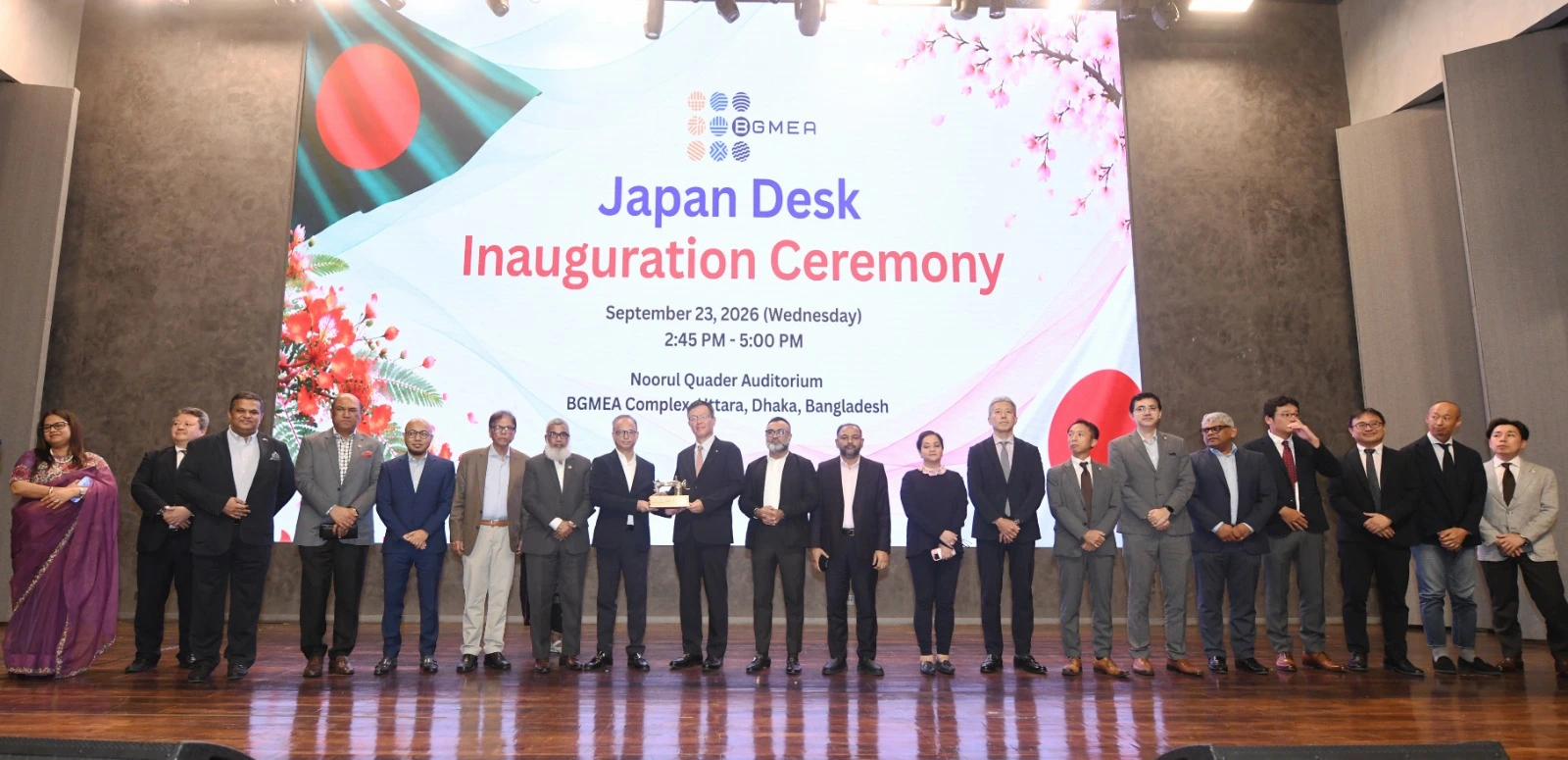
Bangladesh will continue to enjoy duty-free access to the Japanese market for three years after graduating from the least developed country (LDC) category.
Japan has amended its tariff system to extend preferential treatment for LDCs, a move officially notified to the World Trade Organisation (WTO) on November 5.
The WTO Committee on Trade and Development confirmed the measure on November 7.
Experts said the extended access will benefit Bangladesh’s garment exports, one of the country’s key foreign currency earners.
Bangladesh is scheduled to graduate to developing nation status in November 2026, but will retain LDC trade benefits in Japan, Australia, the EU, the UK, and Canada for three more years.
Explaining the purpose of Japan’s Generalised System of Preferences (GSP), the notification said that the GSP applies reduced tariffs on designated imported goods from developing countries or territories to help them increase export income, advance industrialisation, and promote economic development.
Regarding the reform, it added: ‘Japan reformed its tariff system to allow least developed countries to receive preferential tariff treatment up to three years after they graduate from the least developed country category. The respective provision is mentioned in the Temporary Tariff Measures Law, Article 8-2, paragraph 3.’
The notification further clarified that ‘Only countries determined as least developed countries (LDCs) by the United Nations General Assembly, or up to three years after they graduate from the LDC category, are eligible for special preferential treatment for LDCs.’
Research and Policy Integration for Development (RAPID) Chairman Mohammad Abdur Razzaque said that, similar to the European Union (EU), Bangladesh will receive duty-free access to Japan on the same LDC terms.
Describing the measure as ‘beneficial’ for local exports to Japan, he said that Australia will also provide a three-year duty-free facility, while China will offer preferential treatment for two years after graduation.
Bangladesh’s key apparel export markets include the European Union (EU), the United States, the UK, Canada, India, and Japan.
According to the 2023 Ministerial Conference of the WTO held in Abu Dhabi, LDC trade benefits will continue for three more years after graduation.
Post-graduation, Bangladeshi garments are expected to face duties ranging from 9 per cent to 20 per cent: 12 per cent for the EU market, 11.5 per cent for the UK, 16.2 per cent for Canada, 9 per cent for Japan, 20 per cent for India, and 6.7 per cent for China.
Apparel makers have called for delayed graduation, arguing that extended LDC trade benefits are necessary to maintain competitiveness in the global market.
The EU, Canada, the UK, and Australia will continue LDC trade benefits for Bangladesh until 2029, providing a three-year grace period.
When asked, Fazlul Hoque, former president of the Bangladesh Knitwear Manufacturers and Exporters Association, said the move was expected and welcomed, noting it would help sustain rising exports.
He said that the industry had long sought deferral of graduation to allow preparation at both industry and government levels, including improving port efficiency and reducing production costs, such as utility charges and bank interest rates.
He also stressed the need for enhancing productivity.
Exporters highlighted that duty-free market access is a major factor influencing buyers’ sourcing decisions from Bangladesh, and urged the government to take timely measures regarding graduation to allow buyers to make strategic plans.
According to Export Promotion Bureau data, Bangladesh earned $1.18 billion from Japan in the financial year 2025-26 through garment exports, compared with $478.48 million in FY 2012-13.