Bizbd Report
Global garment manufacturers have called on US buyers to take shared responsibility as escalating tariffs threaten the industry, workers, and sustainability commitments.
In a joint statement, issued on August 4, the International Apparel Federation (IAF), the Sustainable Textiles of the Asian Region (STAR) Network, and their joint Sustainable Terms of Trade Initiative (STTI) urged brands and retailers to honour existing commitments to responsible purchasing practices (RPP).
These include fair payment terms, predictable and transparent order planning, shared risk during crises, and avoiding last-minute cancellations or retroactive discounts.
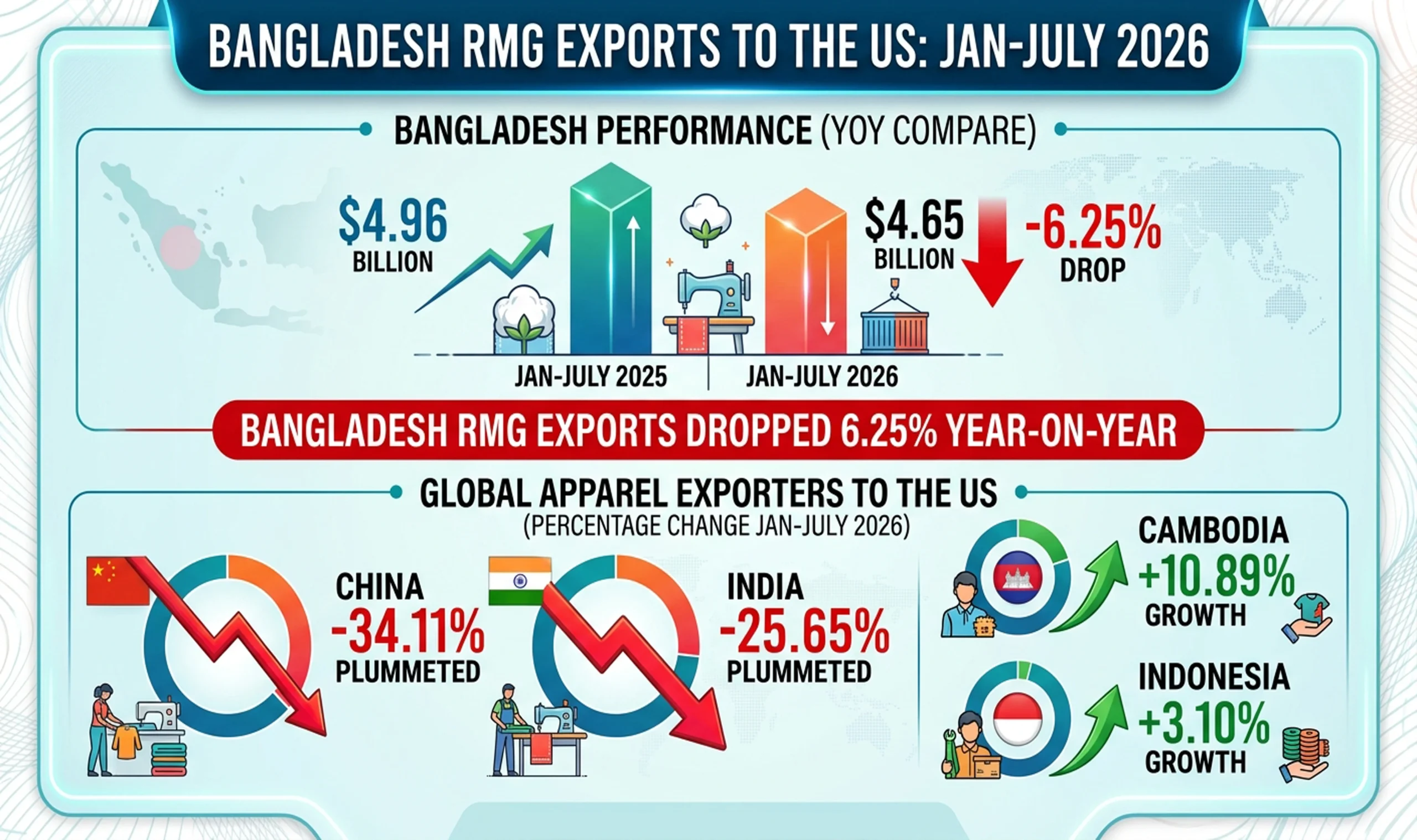
The groups warned that from August 7, most apparel imports from key producing countries will face additional US tariffs, ranging from 15 per cent to 25 per cent. While lower than the rates first announced on April 2, they still represent a steep cost increase, combined with greater business uncertainty.
‘Tariffs hurt everyone, including Americans. Buyers must uphold responsible purchasing practices now more than ever,’ the statement said.
The garment and textile sector employs over 75 million people worldwide, most of them women.
The organisations cautioned that the new tariffs would not bring jobs back to the US or strengthen its domestic industry but would instead raise clothing prices, particularly hitting low-income households, while squeezing profits and risking factory closures in producing nations.
They further warned that higher costs could accelerate unsustainable production practices, undermine labour and environmental standards, and reverse progress on decent work and fair wages.
‘These measures mirror the uncertainty of the COVID period—only this time, it’s man-made,’ the statement read.
Operating on thin margins, suppliers said they have little capacity to absorb cost increases of up to 40 per cent amid rising material and logistics expenses, and passing these shocks onto them could undo years of advancement in sustainability and workers’ rights.