Bizbd Report
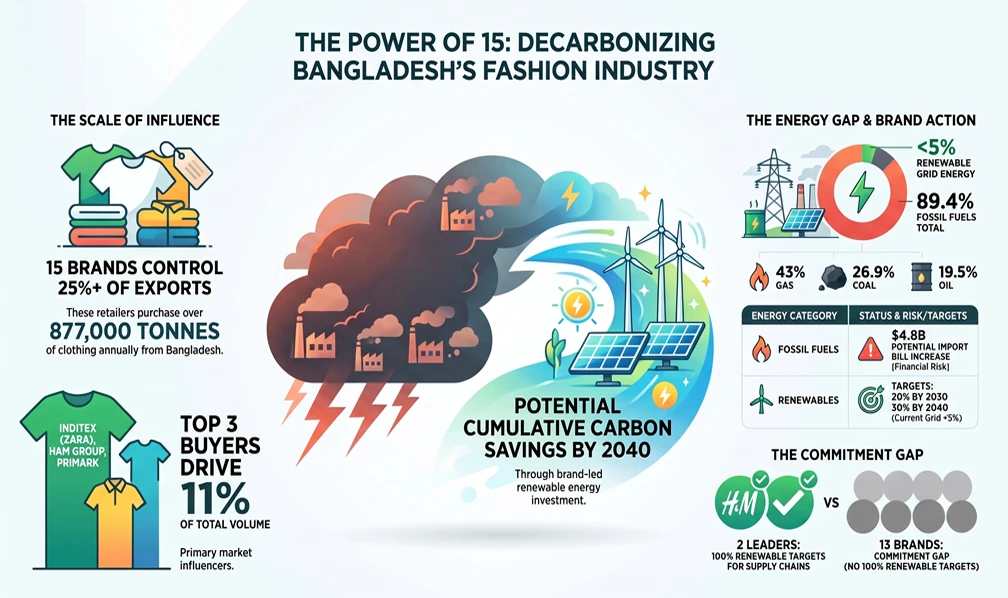
Bangladesh has emerged as a global frontrunner in sustainable apparel manufacturing, according to a newly published international report that highlights the country’s progress in decarbonising its readymade garment (RMG) sector.
The report, titled ‘Bangladesh Country Report: Macroeconomic and Sustainability Analysis’, was released by Cascale on 26 and presents a comprehensive picture of the industry’s evolving landscape, balancing notable achievements with the urgent need to address persistent structural barriers.
The study applauds Bangladesh’s growing momentum in sustainable production, driven by ambitious environmental targets, a strong base of green-certified factories, and a rising culture of industry collaboration.
Cascale, formerly known as the Sustainable Apparel Coalition, underscored Bangladesh’s alignment with the global Industry Decarbonization Roadmap (IDR), a sector-wide initiative that aims to cut greenhouse gas (GHG) emissions by 45 per cent by 2030.
The report suggests Bangladesh is well-positioned to contribute meaningfully to this target.
The findings are drawn from data collected via the Higg Facility Environmental Module (FEM), a globally recognised self-assessment tool used to evaluate factory-level environmental performance in areas such as energy and water use, waste and chemical management.
In 2023, nearly 1,300 factories in Bangladesh participated in the Higg FEM, and the results revealed that many outperformed global averages. Opportunities for Bangladesh to scale up renewable energy usage and reduce reliance on natural gas were also identified.
Bangladesh’s progress in green manufacturing is illustrated by its leadership in LEED-certified garment facilities. The country is home to over 240 such factories, including 62 of the world’s top 100 highest-rated green industrial units—more than any other nation.
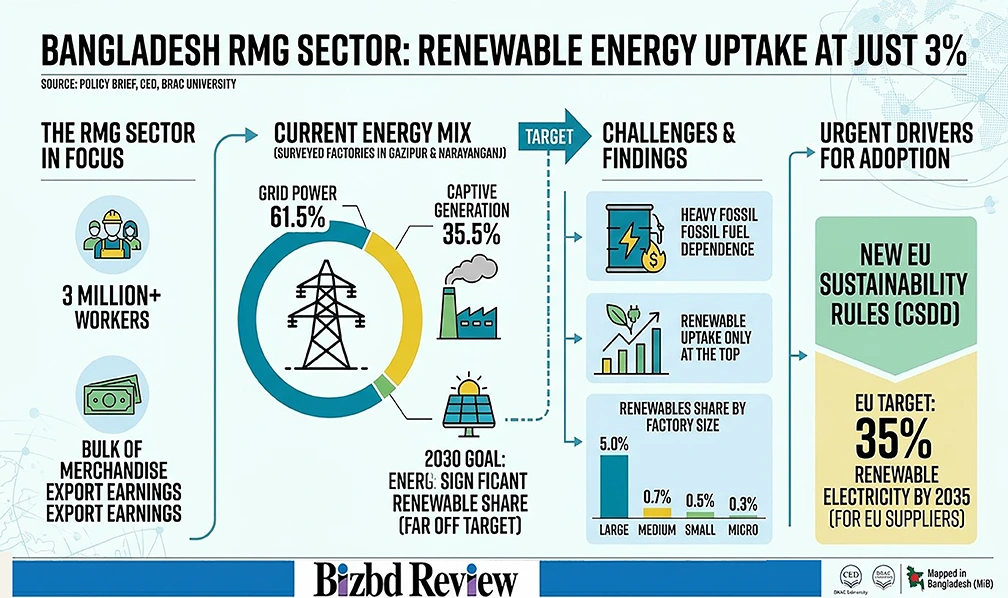
The report also commended the Bangladesh Garment Manufacturers and Exporters Association (BGMEA) for its Sustainability Vision 2030, which outlines specific commitments such as reducing GHG emissions by 30 per cent, sourcing 50 per cent of materials sustainably, converting 20 per cent of energy use to renewables, and eliminating hazardous chemical discharge.
Cascale’s Senior Vice President of the Higg Index, Jeremy Lardeau, remarked that scaling up the decarbonisation of the energy supply is essential if Bangladesh is to meet its 2030 climate ambitions.
He emphasised that cleaner energy transitions will need to go hand-in-hand with continued improvements in energy efficiency and broader technological adoption.
Yet despite these gains, the report provides a sober assessment of ongoing challenges that could hinder future growth.
Infrastructure bottlenecks remain a serious concern, particularly around port congestion and underdeveloped internal transport networks.
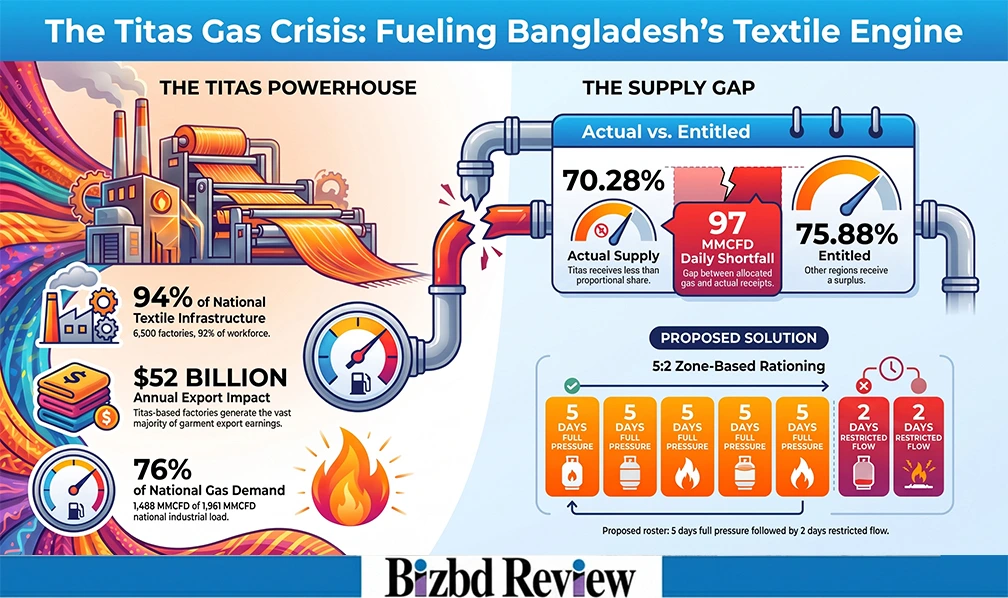
These limitations increase export lead times and raise logistical costs. Energy reliability is another issue, with occasional shortages disrupting operations and limiting production capacity.
Bangladesh’s heavy reliance on basic, low-value garments was highlighted as a structural vulnerability.
Without diversification into higher-end products, synthetic fabrics, and original design manufacturing, the industry risks losing market share to more agile competitors.
Cascale also warned of the country’s limited access to trade agreements beyond its current Least Developed Country (LDC) privileges.
With the European Union and United Kingdom set to gradually withdraw duty-free access between 2026 and 2029, there is growing concern over how this could impact competitiveness if alternative trade arrangements are not secured.
Financial barriers continue to plague smaller and medium-sized factories, which often lack access to affordable capital to fund modernisation and sustainability upgrades.
BGMEA Director Sheikh Hossain Md Mustafiz acknowledged that while around 500 factories have installed solar panels, scaling up decarbonisation efforts requires significant investment.
He noted that SMEs in particular struggle to secure work orders at viable prices and often face difficulty meeting increasingly demanding sustainability standards.
Shams Mahmud, Managing Director of Shasha Denims, described the report as a strong reflection of the sector’s progress but pointed to continued disparity between larger, well-equipped factories and smaller units.
He noted that factories built in the last decade tend to be more energy- and water-efficient due to newer technology. In contrast, older or smaller enterprises face high interest rates and short-term financing constraints, making them less able to invest in sustainable infrastructure.
Mahmud proposed a national carbon financing mechanism that would allow SMEs to benefit from carbon credit systems by quantifying the carbon absorption of the Sundarbans mangrove forest.
He argued that such a system could help offset operational costs and improve market access, especially in the EU, where carbon footprint is an increasingly important factor in procurement decisions.
Cascale’s report acknowledged the favourable policy environment emerging in Bangladesh, particularly the government’s Renewable Energy Policy, which offers tax incentives and aims to reduce fuel imports while encouraging solar energy and energy-efficient technologies. However, implementation gaps and bureaucratic inefficiencies continue to slow progress in adopting clean energy at scale.
The human dimension of the transition was also emphasised. Carolina van Loenen, Cascale’s Director of Stakeholder Engagement, stressed the importance of prioritising worker wellbeing.
She stated that the workforce remains both the sector’s greatest asset and its greatest responsibility, calling for investments in organisational health, labour rights, and skill development to ensure sustainable and equitable growth.
The report concludes that Bangladesh is at a pivotal moment. With the right mix of coordinated policy, industry leadership, and international support, the country has the potential to become a global template for climate-resilient and socially inclusive manufacturing.
Cascale called on brands, investors, and policymakers to align sourcing practices with Bangladesh’s sustainability goals and to back the industry with targeted financial tools, technical assistance, and trade facilitation measures.
While ‘business as usual’ is no longer viable, the report signals that with proactive reforms and continued momentum, Bangladesh can continue to strengthen its role as a key sourcing destination—and evolve into a global leader in sustainable, future-ready apparel production.