Bizbd Report
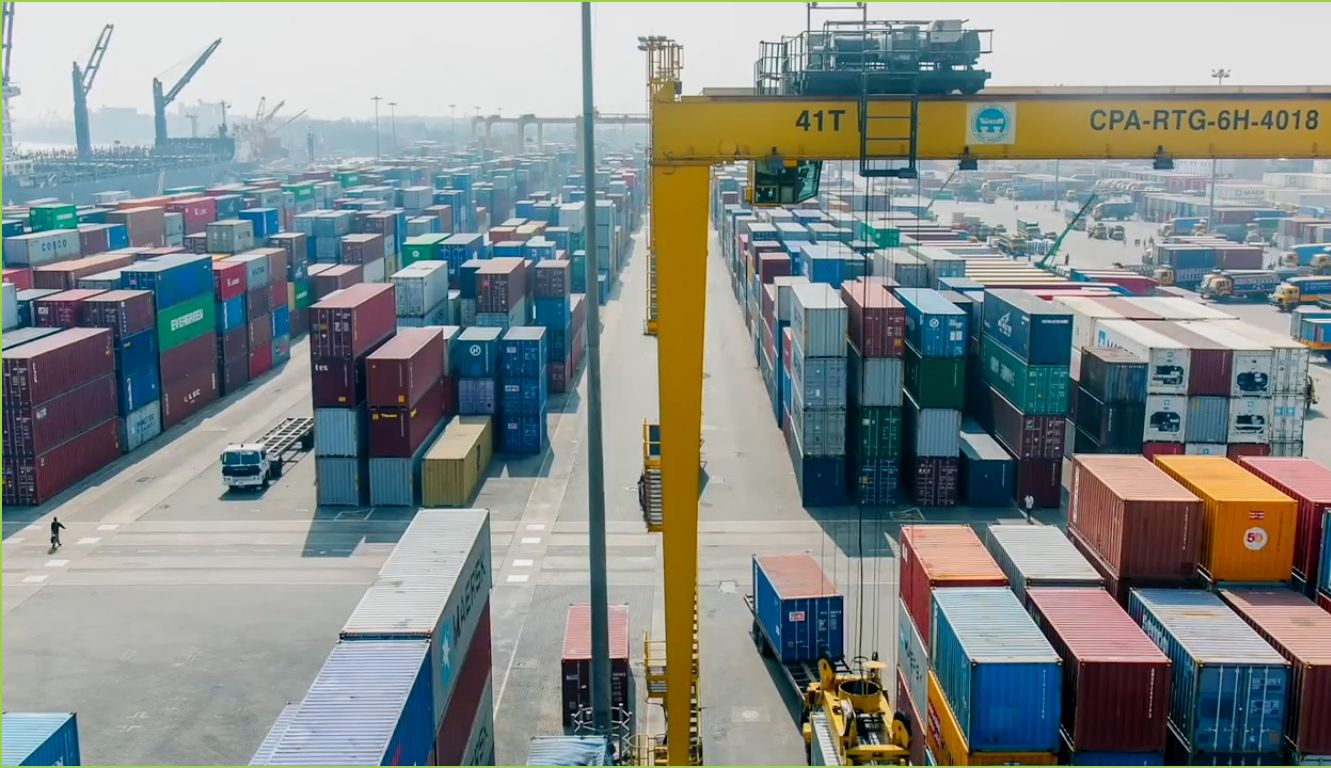
Bangladesh has signed a landmark agreement with Denmark’s APM Terminals, a subsidiary of AP Moller–Maersk, securing a $550 million investment to develop the Laldia Container Terminal at Chattogram Port.
The project marks the largest European foreign direct investment in Bangladesh and one of the most significant public–private partnership (PPP) ventures in the nation’s history.
The Letter of Award (LoA) was formally handed over by the Chattogram Port Authority (CPA) to APM Terminals and its local equity partner, QNS Container Services Ltd, at an inauguration ceremony held at The Intercontinental Dhaka on November 17.
The event, jointly organised by the Public Private Partnership Authority (PPPA), APM Terminals, and the CPA, was attended by senior dignitaries from both Bangladesh and Denmark.
Robert Maersk Uggla, Chairman of the AP Moller–Maersk Group, travelled to Dhaka for the ceremony, accompanied by Denmark’s State Secretary for Trade and Investment, Lina Gandløse Hansen.
Under a 30-year concession agreement, APM Terminals and its local partner will design, finance, construct, and operate the new terminal on a fully private-equity basis, ensuring no debt burden for the government.
In a virtual address, Denmark’s Minister of Foreign Affairs, Lars Løkke Rasmussen, praised the deepening commercial partnership between the two countries.
‘Mærsk has been a long-standing partner to Bangladesh and an important driver of the strong commercial ties between our two countries. The investment in the Laldia Container Terminal is a powerful symbol of enduring partnership and shows strong confidence in Bangladesh’s future,’ he said.
Keith Svendsen, CEO of APM Terminals, said the greenfield project would significantly strengthen Bangladesh’s trade competitiveness.
‘We are supporting the growth of manufacturers, exporters, importers, and the broader economy. Our aim is to build a safe and efficient terminal while generating skilled jobs for the region’s future prosperity,’ he said.
Rear Admiral SM Moniruzzaman, Chairman of the Chittagong Port Authority, emphasised the urgent need for expanded capacity.
‘This terminal is arriving at a moment when we are hungry for efficiency. To remain competitive and attract higher-value products, we need faster logistics and modern facilities like those provided by APM Terminals,’ he said.
M Sakhawat Hossain, Adviser to the Ministry of Shipping, said the new terminal would help ease long-standing congestion and improve reliability for exporters.
‘The Laldia terminal will allow larger vessels to call and reduce lead times. We welcome Maersk’s global expertise in resolving day-to-day challenges faced at the port,’ he said.
PPP Authority CEO Ashik Chowdhury said the agreement proves that Bangladesh’s PPP framework has matured into genuine practice.
He said that the project is expected to increase Chattogram Port’s handling capacity by 44 per cent.
‘Projects of this nature boost investor confidence and show that Bangladesh can deliver world-class infrastructure through PPPs,’ he said.
The ceremony was also attended by Lutfey Siddiqui, the Chief Adviser’s Special Envoy for International Affairs, and Touhid Hossain, Adviser at the Ministry of Foreign Affairs.
The Laldia Container Terminal, to be completed by 2030, will introduce world-class port technology and enable larger container vessels—double the size of those currently handled—to call directly at Chattogram.
It will also support 24/7 operations, including night navigation, for the first time in Bangladesh.
Under the revenue-sharing concession model, the project is expected to generate stable foreign-currency income, expand container-handling capacity by more than 800,000 TEUs per year, reduce freight costs for businesses, and create thousands of direct and indirect jobs.
The terminal will also incorporate global safety, climate, and environmental standards, supporting Bangladesh’s long-term infrastructure and sustainability goals.
The government expects the project to have far-reaching economic benefits, stimulating investment in logistics, inland depots, industrial parks, and cold-chain facilities along major transport corridors.
Officials say it will also serve as a demonstration model for future PPPs across the energy, transport, and social infrastructure sectors.
With APM Terminals operating more than 60 ports worldwide, including several of the world’s top-performing terminals, the Laldia project is set to introduce advanced technologies and processes to Bangladesh’s maritime sector.
It is anticipated to help position the country as a more competitive logistics hub in the post-LDC era.