7:16 pm, Saturday, 8 November 2025

Automated TDS refund system expected in coming months: NBR chief

  • Bizbd Report
  • Update Time : 10:48:26 am, Friday, 19 September 2025
  • 175

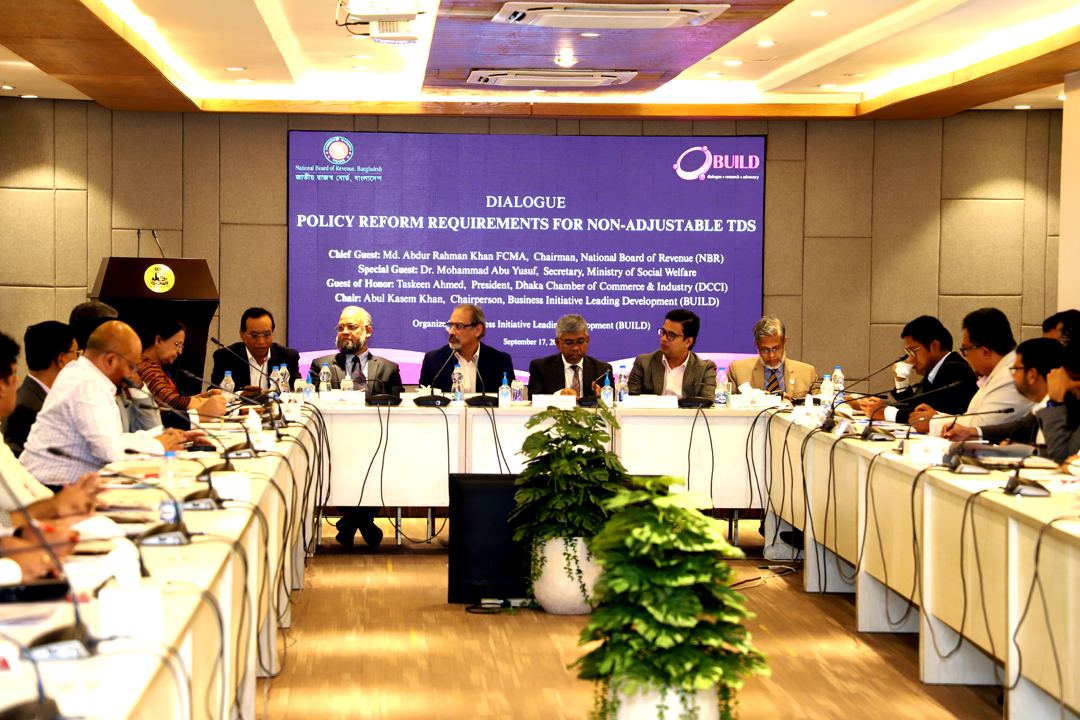
The National Board of Revenue (NBR) is preparing to operationalise an automated Tax Deducted at Source (TDS) refund system within the coming months, its Chairman Md Abdur Rahman Khan announced on September 17.

Speaking at a dialogue on Policy Reform Requirements for Non-Adjustable TDS organised by Business Initiative Leading Development (BUILD) at the DCCI Auditorium, Dhaka, Mr Rahman acknowledged that while TDS is a globally effective practice, its implementation in Bangladesh has been hindered by operational inefficiencies that delay adjustments.

He said that analytical tools within the ASYCUDA system remain underused, and stressed the need for reforms to enhance transparency, efficiency and fairness for taxpayers.

‘We are gradually reducing TDS rates, and work is under way to automate the TDS refund system. In some cases, Advance Income Tax rates stand as high as 20 per cent, which is nearly equal to the total corporate tax. This is unsustainable and requires urgent research to rationalise sector-specific rates,’ he said.

The NBR chief emphasised that policy adjustments must pursue tax justice without undermining the tax-to-GDP ratio.

Mohammad Abu Yusuf, Secretary at the Ministry of Social Welfare, underlined the negative impact of delayed refunds on small businesses, which often face blocked working capital and reduced profitability.

He called for linking the informal economy to the tax system as a means of raising the country’s tax-to-GDP ratio.

Other speakers echoed concerns over policy inconsistencies, complex refund procedures and rising tax burdens on businesses.

Abul Kasem Khan, Chairperson of BUILD, described the current refund system as very complicated noting that some businesses are compelled to maintain two sets of accounts.

He warned that without stronger trust between the public and private sectors, tax reform would remain elusive.

In his keynote address, Wasel Bin Shadat, Research Director at BUILD, highlighted that the non-adjustable nature of TDS under Section 163 of the Income Tax Act 2023 often functions as a minimum tax, creating liquidity challenges for firms.

He proposed a phased reform strategy, beginning with the immediate introduction of a prescribed refund form and culminating in sector-specific TDS rates aligned with profitability.

Industry leaders including Ali Zaman, President of the SMEs Owners Association, and Shadab Ahmed Khan, Managing Director of Coca-Cola Bangladesh Beverages, criticised the refund delays and policy inconsistencies that they said were hurting business confidence and deterring investment.

Ferdaus Ara Begum, CEO of BUILD, concluded the dialogue by noting that while the share of TDS in income tax revenue has increased, refunds as a proportion of collections have fallen sharply.

‘Despite clear provisions for refunding adjustable TDS with 10 per cent interest, refund rates remain minimal. Addressing this gap is critical to restoring taxpayer confidence,’ she said.

Automated TDS refund system expected in coming months: NBR chief

Update Time : 10:48:26 am, Friday, 19 September 2025

The National Board of Revenue (NBR) is preparing to operationalise an automated Tax Deducted at Source (TDS) refund system within the coming months, its Chairman Md Abdur Rahman Khan announced on September 17.

Speaking at a dialogue on Policy Reform Requirements for Non-Adjustable TDS organised by Business Initiative Leading Development (BUILD) at the DCCI Auditorium, Dhaka, Mr Rahman acknowledged that while TDS is a globally effective practice, its implementation in Bangladesh has been hindered by operational inefficiencies that delay adjustments.

He said that analytical tools within the ASYCUDA system remain underused, and stressed the need for reforms to enhance transparency, efficiency and fairness for taxpayers.

‘We are gradually reducing TDS rates, and work is under way to automate the TDS refund system. In some cases, Advance Income Tax rates stand as high as 20 per cent, which is nearly equal to the total corporate tax. This is unsustainable and requires urgent research to rationalise sector-specific rates,’ he said.

The NBR chief emphasised that policy adjustments must pursue tax justice without undermining the tax-to-GDP ratio.

Mohammad Abu Yusuf, Secretary at the Ministry of Social Welfare, underlined the negative impact of delayed refunds on small businesses, which often face blocked working capital and reduced profitability.

He called for linking the informal economy to the tax system as a means of raising the country’s tax-to-GDP ratio.

Other speakers echoed concerns over policy inconsistencies, complex refund procedures and rising tax burdens on businesses.

Abul Kasem Khan, Chairperson of BUILD, described the current refund system as very complicated noting that some businesses are compelled to maintain two sets of accounts.

He warned that without stronger trust between the public and private sectors, tax reform would remain elusive.

In his keynote address, Wasel Bin Shadat, Research Director at BUILD, highlighted that the non-adjustable nature of TDS under Section 163 of the Income Tax Act 2023 often functions as a minimum tax, creating liquidity challenges for firms.

He proposed a phased reform strategy, beginning with the immediate introduction of a prescribed refund form and culminating in sector-specific TDS rates aligned with profitability.

Industry leaders including Ali Zaman, President of the SMEs Owners Association, and Shadab Ahmed Khan, Managing Director of Coca-Cola Bangladesh Beverages, criticised the refund delays and policy inconsistencies that they said were hurting business confidence and deterring investment.

Ferdaus Ara Begum, CEO of BUILD, concluded the dialogue by noting that while the share of TDS in income tax revenue has increased, refunds as a proportion of collections have fallen sharply.

‘Despite clear provisions for refunding adjustable TDS with 10 per cent interest, refund rates remain minimal. Addressing this gap is critical to restoring taxpayer confidence,’ she said.