5:52 pm, Saturday, 8 November 2025

US apparel tariffs hit decades-high 26.4%, reshaping market, straining retailers

  • Bizbd Report
  • Update Time : 02:15:41 pm, Friday, 12 September 2025
  • 701

The sharp escalation of the US tariffs on imported clothing is reshaping the country’s apparel market, driving up costs, reducing import volumes and altering global sourcing patterns.

According to the latest analysis by Dr Sheng Lu of the University of Delaware, the average tariff rate on apparel imports reached 26.4 per cent in July 2025, the highest level in decades, following the introduction of reciprocal tariffs under the Trump administration.

The immediate impact has been a contraction in trade. In July, the value of US apparel imports fell 3 per cent year-on-year, while the volume dropped 5.2 per cent.

Import prices climbed nearly 3 per cent between April and July as suppliers adjusted to the higher duties, a trend expected to continue as more countries are drawn into the tariff regime.

Despite these cost pressures, retail clothing prices in the US have remained broadly stable. Fashion companies have so far chosen to absorb the increases rather than pass them on to consumers already cautious about spending in an uncertain economic climate.

The tariff surge has not been evenly applied. Even traditional trade partners under the CAFTA-DR agreement now face duties of around 10 per cent, while Mexico remains a notable exception with a comparatively low rate of 1.6 per cent.

A key trend is the sharp drop in imports from China, whose market share has fallen significantly due to steep tariff rates, suggesting a potential end to its long-standing dominance.

At the same time, sourcing is diversifying toward other Asian countries, the Middle East and Africa, while the Trump administration’s tariff policies have not meaningfully boosted nearshoring in the Western Hemisphere.

China has borne the brunt of the policy, with apparel imports facing tariffs approaching 50 per cent.

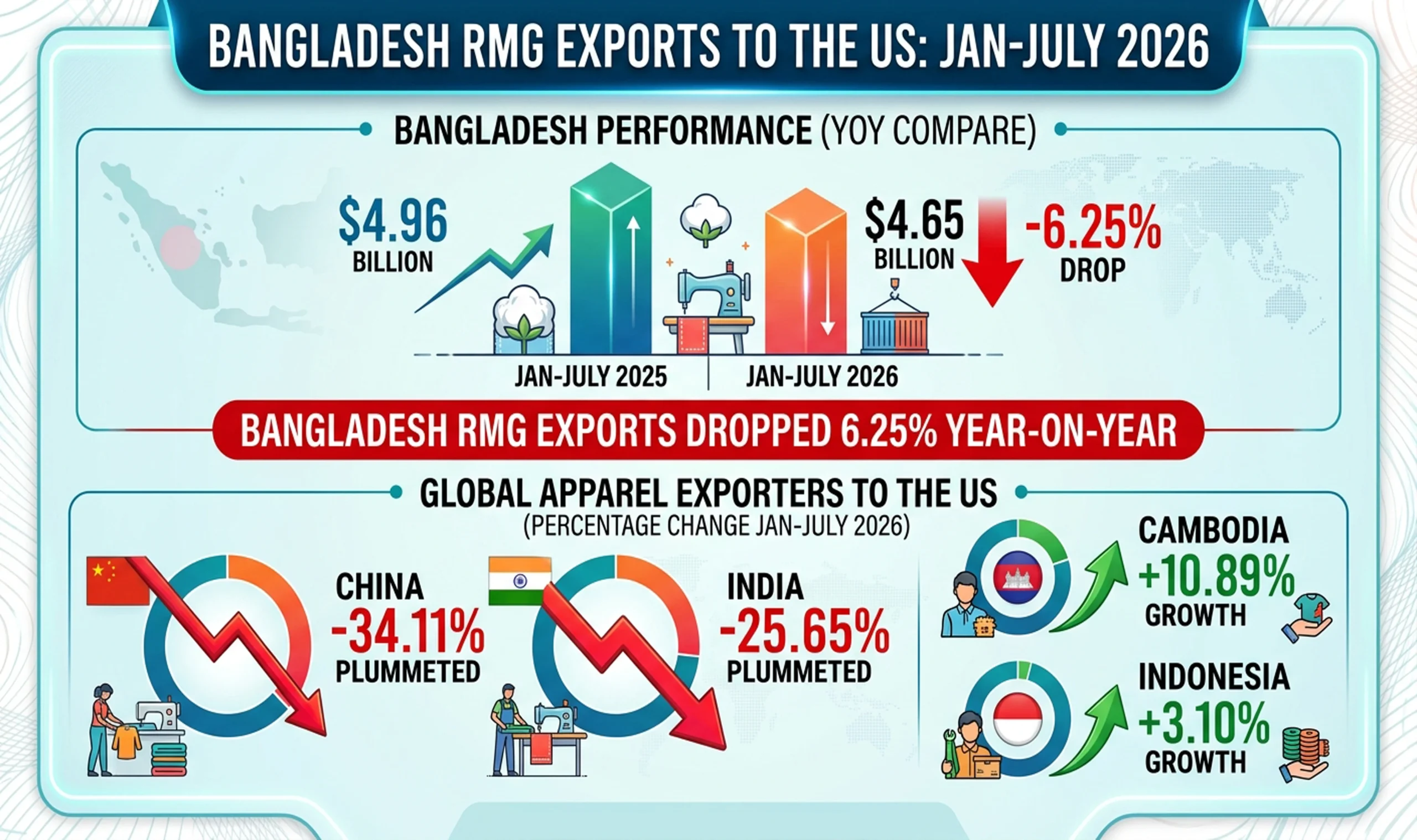
This punitive rate has triggered a collapse in trade: in July, imports from China fell 38.4 per cent in value and 27.3 per cent in quantity compared with the previous year.

Its share of the US market has plunged from 24.6 per cent in July 2024 to 15.6 per cent in July 2025.

Vietnam has emerged as the primary beneficiary of China’s decline. Its apparel exports to the US grew by 12.5 per cent year-on-year, lifting its market share to 22.1 per cent and making it the country’s largest supplier for the first time.

Other exporters are also strengthening their positions: Egypt’s shipments rose more than 30 per cent in July, Cambodia’s by 25 per cent, Jordan’s by nearly 22 per cent, while India and Pakistan both recorded double-digit growth.

As a result, Asia continues to dominate, accounting for 72.9 per cent of US apparel imports, only slightly lower than the 74.7 per cent recorded a year earlier.

By contrast, the tariff measures have failed to spur nearshoring to the Western Hemisphere. Imports from Mexico inched up just 0.5 per cent in July, while those from CAFTA-DR members fell 2.7 per cent.

The report notes that uncertainty surrounding U.S. trade policy has discouraged brands from making long-term commitments to regional suppliers, even where tariff preferences exist.

While consumers remain shielded from sharp price increases, the pressures on retailers and manufacturers are mounting.

Dr Lu warns that absorbing higher costs may not be sustainable in the long run.

‘The US apparel import market is being reshaped in profound ways,’ he concludes, ‘but whether this delivers lasting benefits to consumers or the domestic industry remains highly doubtful.’

US apparel tariffs hit decades-high 26.4%, reshaping market, straining retailers

Update Time : 02:15:41 pm, Friday, 12 September 2025

The sharp escalation of the US tariffs on imported clothing is reshaping the country’s apparel market, driving up costs, reducing import volumes and altering global sourcing patterns.

According to the latest analysis by Dr Sheng Lu of the University of Delaware, the average tariff rate on apparel imports reached 26.4 per cent in July 2025, the highest level in decades, following the introduction of reciprocal tariffs under the Trump administration.

The immediate impact has been a contraction in trade. In July, the value of US apparel imports fell 3 per cent year-on-year, while the volume dropped 5.2 per cent.

Import prices climbed nearly 3 per cent between April and July as suppliers adjusted to the higher duties, a trend expected to continue as more countries are drawn into the tariff regime.

Despite these cost pressures, retail clothing prices in the US have remained broadly stable. Fashion companies have so far chosen to absorb the increases rather than pass them on to consumers already cautious about spending in an uncertain economic climate.

The tariff surge has not been evenly applied. Even traditional trade partners under the CAFTA-DR agreement now face duties of around 10 per cent, while Mexico remains a notable exception with a comparatively low rate of 1.6 per cent.

A key trend is the sharp drop in imports from China, whose market share has fallen significantly due to steep tariff rates, suggesting a potential end to its long-standing dominance.

At the same time, sourcing is diversifying toward other Asian countries, the Middle East and Africa, while the Trump administration’s tariff policies have not meaningfully boosted nearshoring in the Western Hemisphere.

China has borne the brunt of the policy, with apparel imports facing tariffs approaching 50 per cent.

This punitive rate has triggered a collapse in trade: in July, imports from China fell 38.4 per cent in value and 27.3 per cent in quantity compared with the previous year.

Its share of the US market has plunged from 24.6 per cent in July 2024 to 15.6 per cent in July 2025.

Vietnam has emerged as the primary beneficiary of China’s decline. Its apparel exports to the US grew by 12.5 per cent year-on-year, lifting its market share to 22.1 per cent and making it the country’s largest supplier for the first time.

Other exporters are also strengthening their positions: Egypt’s shipments rose more than 30 per cent in July, Cambodia’s by 25 per cent, Jordan’s by nearly 22 per cent, while India and Pakistan both recorded double-digit growth.

As a result, Asia continues to dominate, accounting for 72.9 per cent of US apparel imports, only slightly lower than the 74.7 per cent recorded a year earlier.

By contrast, the tariff measures have failed to spur nearshoring to the Western Hemisphere. Imports from Mexico inched up just 0.5 per cent in July, while those from CAFTA-DR members fell 2.7 per cent.

The report notes that uncertainty surrounding U.S. trade policy has discouraged brands from making long-term commitments to regional suppliers, even where tariff preferences exist.

While consumers remain shielded from sharp price increases, the pressures on retailers and manufacturers are mounting.

Dr Lu warns that absorbing higher costs may not be sustainable in the long run.

‘The US apparel import market is being reshaped in profound ways,’ he concludes, ‘but whether this delivers lasting benefits to consumers or the domestic industry remains highly doubtful.’