Bizbd Report
A new technical report by the World Health Organization (WHO) and the World Meteorological Organization (WMO) warned that rising global temperatures were placing millions of manual workers worldwide at increasing risk, threatening both their health and their livelihoods.
The Climate Change and Workplace Heat Stress: Technical Report and Guidance, drawing on evidence collected since WHO’s original 1969 report on heat stress, stated that high environmental temperatures were already affecting roughly half of the global population.
It said that the decade from 2015 to 2024 had been the warmest on record, with 2024 averaging 1.45°C above pre-industrial levels, and stressed the urgent need for strategies to protect workers, particularly in sectors such as agriculture, construction, and fishing.
The International Trade Union Confederation (ITUC) expressed deep concern over the findings, noting the growing risks workplace heat stress poses amid escalating global temperatures.
‘There is a rolling disaster unfolding in our overheated workplaces. The WHO and WMO have made clear that workers are on the front lines of the climate crisis, and they must be included in the discussions on how to respond,’ said ITUC General Secretary Luc Triangle.
He said that working people could not wait while the world burned, noting that unions were already taking action to save lives and urging governments and employers to work with them to do the same.
The report mentioned that workplace heat stress was no longer a marginal concern, warning that exposure to extreme heat could cause a wide range of severe health problems, including hyperthermia, dehydration, kidney dysfunction, and neurological disorders.
It said that vulnerable groups such as older adults, children, and those living in poverty faced heightened risks, while manual workers were particularly affected due to prolonged daily exposure that threatened both their health and their ability to earn a livelihood.
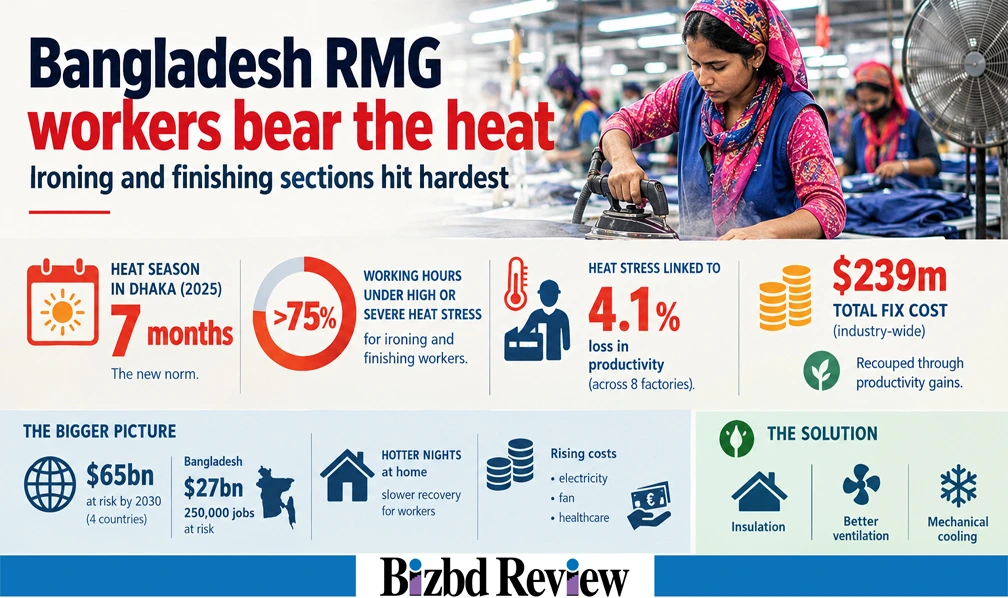
Productivity was also said to be directly impacted, declining by two to three per cent for every degree above 20°C in wet-bulb globe temperature, a standard measure of heat stress.
Although reducing physical activity or avoiding heat could lessen health risks, the report observed that such measures were often incompatible with the need to maintain income and support national economic activity.
It said that excessive heat currently affected more than 2.4 billion workers worldwide, representing 71 per cent of the global workforce. Heat-related illness was linked to around 18,970 deaths and 22.87 million occupational injuries each year.
According to the report, workers exposed to high temperatures were far more likely to suffer from workplace injuries and chronic illness, while the resulting productivity losses and economic disruptions extended beyond directly affected sectors to the wider economy, including industries reliant on stable food prices and primary sector outputs.
The report also observed that existing public heat-health warning systems and national prevention programmes were mainly designed to protect the general population and often failed to meet the specific needs of workers who had to sustain a certain level of productivity.
It called for tailored occupational heat action programmes, to be co-created by employers, trade unions, health experts, and local authorities, in order to mitigate health risks while maintaining productivity through approaches that were both economically viable and environmentally sustainable.
Assessing workplace heat stress requires both qualitative and quantitative approaches. Employers and agencies are urged to evaluate job-specific and personal risk factors, including workers’ capacity to return to work after severe heat-related illness.
Interventions may include modified work schedules, provision of cooling breaks, hydration protocols, and technological solutions such as wearable monitoring devices and data-driven management systems.
The guidance stresses the importance of worker participation and training. First responders, employers, health professionals, and workers themselves must be able to recognise both mild and severe heat-related conditions, which are often misdiagnosed or overlooked.
Special attention should be given to vulnerable populations, including older workers, the physically unfit, and those with chronic illnesses.
The report highlighted the strong link between workplace heat stress and broader global goals, including the Sustainable Development Goals (SDGs) for poverty reduction, health and well-being, decent work and economic growth, and climate action.
It warned that without immediate action, rising temperatures would continue to endanger human health, labour productivity, and economic stability.
The guidance called for national heat-health action plans, mandatory employer policies, and specific protections for vulnerable groups.
It stressed that binding maximum working temperatures, enforceable collective agreements, mandatory risk assessments and training, medical monitoring, and the legal recognition of extreme heat as a workplace hazard were all essential measures, while affirming that workers should have the right to stop unsafe work without fear of retaliation.
The report said that trade unions were already taking action globally to protect workers from excessive heat. It cited examples such as the Self Employed Women’s Association (SEWA) in India, which had launched a heatwave insurance programme to compensate informal women workers when extreme conditions prevented them from working or meeting targets.
In Cambodia, it observed that unionised garment workers were experiencing 74 per cent less dangerous heat exposure as a result of workplace safety interventions.
The Building and Wood Workers’ International (BWI) was reported to have launched the ‘Too Hot to Work’ campaign, empowering workers to halt operations during heatwaves.
In the United Kingdom, the Trades Union Congress had mobilised 1,000 union safety representatives in July 2025 to conduct heat inspections, identifying high-risk workplaces and ensuring preventive measures were applied.
Meanwhile, UNI’s Global Amazon Alliance had issued demands for safe working conditions for Amazon employees facing excessive temperatures worldwide.
The report further emphasised that protecting workers from heat stress was not only a moral obligation but also a necessity for maintaining productivity and economic stability.
It explained that effective interventions could include modifying work schedules, providing shaded or cooled areas, promoting hydration, introducing rest breaks, and deploying wearable monitoring devices to alert workers to hazardous conditions.
It underlined that collaboration among governments, employers, trade unions, and health experts was essential to ensure these measures were implemented effectively.
According to the report, proactive action could safeguard worker health, preserve productivity, and reduce the broader social and economic impacts of climate change.