Bizbd Report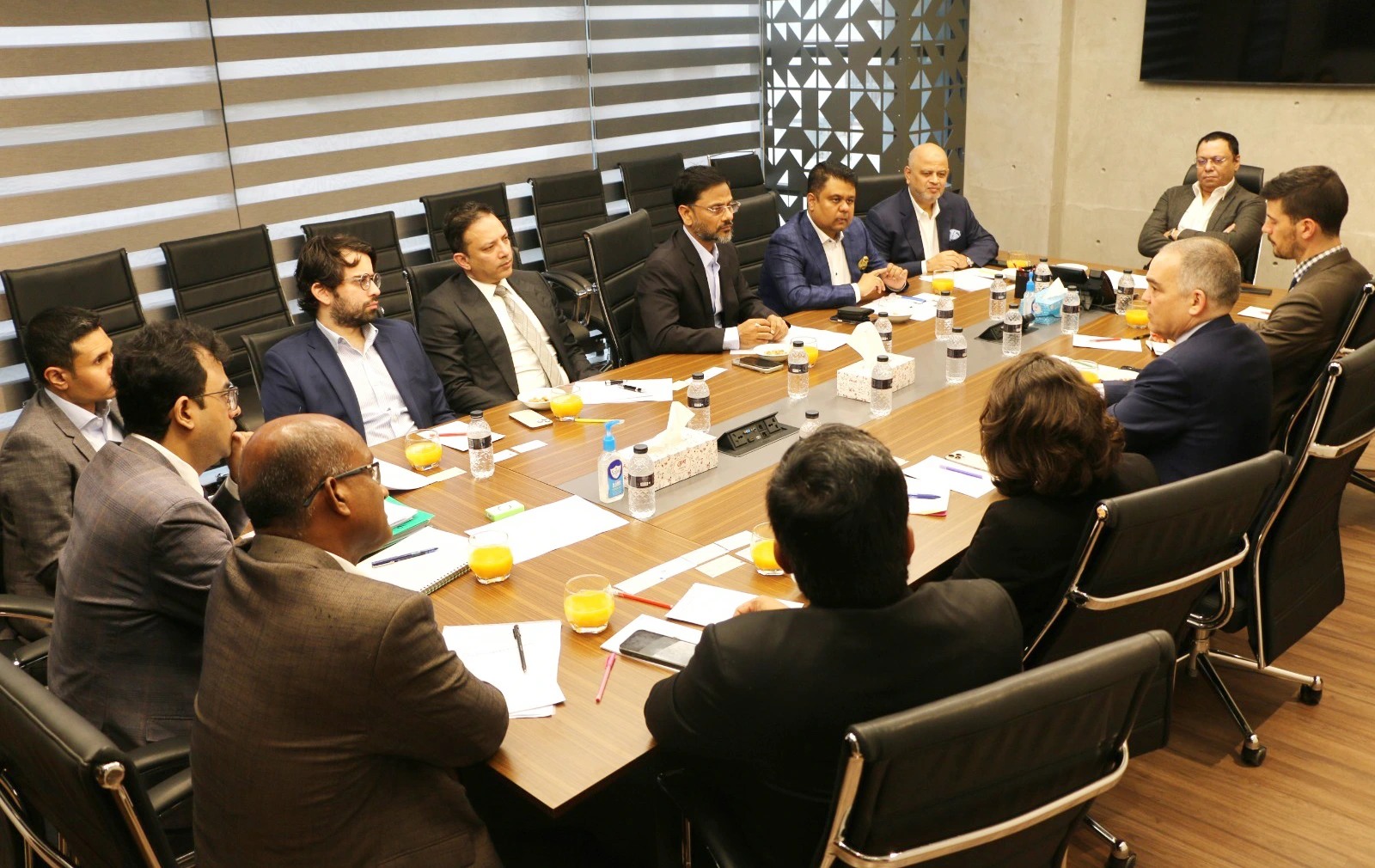
Bangladesh Textile Mills Association (BTMA) on June 24 called for the speedy implementation of duty-free market access facilities under a trade agreement covering apparel made with US cotton and man-made fibres (MMF).
BTMA President Showkat Aziz Russel made the request during a meeting with a delegation from the US Embassy in Dhaka held at the embassy’s Gulshan office.
The US delegation included Political-Economic Counsellor Eric Gillan, Agricultural Attaché Erin Covert, and Political-Economic Officer Charles Besnard.
BTMA directors Chowdhury Md Hanif Shoaib, Syed Ishtiaq Ahmed, Mirza Ahmed Ispahani and Rubayet Haider, along with former directors Md Masud Rana and Rajib Haider, were also present at the meeting.
Russel highlighted the contribution of the BTMA to the development of Bangladesh’s primary textile industry, noting its role in enhancing global competitiveness and export capacity in the post-LDC graduation period.
He said the association continues to serve as a key backward linkage industry supporting both the textile and readymade garment (RMG) sectors.
He urged the immediate implementation of Article 5.3 of the trade agreement between Bangladesh and the United States, aimed at expanding bilateral trade cooperation.
According to BTMA leaders, the provision allows duty-free access for apparel exported to the United States that is manufactured in Bangladesh using US cotton and man-made fibres.
They said full implementation would strengthen Bangladesh’s export competitiveness while also increasing US exports of cotton and MMF, benefiting both sides.
However, the BTMA president expressed concern that there has been no visible progress in implementing the agreement since its signing, creating uncertainty among investors and exporters.
He sought US support in ensuring the swift implementation of Article 5.3, finalisation of rules of origin, and tangible progress on the issue.
During the meeting, both sides exchanged views on expanding trade and investment cooperation, strengthening partnerships in the textile and related industries, increasing the use of US cotton, and other areas of mutual interest.
They also discussed the need for faster implementation of the central bonded warehouse system and improved market access for Bangladeshi textile and apparel products made using US cotton and MMF in the US market.