1:25 am, Friday, 7 August 2026

Bangladesh’s apparel exports to US decline 5.6pc in H1

Bangladesh’s apparel exports to the United States declined in the first half of 2026, with the country losing ground to regional competitors Vietnam, Cambodia and Indonesia.

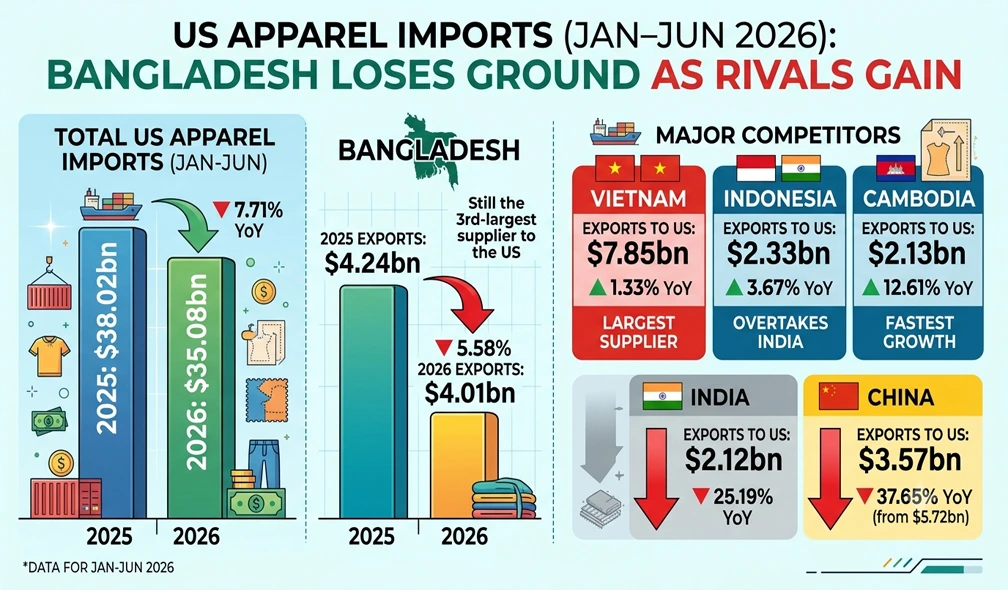
Bangladesh, the third-largest apparel supplier to the US market, exported garments worth $4.01 billion between January and June 2026, down 5.58 per cent from $4.24 billion in the corresponding period of 2025, according to data released by the US Office of Textiles and Apparel (OTEXA) on August 4.

The decline came despite an overall contraction in US apparel imports, which fell 7.71 per cent year-on-year to $35.08 billion from $38.02 billion, reflecting softer consumer demand amid heightened geopolitical uncertainty.

Industry leaders attributed Bangladesh’s weaker performance to both external and domestic pressures.

They said geopolitical tensions, including the US-Iran conflict, had dampened consumer spending on discretionary items such as clothing, while exporters at home were struggling with rising energy costs, unreliable gas and electricity supply, higher bank lending rates and increasing labour costs that had eroded the country’s cost competitiveness.

Among Bangladesh’s major competitors, Vietnam strengthened its position by overtaking China as the largest apparel supplier to the US market, with exports rising 1.33 per cent to $7.85 billion.

Cambodia posted the fastest growth among the leading exporters, with shipments increasing 12.61 per cent to $2.13 billion, while Indonesia’s exports rose 3.67 per cent to $2.33 billion, allowing it to overtake India.

India’s exports declined 25.19 per cent to $2.12 billion, while China recorded the sharpest fall among major suppliers, with shipments plunging 37.65 per cent to $3.57 billion from $5.72 billion a year earlier.

Bangladesh Garment Manufacturers and Exporters Association president Mahmud Hasan Khan said Vietnam and Cambodia enjoyed an advantage in shorter lead times and higher value-added production.

Although both countries depended on imported raw materials, they could source inputs from China much more quickly because of their geographical proximity, an advantage Bangladesh did not have, he said.

Mahmud Hasan Khan also said Vietnam had attracted substantial Chinese investment in recent years, while Bangladesh had struggled to secure similar investment because of infrastructure bottlenecks, policy inconsistency and political instability following the 2024 uprising.

He said that Indonesia’s stronger export performance was largely driven by its man-made fibre-based garment industry.

A recent study by the US Fashion Industry Association found that American brands were consolidating their supplier base in response to continuing supply chain disruptions, protectionist tariffs, stricter regulatory requirements and volatile trans-Pacific freight costs.

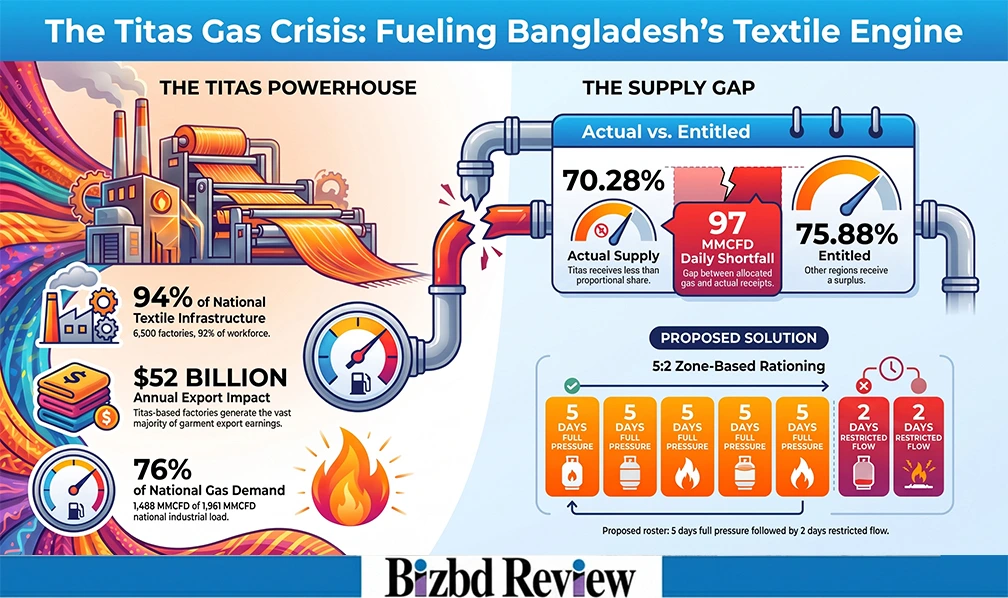
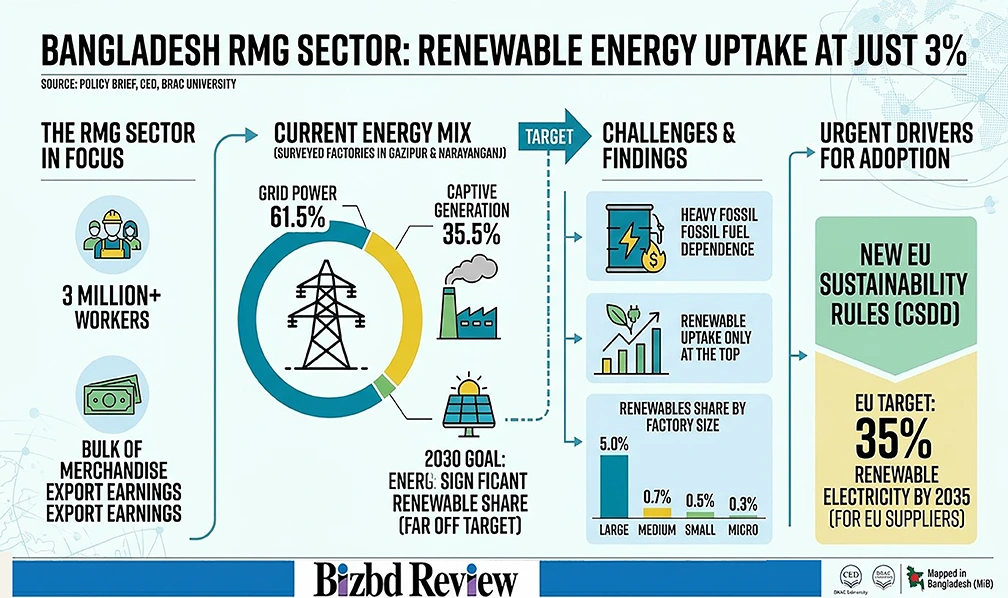
The export slowdown has coincided with an acute energy crisis in Bangladesh’s industrial belts, where factories are facing severe gas and electricity shortages during the peak production period for Christmas orders.

Pacific Jeans managing director Syed M Tanvir warned that exports could decline further if factories failed to meet shipment schedules between August and October for the Christmas sales season.

He urged the government to prioritise gas supply to export-oriented industrial zones, including Ashulia, Gazipur, Chattogram and Narayanganj.

Several manufacturers have already announced temporary production suspensions because of the energy shortage.

Bangladesh’s apparel exports to US decline 5.6pc in H1

Update Time : 08:38:00 pm, Thursday, 6 August 2026

Bangladesh’s apparel exports to the United States declined in the first half of 2026, with the country losing ground to regional competitors Vietnam, Cambodia and Indonesia.

Bangladesh, the third-largest apparel supplier to the US market, exported garments worth $4.01 billion between January and June 2026, down 5.58 per cent from $4.24 billion in the corresponding period of 2025, according to data released by the US Office of Textiles and Apparel (OTEXA) on August 4.

The decline came despite an overall contraction in US apparel imports, which fell 7.71 per cent year-on-year to $35.08 billion from $38.02 billion, reflecting softer consumer demand amid heightened geopolitical uncertainty.

Industry leaders attributed Bangladesh’s weaker performance to both external and domestic pressures.

They said geopolitical tensions, including the US-Iran conflict, had dampened consumer spending on discretionary items such as clothing, while exporters at home were struggling with rising energy costs, unreliable gas and electricity supply, higher bank lending rates and increasing labour costs that had eroded the country’s cost competitiveness.

Among Bangladesh’s major competitors, Vietnam strengthened its position by overtaking China as the largest apparel supplier to the US market, with exports rising 1.33 per cent to $7.85 billion.

Cambodia posted the fastest growth among the leading exporters, with shipments increasing 12.61 per cent to $2.13 billion, while Indonesia’s exports rose 3.67 per cent to $2.33 billion, allowing it to overtake India.

India’s exports declined 25.19 per cent to $2.12 billion, while China recorded the sharpest fall among major suppliers, with shipments plunging 37.65 per cent to $3.57 billion from $5.72 billion a year earlier.

Bangladesh Garment Manufacturers and Exporters Association president Mahmud Hasan Khan said Vietnam and Cambodia enjoyed an advantage in shorter lead times and higher value-added production.

Although both countries depended on imported raw materials, they could source inputs from China much more quickly because of their geographical proximity, an advantage Bangladesh did not have, he said.

Mahmud Hasan Khan also said Vietnam had attracted substantial Chinese investment in recent years, while Bangladesh had struggled to secure similar investment because of infrastructure bottlenecks, policy inconsistency and political instability following the 2024 uprising.

He said that Indonesia’s stronger export performance was largely driven by its man-made fibre-based garment industry.

A recent study by the US Fashion Industry Association found that American brands were consolidating their supplier base in response to continuing supply chain disruptions, protectionist tariffs, stricter regulatory requirements and volatile trans-Pacific freight costs.

The export slowdown has coincided with an acute energy crisis in Bangladesh’s industrial belts, where factories are facing severe gas and electricity shortages during the peak production period for Christmas orders.

Pacific Jeans managing director Syed M Tanvir warned that exports could decline further if factories failed to meet shipment schedules between August and October for the Christmas sales season.

He urged the government to prioritise gas supply to export-oriented industrial zones, including Ashulia, Gazipur, Chattogram and Narayanganj.

Several manufacturers have already announced temporary production suspensions because of the energy shortage.