Bizbd Report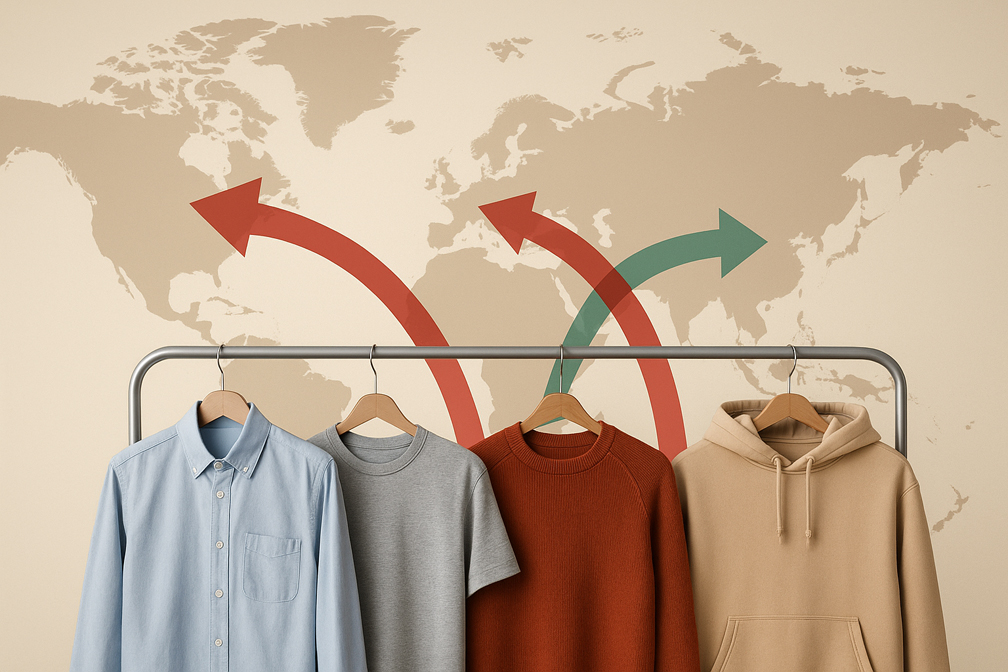
Key Asian apparel exporters, including Bangladesh, China, Vietnam, India, Pakistan, and Cambodia, are navigating a complex mix of tariff pressures, compliance costs, and intensifying competition, according to the 2025 Sourcing at MAGIC trade show and the United States Fashion Industry Association’s 2025 Benchmarking Study.
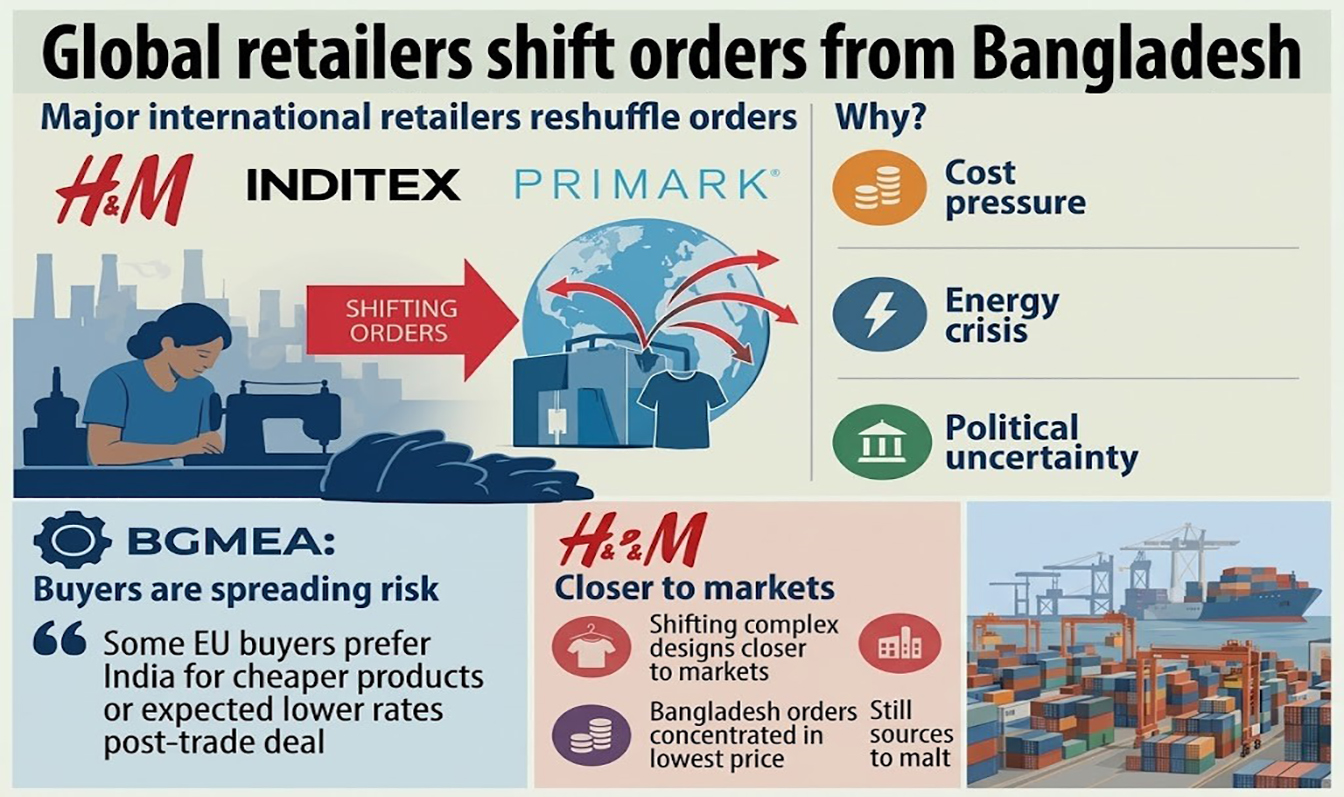
The trade show highlighted the two main challenges for Asian exporters: dealing with tariffs and compliance requirements while facing growing competition. As the US buyers look beyond China, Vietnam, and Bangladesh, emerging markets like Jordan, Egypt, Pakistan, and parts of Africa are becoming viable alternatives, suggesting a possible shift in global apparel supply chains.
The three-day MAGIC trade show in Las Vegas, held from August 18–20 and attended by thousands of manufacturers, textile suppliers, brands, and retailers from more than 30 countries, highlighted evolving US sourcing trends and shifting global supply chains.
Professor Sheng Lu of the University of Delaware observed that tariffs imposed during the Trump administration continued to weigh heavily on exporters and the US importers, contributing to inflationary pressures that were leading brands and retailers to adjust pricing, product assortments, and profit margins.
According to the report, Jordan is gaining attention for its growing competitiveness, supported by duty-free access to the US under trade agreements, while Egypt leverages its Qualifying Industrial Zones and expertise in cotton and natural-fibre apparel to meet rising the US demand.
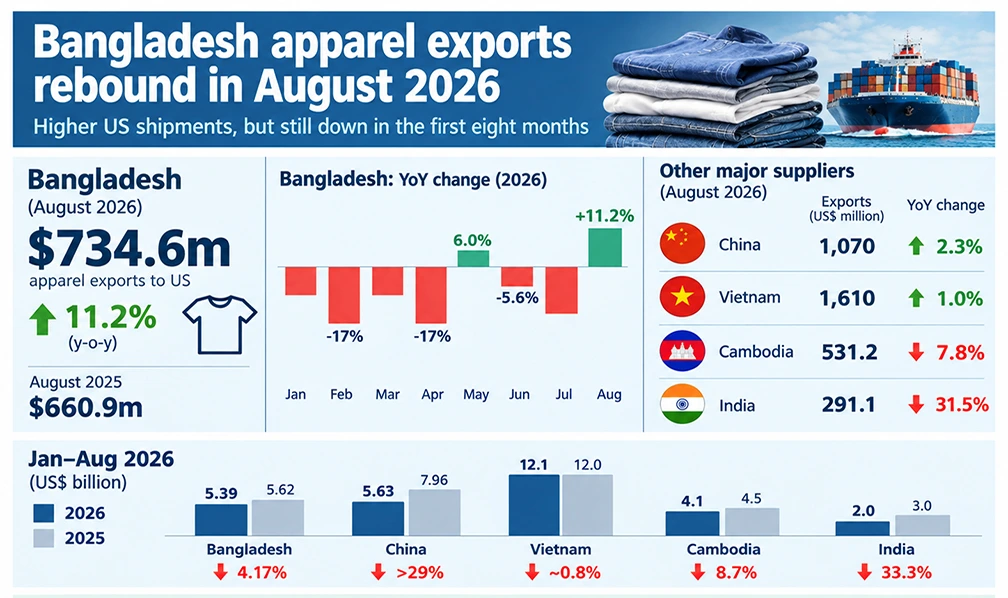
The report identified that Bangladesh was facing challenges from tariff uncertainty, dependence on large-volume orders, rising sustainability certification costs, and debates over Chinese-owned factories.
It said that China, despite tariff disadvantages, was mitigating risks through strategic diversification, operating factories across Asia and Africa, and providing value-added services such as drop shipping, direct-to-consumer e-commerce, and warehousing.
Some Chinese vendors even accepted small orders or low minimum quantities with short lead times, giving them a competitive edge.
The findings indicated that Vietnam and India were under pressure from rising labour and compliance costs, fragmented industry structures, and competition from tariff-advantaged rivals such as Pakistan.
It said that Cambodia remained vulnerable due to heavy reliance on the US market, high compliance costs, and the dominance of Chinese-owned factories.
Across all these countries, sustainability had shifted from a niche concern to a baseline requirement, with certifications such as Global Organic Textile Standard, Global Recycled Standard and Better Cotton Initiative.
The report also mentioned that emerging competitors were gaining traction. Jordan was said to benefit from duty-free access under the US–Jordan Free Trade Agreement and from capacity-building support provided by organisations such as the International Trade Centre, while Egypt leveraged its Qualifying Industrial Zones and expertise in cotton and natural-fibre apparel.
Pakistan was reported to be capturing market share in denim, while African suppliers—including those from Ghana backed by Chinese investment—were entering niche markets with cost and tariff advantages.
The report indicated that sustainability was becoming an increasingly important differentiator.
It noted that during the MAGIC trade show, suppliers from Asia, Africa, and emerging markets showcased clothing made from recycled or preferred fibers that integrated eco-design and social responsibility initiatives.
While acknowledging that certifications added costs, the findings suggested that many vendors viewed sustainable production as an opportunity to enhance competitiveness, with buyers often willing to pay a premium for certified products.