7:07 pm, Saturday, 8 November 2025
2025 WORLD TRADE REPORT

AI poses limited threat to textile and apparel jobs, competitive pressures loom

  • Bizbd Report
  • Update Time : 09:29:03 pm, Sunday, 21 September 2025
  • 233

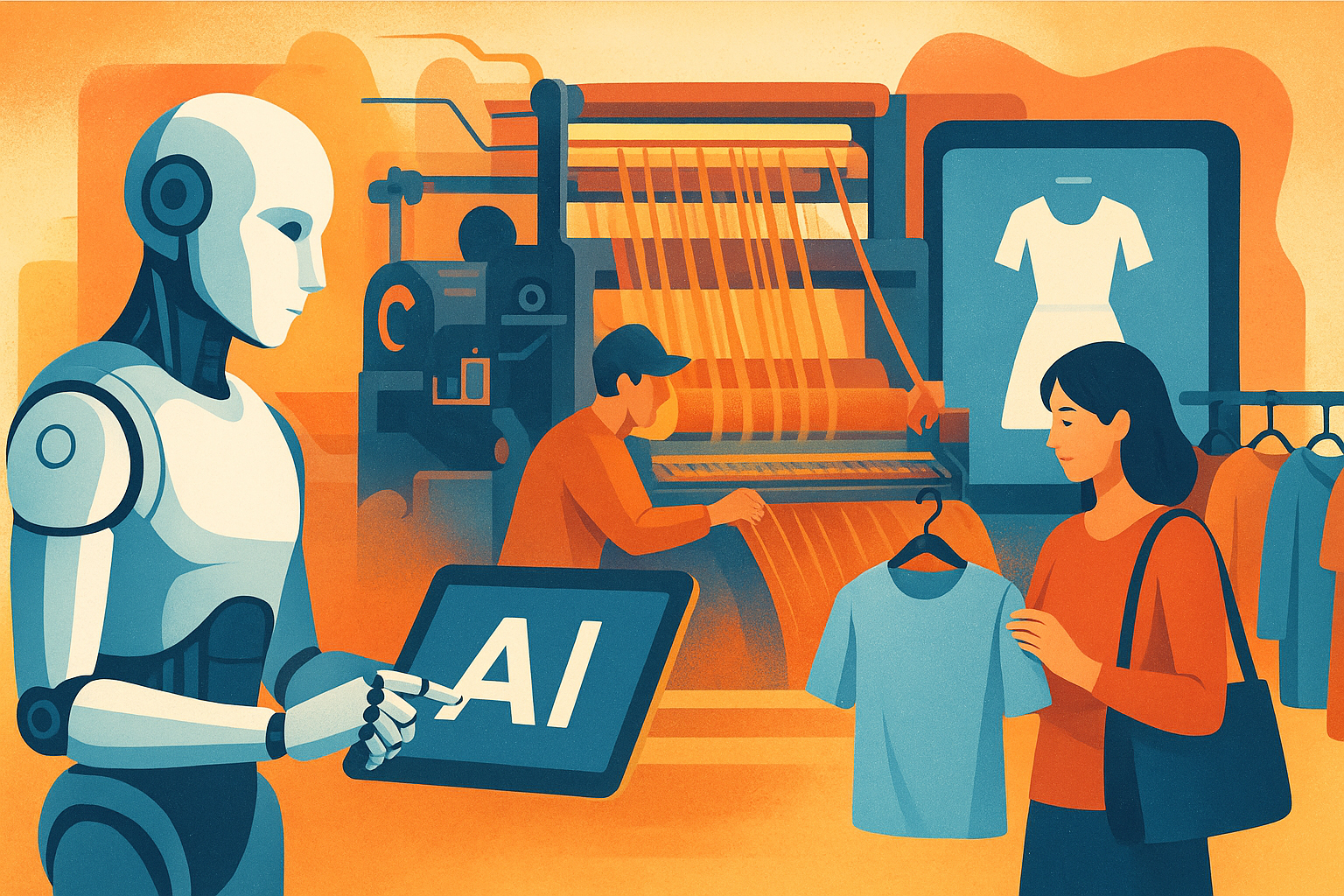
The World Trade Organization (WTO) has highlighted the complex impact of artificial intelligence (AI) on the global textile and apparel sector in its 2025 World Trade Report.

The report indicated that the textile and apparel sector was classified as having ‘low AI intensity,’ suggesting that immediate job displacement due to automation was likely to be limited.

‘The task substitution from human labor to AI is more pronounced for medium-skilled and high-skilled occupations than for low-skilled ones,’ the report read.

It said that low-skilled manufacturing roles were expected to remain largely unaffected, with only about 3 per cent of tasks at risk, while medium- and high-skilled roles, particularly in apparel wholesaling and retailing, could see 7–9 per cent of tasks automated.

WTO simulations suggested that low-skilled employment might rise by 3–4 per cent, whereas medium- and high-skilled employment could increase by 1–2 per cent.

The report also warned that, despite the sector’s low direct exposure to AI, broader structural challenges remained.

It explained that AI technology tended to favour capital- and data-intensive production, which could undermine the competitiveness of economies reliant on low-cost, labour-intensive manufacturing.

Report said that firms in advanced economies adopting AI-enabled optimisation might reduce incentives for offshore production, potentially creating reshoring pressures and threatening export opportunities in developing countries heavily dependent on apparel manufacturing for jobs.

WTO report emphasised the importance of proactive policy measures to manage these shifts and reduce inequality.

It urged developing economies to invest in digital infrastructure, education, and labour market reforms to enable workers and firms to adapt to AI-driven changes.

The WTO stressed that adopting AI tools, even in low-intensity sectors such as textiles and apparel, was essential for maintaining global competitiveness.

Finally, the report highlighted that, although the immediate threat to jobs in textiles and apparel was modest, failure to integrate key AI applications could gradually weaken the sector’s position in the global market.

It said that while low-AI-intensity sectors might avoid dramatic automation impacts, they were not immune to the economic pressures and structural shifts resulting from broader AI adoption in trade and manufacturing.
2025 WORLD TRADE REPORT

AI poses limited threat to textile and apparel jobs, competitive pressures loom

Update Time : 09:29:03 pm, Sunday, 21 September 2025

The World Trade Organization (WTO) has highlighted the complex impact of artificial intelligence (AI) on the global textile and apparel sector in its 2025 World Trade Report.

The report indicated that the textile and apparel sector was classified as having ‘low AI intensity,’ suggesting that immediate job displacement due to automation was likely to be limited.

‘The task substitution from human labor to AI is more pronounced for medium-skilled and high-skilled occupations than for low-skilled ones,’ the report read.

It said that low-skilled manufacturing roles were expected to remain largely unaffected, with only about 3 per cent of tasks at risk, while medium- and high-skilled roles, particularly in apparel wholesaling and retailing, could see 7–9 per cent of tasks automated.

WTO simulations suggested that low-skilled employment might rise by 3–4 per cent, whereas medium- and high-skilled employment could increase by 1–2 per cent.

The report also warned that, despite the sector’s low direct exposure to AI, broader structural challenges remained.

It explained that AI technology tended to favour capital- and data-intensive production, which could undermine the competitiveness of economies reliant on low-cost, labour-intensive manufacturing.

Report said that firms in advanced economies adopting AI-enabled optimisation might reduce incentives for offshore production, potentially creating reshoring pressures and threatening export opportunities in developing countries heavily dependent on apparel manufacturing for jobs.

WTO report emphasised the importance of proactive policy measures to manage these shifts and reduce inequality.

It urged developing economies to invest in digital infrastructure, education, and labour market reforms to enable workers and firms to adapt to AI-driven changes.

The WTO stressed that adopting AI tools, even in low-intensity sectors such as textiles and apparel, was essential for maintaining global competitiveness.

Finally, the report highlighted that, although the immediate threat to jobs in textiles and apparel was modest, failure to integrate key AI applications could gradually weaken the sector’s position in the global market.

It said that while low-AI-intensity sectors might avoid dramatic automation impacts, they were not immune to the economic pressures and structural shifts resulting from broader AI adoption in trade and manufacturing.