Bizbd Report
Economists and former policymakers on Thursday raised concerns about Bangladesh’s economy, warning that slow reforms and weak revenue collection could hurt growth and global competitiveness.
The warnings came during the Monthly Macroeconomic Insights (MMI) event held today by the Centre for Macroeconomic Analysis (CMEA) of the Policy Research Institute of Bangladesh (PRI), in partnership with Australia’s Department of Foreign Affairs and Trade (DFAT).
In his opening remarks, Khurshid Alam, Executive Director of PRI, said that revenue generation continued to pose a major challenge and pointed out that reforms such as separating policymaking from implementation at the National Board of Revenue (NBR) were still unfinished.
Zaidi Sattar, Chairman of PRI and keynote speaker at the event, observed that Bangladesh’s economy remained investment-driven, but recent signs pointed to slowing private credit growth, falling imports of capital machinery, and a decline in investment to around 29 per cent of GDP.
While macroeconomic stability had been maintained, he noted that overall growth was beginning to weaken.
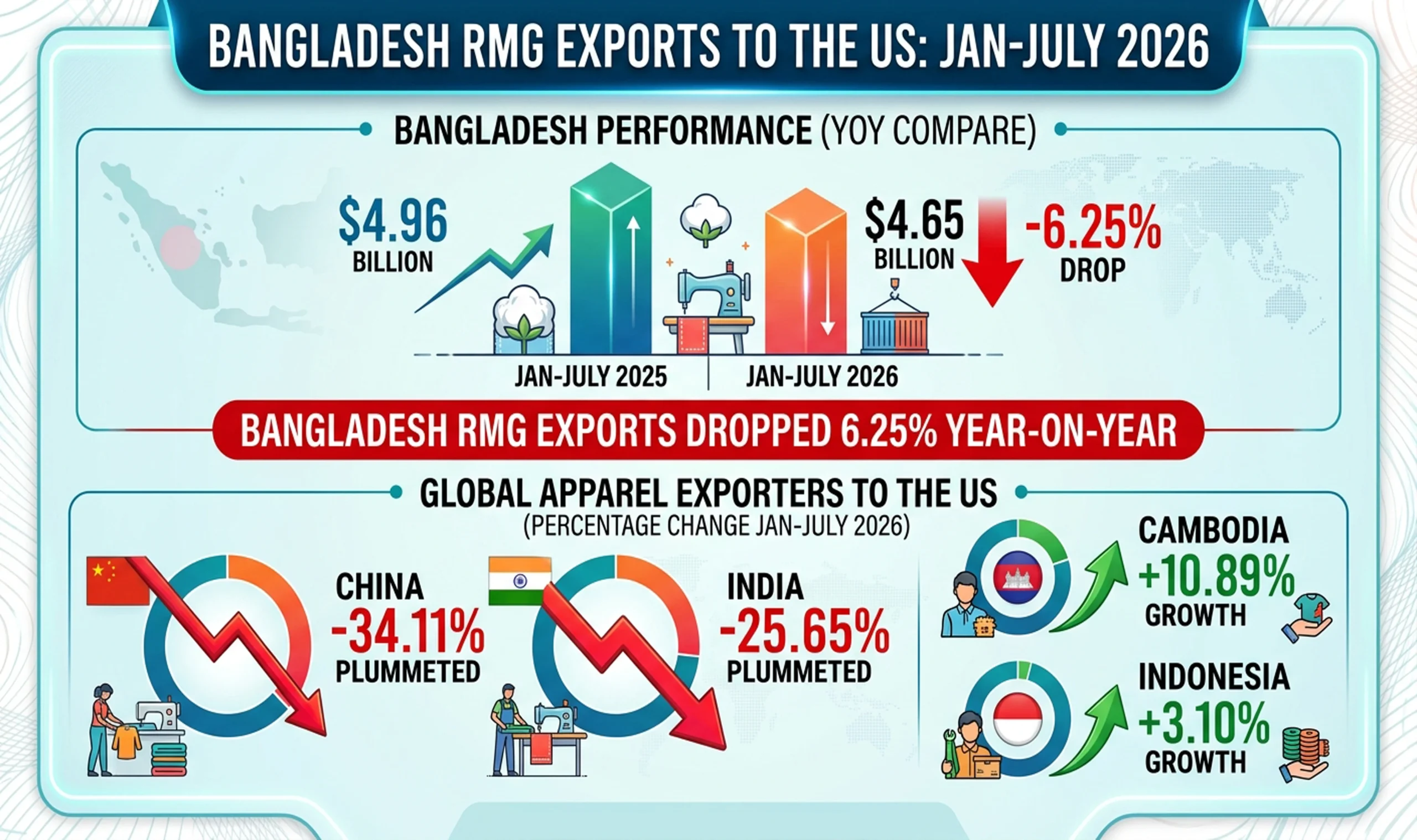
He also underlined the urgency of securing a trade agreement with the United States, warning that Bangladesh could no longer depend solely on its low-cost labour advantage to remain globally competitive.
Zaidi Sattar cautioned that if rival countries secured better trade deals, Bangladesh risked falling behind.
Echoing this concern, Abdul Moyeen Khan, former Minister for Economic Planning, said that Bangladesh lagged behind its competitors in obtaining favourable trade terms with the US.
He stressed that building internal trust within the government would be vital for achieving lasting economic stability.
Ashikur Rahman, Principal Economist at PRI, highlighted the need for deep reforms and improved governance in the banking sector.
He noted that such changes would require continuity over the next one to three years, along with strong political commitment from the country’s next elected government.
Clinton Pobke, Australian Deputy Head of Mission to Bangladesh, described the event as a valuable platform for engaging with complex economic challenges and exploring practical solutions.
Muhammad Abdul Mazid, former Chairman of the NBR, warned that Bangladesh’s limited fiscal space made reforms in tax policy, debt management, and GDP calculation not only necessary but urgent.
He added that without a clear division of policymaking and implementation roles within the NBR, meaningful progress would remain out of reach.
The event ended with an open discussion on topics such as inflation, monetary policy, and digitalising revenue collection.