3:29 am, Friday, 7 November 2025

US tariff cut brings relief to Bangladesh’s RMG sector, says BGMEA president

The US government’s decision to reduce reciprocal tariffs on Bangladeshi products from 35 per cent to 20 per cent has brought welcome relief to the country’s apparel industry, says Bangladesh Garment Manufacturers and Exporters Association President Mahmud Hasan Khan.

‘For the past three months, we were facing uncertainty due to the high tariffs. It was hard to do business in such conditions. US buyers were also waiting to see what would happen,’ Khan said. ‘This reduction is a relief.’

BGMEA president said that they had warned from the outset that doing business would become difficult if countervailing tariffs on Bangladeshi products were higher than those of competitor countries.

He said that while Bangladesh’s tariff was 1 per cent higher than Pakistan’s, it was 5 per cent lower than India’s and 10 per cent lower than China’s, which was a significant relief.

BGMEA President said that the additional tariffs might cause a temporary slowdown in business, as US buyers would now have to pay higher duties than before when importing goods, which would put pressure on their working capital.

He explained that if they were unable to arrange additional financing in such a situation, they might reduce the number of orders.

Khan said that the burden of these higher tariffs would ultimately fall on consumers, and if tariffs pushed up product prices, buyers would come under pressure, potentially leading to reduced sales.

He mentioned that in the first phase back in April, the Trump administration had imposed a minimum 10 per cent  duty on products from all countries. US buyers had managed the impact in various ways, and in some cases, Bangladeshi suppliers were forced to share the burden of the additional tariffs due to pressure from buyer companies.

Khan stressed that these additional tariffs must be borne by the importers and buyer companies, not the suppliers, and ultimately, the cost would be passed on to American consumers.

He emphasised that this message needed to be clearly understood.

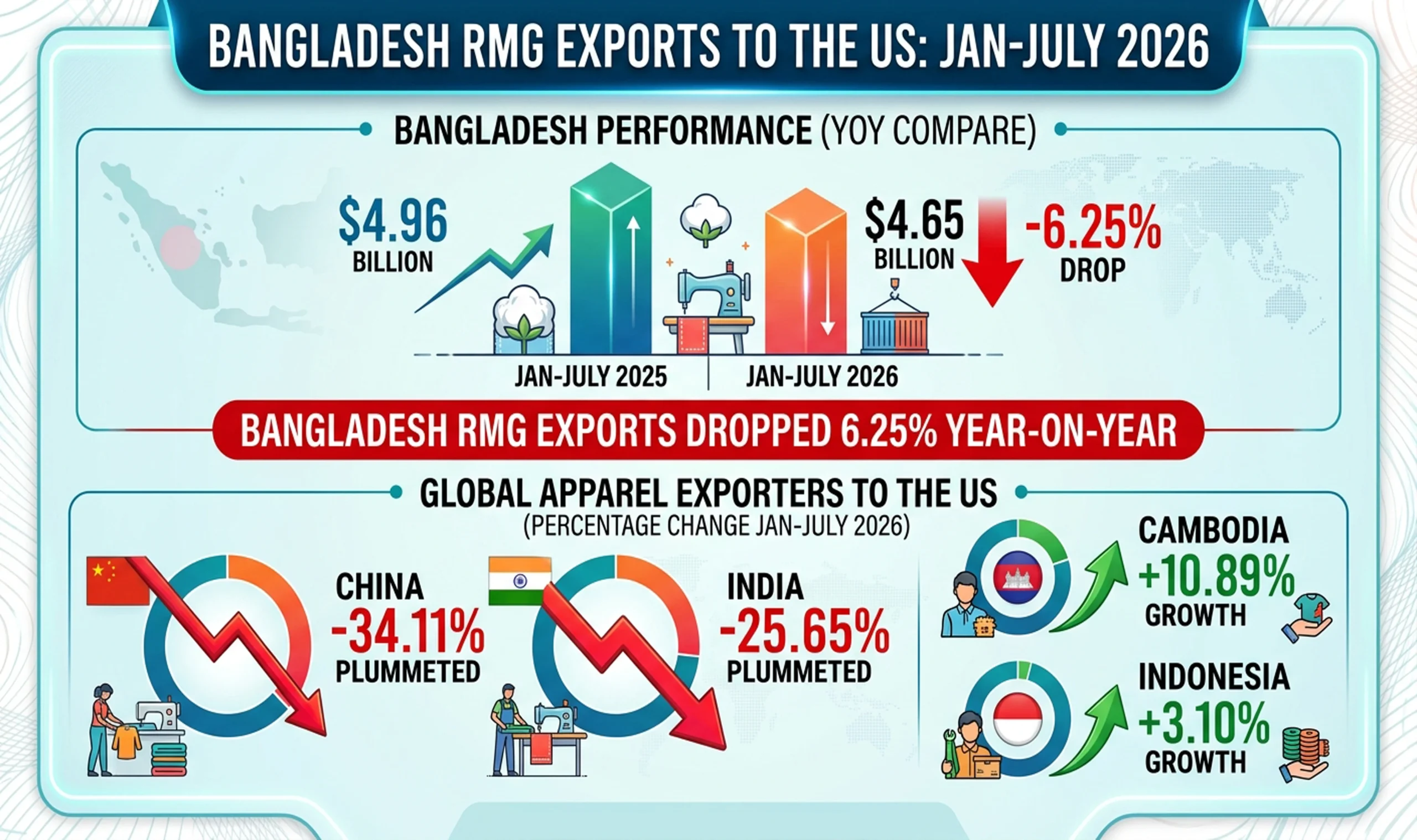
BGMEA President also said that China was still facing reciprocal tariffs of 30 per cent, and that the US President was expected to announce the final tariff rate on Chinese goods soon.

However, early indications suggested that China’s tariff rate would not be lower than Bangladesh’s, he said.

As a result, the shift of apparel orders away from China was expected to continue, creating opportunities for Bangladesh to expand its business, Khan said.

He said that to seize this opportunity, it was essential to ensure an adequate energy supply, enhanced capacity at Chattogram Port, and political stability.

Although only the draft or a summary of the agreement had been seen so far, BGMEA president hoped the country’s trade delegation had finalised the deal in a way that protected both national and industry interests.

Khan highlighted the importance of properly implementing the commitments and agreements made by Bangladesh during the tariff discussions.

These, he said, included short-term arrangements such as the purchase of wheat, cotton, and LNG, as well as long-term commitments like aircraft procurement.

BGMEA president warned that any failure to fulfil these obligations could place the country in difficulty once again.
US tariff cut brings relief to Bangladesh’s RMG sector, says BGMEA president

Update Time : 11:40:23 pm, Friday, 1 August 2025

The US government’s decision to reduce reciprocal tariffs on Bangladeshi products from 35 per cent to 20 per cent has brought welcome relief to the country’s apparel industry, says Bangladesh Garment Manufacturers and Exporters Association President Mahmud Hasan Khan.

‘For the past three months, we were facing uncertainty due to the high tariffs. It was hard to do business in such conditions. US buyers were also waiting to see what would happen,’ Khan said. ‘This reduction is a relief.’

BGMEA president said that they had warned from the outset that doing business would become difficult if countervailing tariffs on Bangladeshi products were higher than those of competitor countries.

He said that while Bangladesh’s tariff was 1 per cent higher than Pakistan’s, it was 5 per cent lower than India’s and 10 per cent lower than China’s, which was a significant relief.

BGMEA President said that the additional tariffs might cause a temporary slowdown in business, as US buyers would now have to pay higher duties than before when importing goods, which would put pressure on their working capital.

He explained that if they were unable to arrange additional financing in such a situation, they might reduce the number of orders.

Khan said that the burden of these higher tariffs would ultimately fall on consumers, and if tariffs pushed up product prices, buyers would come under pressure, potentially leading to reduced sales.

He mentioned that in the first phase back in April, the Trump administration had imposed a minimum 10 per cent  duty on products from all countries. US buyers had managed the impact in various ways, and in some cases, Bangladeshi suppliers were forced to share the burden of the additional tariffs due to pressure from buyer companies.

Khan stressed that these additional tariffs must be borne by the importers and buyer companies, not the suppliers, and ultimately, the cost would be passed on to American consumers.

He emphasised that this message needed to be clearly understood.

BGMEA President also said that China was still facing reciprocal tariffs of 30 per cent, and that the US President was expected to announce the final tariff rate on Chinese goods soon.

However, early indications suggested that China’s tariff rate would not be lower than Bangladesh’s, he said.

As a result, the shift of apparel orders away from China was expected to continue, creating opportunities for Bangladesh to expand its business, Khan said.

He said that to seize this opportunity, it was essential to ensure an adequate energy supply, enhanced capacity at Chattogram Port, and political stability.

Although only the draft or a summary of the agreement had been seen so far, BGMEA president hoped the country’s trade delegation had finalised the deal in a way that protected both national and industry interests.

Khan highlighted the importance of properly implementing the commitments and agreements made by Bangladesh during the tariff discussions.

These, he said, included short-term arrangements such as the purchase of wheat, cotton, and LNG, as well as long-term commitments like aircraft procurement.

BGMEA president warned that any failure to fulfil these obligations could place the country in difficulty once again.