12:56 pm, Sunday, 14 June 2026

Photography exhibition highlights childcare realities in Bangladesh

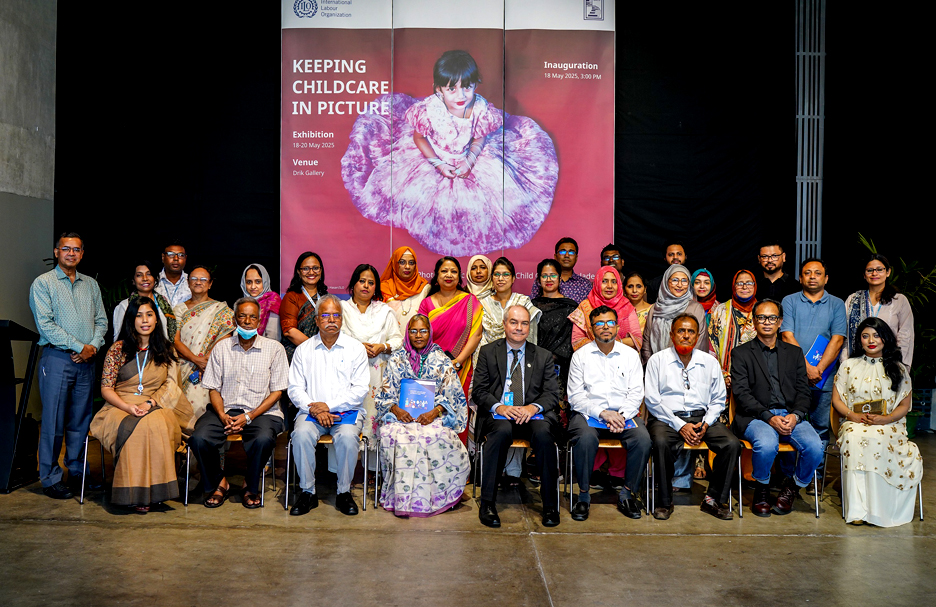
A three-day photography exhibition titled ‘Childcare in Pictures’ has opened at Drik Gallery in Dhaka, offering a vivid look into the lives of working parents, their children and the caregivers who support them.

Jointly organised by the International Labour Organization (ILO) and the Bangladesh Institute of Labour Studies (BILS), the exhibition runs from May 18 to 20, aiming to spotlight the critical but often overlooked role of childcare in Bangladesh’s social and economic fabric, said a press release.

Women and children affairs ministry senior secretary Momtaz Ahmed inaugurated the exhibition on May 18.

Other guests at the opening included ILO country director Tuomo Poutiainen, Labour Reform Commission chairman and BILS executive director Syed Sultan Uddin Ahmed, representatives from development and social organisations, Sramik Karmachari Oikya Parishad (SKOP, and the National Coordination Committee for Workers Education (NCCWE).

The release said that the exhibition placed special emphasis on the personal stories of childcare workers, aiming to portray childcare not only as a crucial social service but also as an essential support system for working families.

It said that the photographs and documentary featured in the exhibition were created by Mohammed Rakibul Hasan.

Speakers at the event highlighted the rising demand for childcare services in Bangladesh, driven by the growing participation of women in the workforce.

They emphasised that the care economy holds vast potential for employment—especially for women—provided that issues such as fair wages and social protection are addressed.

Recognising childcare as a dignified and professional sector, they said, is a crucial first step in unlocking these opportunities.

The exhibition explores both formal and informal childcare models. Home-based care is typically delivered by domestic workers or informal caregivers either in their own homes or at the child’s home.

In contrast, centre-based childcare includes a mix of government-run, private, employer-supported, NGO-operated, and community-based day-care centres.

There are currently 63 government-operated day-care centres in the country, which are non-profit and funded by the state.

Under the Bangladesh Labour Act 2006, employer-supported centres are required in workplaces employing 40 or more women.

NGO-run centres, also non-profit, provide a wide range of services, including feeding, early education, health checks, and literacy programmes.

Community-based centres—typically located near female-dominated sectors such as the garment industry—offer limited but essential childcare support.
Photography exhibition highlights childcare realities in Bangladesh

Update Time : 08:57:37 pm, Sunday, 18 May 2025

A three-day photography exhibition titled ‘Childcare in Pictures’ has opened at Drik Gallery in Dhaka, offering a vivid look into the lives of working parents, their children and the caregivers who support them.

Jointly organised by the International Labour Organization (ILO) and the Bangladesh Institute of Labour Studies (BILS), the exhibition runs from May 18 to 20, aiming to spotlight the critical but often overlooked role of childcare in Bangladesh’s social and economic fabric, said a press release.

Women and children affairs ministry senior secretary Momtaz Ahmed inaugurated the exhibition on May 18.

Other guests at the opening included ILO country director Tuomo Poutiainen, Labour Reform Commission chairman and BILS executive director Syed Sultan Uddin Ahmed, representatives from development and social organisations, Sramik Karmachari Oikya Parishad (SKOP, and the National Coordination Committee for Workers Education (NCCWE).

The release said that the exhibition placed special emphasis on the personal stories of childcare workers, aiming to portray childcare not only as a crucial social service but also as an essential support system for working families.

It said that the photographs and documentary featured in the exhibition were created by Mohammed Rakibul Hasan.

Speakers at the event highlighted the rising demand for childcare services in Bangladesh, driven by the growing participation of women in the workforce.

They emphasised that the care economy holds vast potential for employment—especially for women—provided that issues such as fair wages and social protection are addressed.

Recognising childcare as a dignified and professional sector, they said, is a crucial first step in unlocking these opportunities.

The exhibition explores both formal and informal childcare models. Home-based care is typically delivered by domestic workers or informal caregivers either in their own homes or at the child’s home.

In contrast, centre-based childcare includes a mix of government-run, private, employer-supported, NGO-operated, and community-based day-care centres.

There are currently 63 government-operated day-care centres in the country, which are non-profit and funded by the state.

Under the Bangladesh Labour Act 2006, employer-supported centres are required in workplaces employing 40 or more women.

NGO-run centres, also non-profit, provide a wide range of services, including feeding, early education, health checks, and literacy programmes.

Community-based centres—typically located near female-dominated sectors such as the garment industry—offer limited but essential childcare support.