Bizbd Report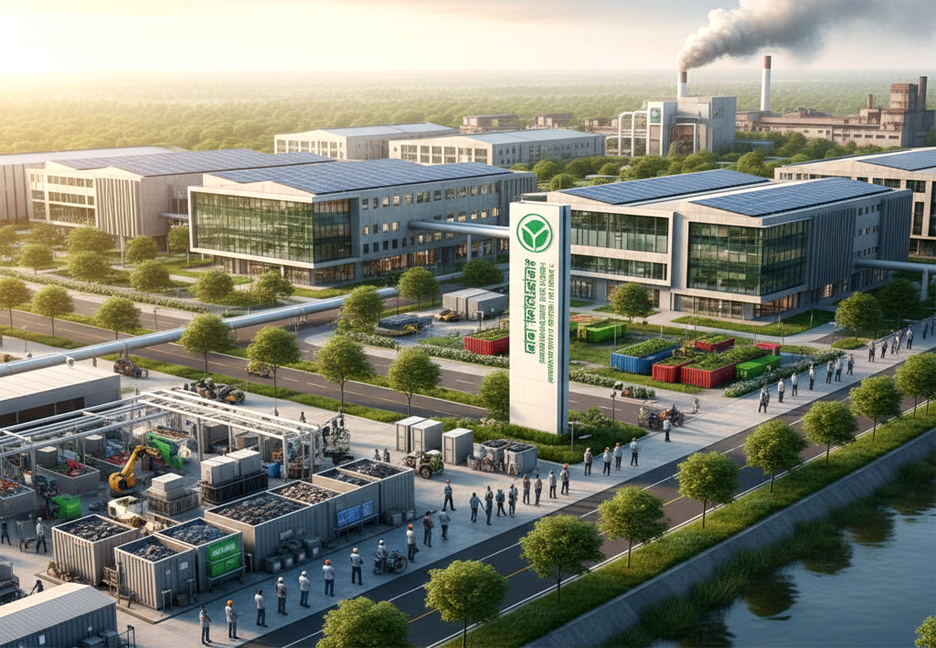
Eco-Industrial Park (EIP) approaches offer a vital solution to mitigate the climate impact of industries in Bangladesh by significantly scaling up resource productivity, minimising waste, and promoting recycling, according to speakers at a recent consultation.
They observed that Bangladesh’s industrial sectors, which have historically prioritised cost competitiveness over environmental resilience, have contributed to the Gross Domestic Product (GDP) but at a measurable environmental cost.
The emergence of EIPs presents a crucial opportunity to reshape this model, providing a structured framework to reverse detrimental trends by embedding resource efficiency, circular economy practices, renewable energy, and industrial symbiosis—where one firm’s waste becomes a valuable input for another.
The stakeholders stressed the need for a coherent national EIP framework, complete with clear sustainability standards.
This framework should incorporate specific criteria for energy, water, waste, emissions, and social safeguards across all industrial zones.
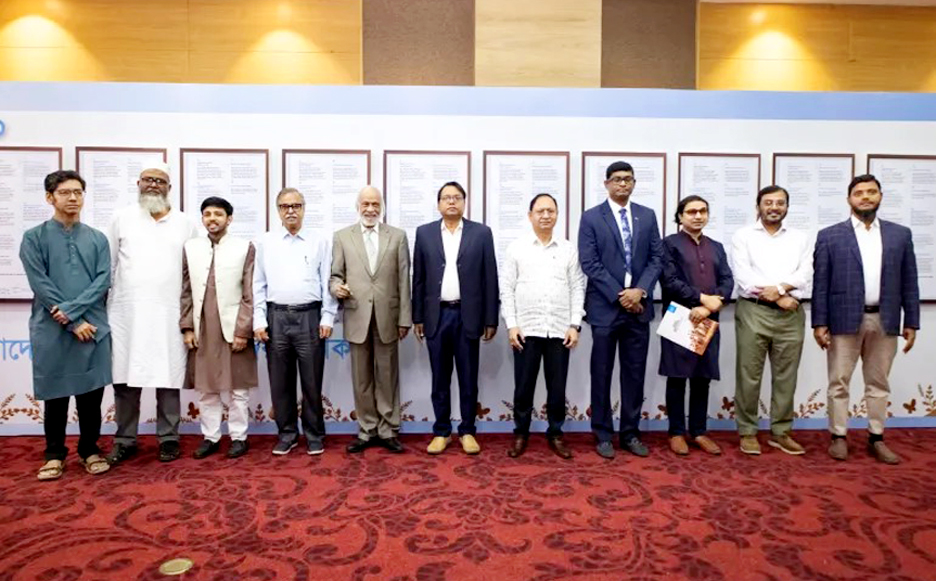
The observations and suggestions were made during a consultation titled ‘Eco-Industrial Parks for just transition, green jobs, employment, skills and social inclusion in Bangladesh,’ held on December 8 in a city hotel.
The event was organised by the United Nations Industrial Development Organization (UNIDO) and Research and Policy Integration for Development (RAPID), under the pilot initiative of Eco-Industrial Parks Light Touch Activities in Bangladesh.
RAPID executive director M Abu Eusuf said that EIPs would be instrumental in advancing Bangladesh’s economy as it graduates from Least Developed Country (LDC) status, noting their potential for job creation.
He emphasised that ensuring compliance with global standards is paramount for attracting business, Foreign Direct Investment (FDI), and generating employment, adding that compliance in the leather sector alone could yield $12 billion in foreign currency earnings from product exports.
Presenting a keynote, RAPID deputy director Md Jahid Ebn Jalal highlighted the hidden costs associated with industrial growth.
He pointed out that while the industrial sector contributes 34 to 38 per cent to the GDP, industrial pollution accounts for approximately 60 per cent of river contamination, illustrating the environmental price tag.
Jahid stressed that EIPs are not just about pollution control, but about achieving resource efficiency, leading to lower operating costs, higher competitiveness, and supporting social infrastructure like childcare and training centres, which ultimately helps meet crucial global buyer requirements, such as the EU Due Diligence rules.
National Project Coordinator in Bangladesh for the EIP Light Touch Activities Chandramallika Ghosh explained that EIPs are managed industrial areas designed to foster cross-industry and community collaboration for common economic, social, and environmental benefits.
She detailed that the piloting programme will support EIP awareness-raising, policy gap analysis, capacity building for institutions, benchmarking industrial parks against the International Framework for Eco-Industrial Parks, and providing training on UNIDO EIP approaches and tools in five countries, including Bangladesh.
She affirmed that the EIP approaches reduce procurement costs and environmental, economic, and social risks while simultaneously boosting competitiveness and profitability, attracting investment, and ensuring good-quality jobs, along with worker health and safety.
UNIDO policy expert Mohammad Avi Hossain and BEPZA deputy director Ummay Hani Islam were also among the speakers at the event.