Bizbd Report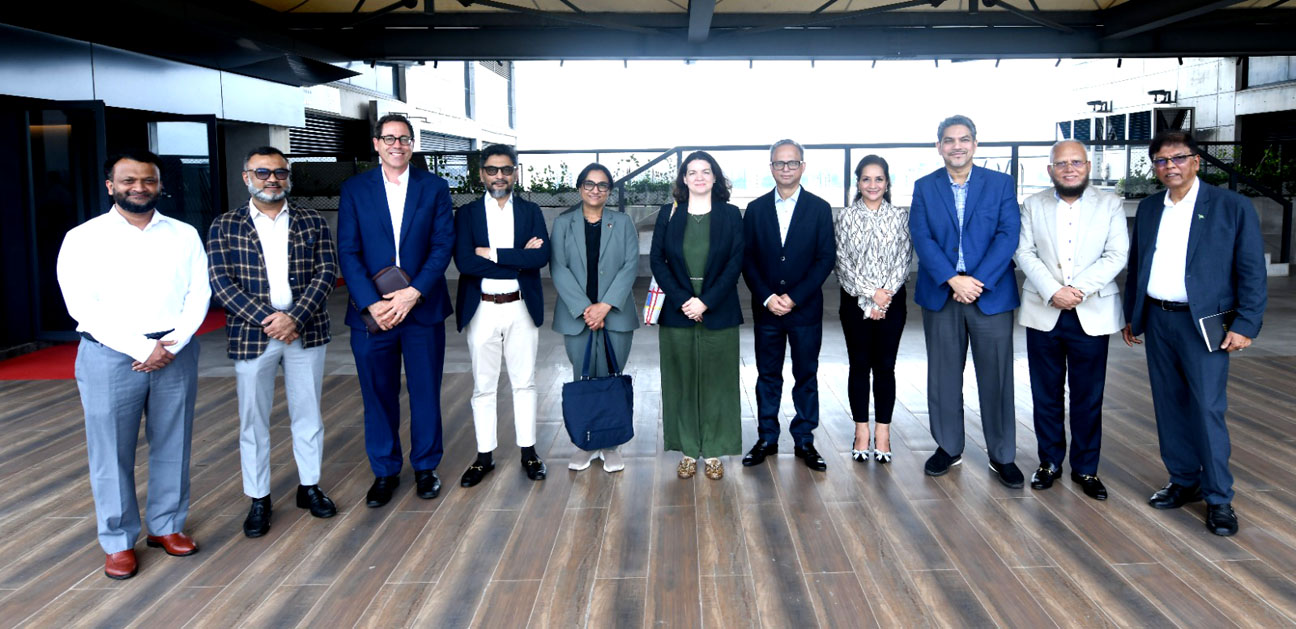
Bangladesh Garment Manufacturers and Exporters Association (BGMEA) has called for clarity on the formula for calculating US raw material usage, as well as mechanisms to ensure transparency and traceability across the supply chain, following the recently announced duty waiver on American raw materials.
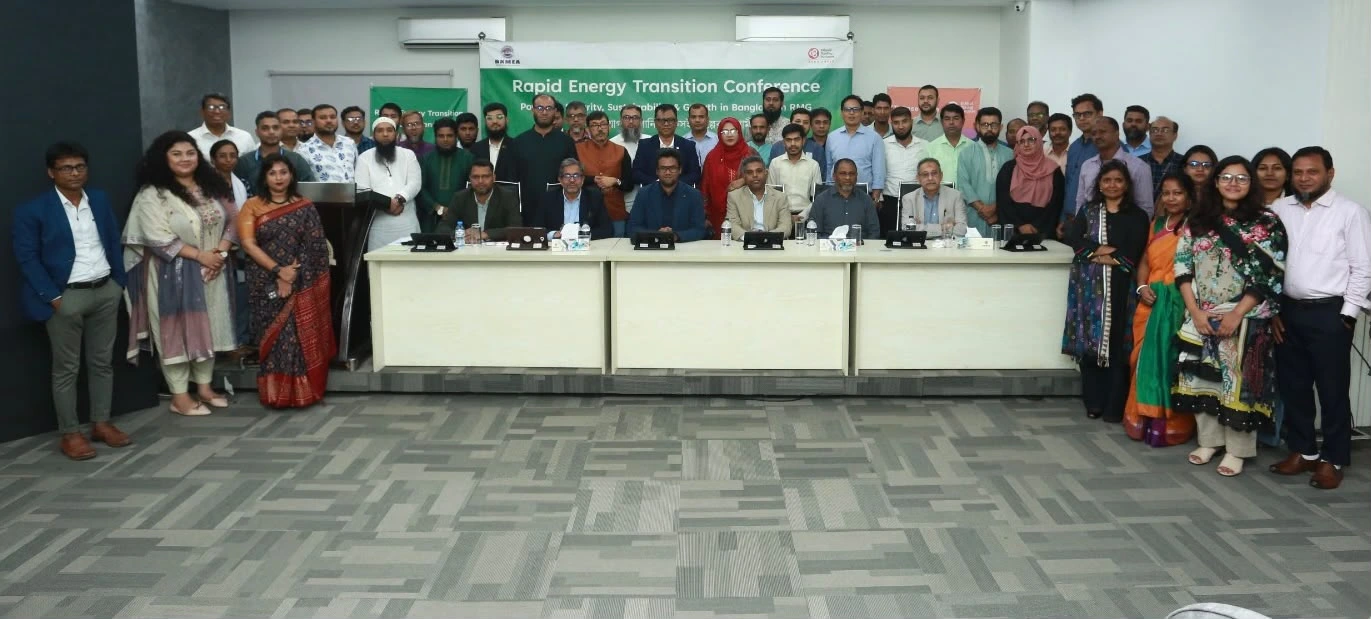
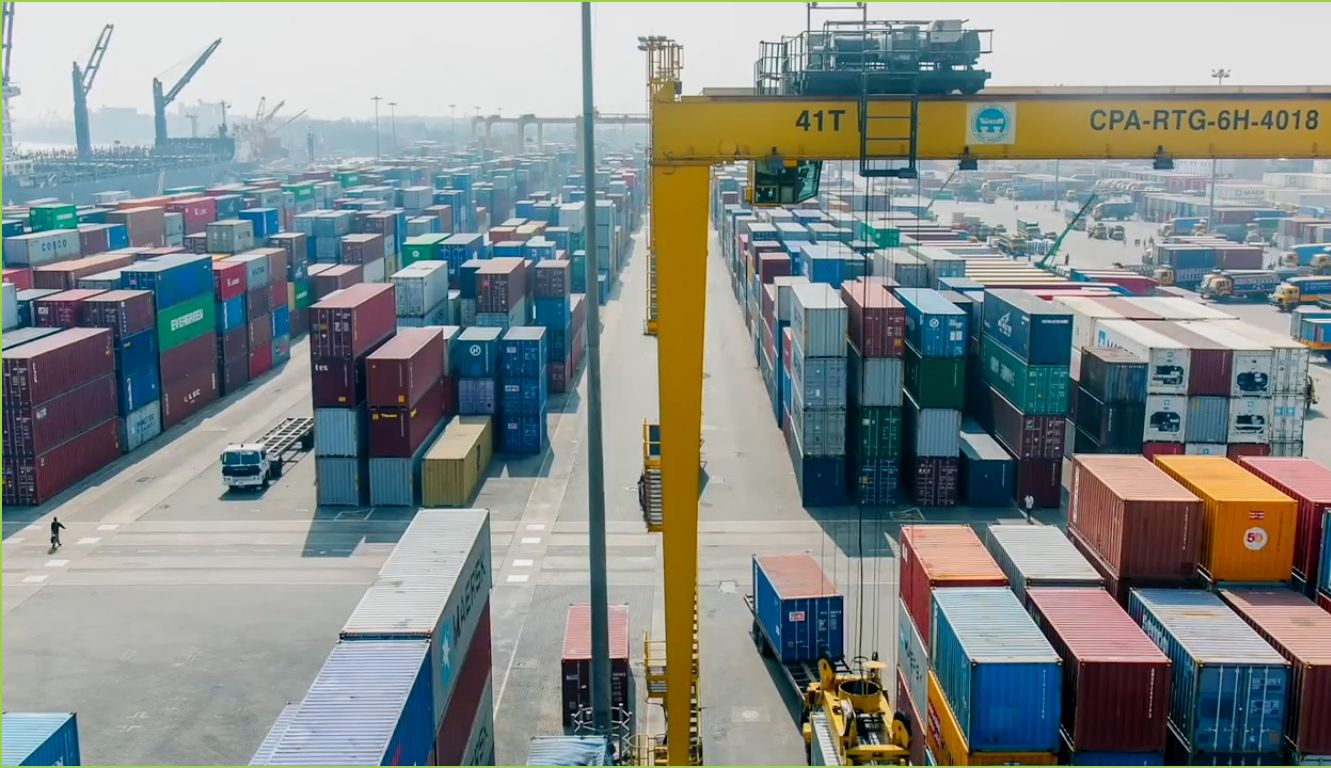
The association also explored the possibility of setting up a warehouse near Chattogram Port to speed up cotton imports from the United States, during a meeting between BGMEA president Mahmud Hasan Khan and a delegation from the US Embassy in Dhaka, the organisation said in a statement issued on August 13.
The US Embassy delegation included Labour Attaché Leena Khan, Foreign Commercial Service Attaché Paul G Frost and Foreign Agricultural Service Attaché Erin Covert.
From BGMEA, Senior Vice President Inamul Haq Khan, Vice President Md Rezwan Selim, Vice President (Finance) Mijanur Rahman, Vice President Vidiya Amrit Khan, and Directors Mohammad Abdur Rahim, Faisal Samad, and Sheikh Hossain Muhammad Mustafiz attended.
A key topic of the meeting was a recent US executive order allowing garments exported from Bangladesh to be proportionately exempt from a newly imposed additional 20 per cent duty, provided at least 20 per cent of the raw materials used in these garments are sourced from the United States, the statement added.
Welcoming the initiative, BGMEA President Mahmud Hasan Khan said the Bangladesh apparel industry is highly interested in utilising this facility.
The meeting also discussed the possibility of setting up a warehouse as a Bangladeshi initiative, a US initiative, or a joint venture, noting that such a warehouse would help reduce lead times in the garment industry.
In addition to cotton, BGMEA leaders expressed interest in importing man-made fibres such as polyester and nylon from the United States (if produced by the US textile sector), requesting more detailed information from the US Embassy.
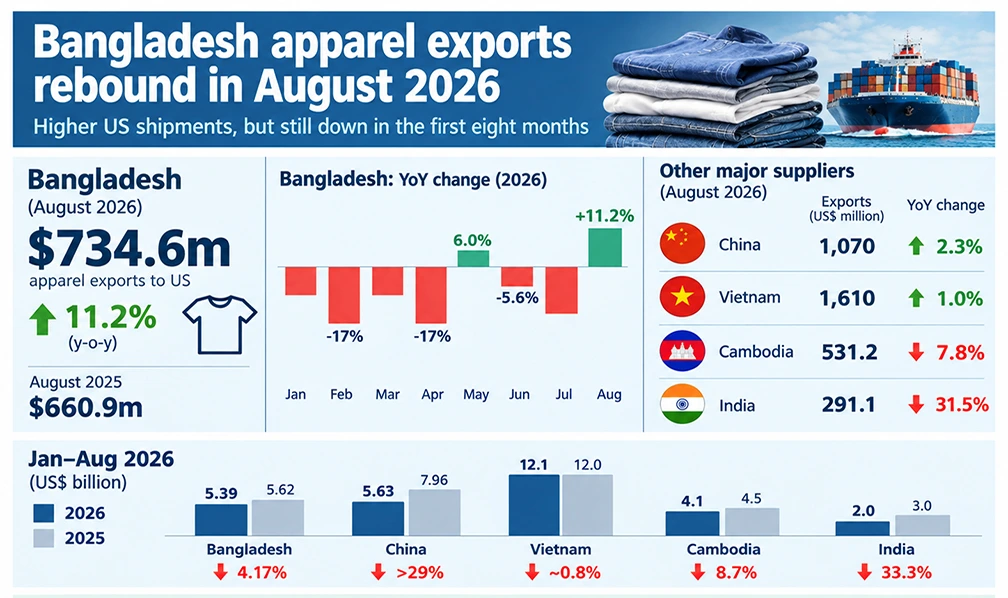
Various issues of mutual interest were discussed during the meeting, with particular focus on strengthening bilateral trade relations between the United States and Bangladesh, increasing exports of Bangladeshi readymade garments (RMG) to the US market, and enhancing overall economic cooperation.
In response, Foreign Commercial Service Attaché Paul G Frost said they would consult relevant US government departments and provide further details.
The meeting also considered potential collaboration between BGMEA and the US Cotton Council. Paul G Frost mentioned that the embassy would discuss this with the US government’s textile department and provide feedback to BGMEA.
Issues regarding the domestic gas and electricity situation were also addressed. BGMEA leaders expressed hope that Bangladesh would be able to import LNG from the United States in the future. Labour rights were given due attention during the discussion.
BGMEA President Mahmud Hasan Khan said maintaining stable labour conditions in the garment sector is a top priority.
He informed the US delegation that, since taking office, his board has engaged in dialogue with 81 workers’ federations to establish harmonious industrial relations.
He also briefed the delegation on progress in legal reforms aimed at ensuring labour rights and welfare.
The US delegation emphasised that aligning Bangladesh’s labour laws with international standards is an international expectation, supported by the ILO, the European Union, and other partners.
BGMEA leaders stressed the importance of maintaining close communication with the US Embassy on labour-related matters to ensure clarity and avoid misunderstandings.
The US side encouraged BGMEA to participate in SelectUSA, a major US investment promotion event scheduled for May 2026, as an avenue to expand exports and build networks with American buyers.
Both parties expressed optimism about strengthening future economic partnerships and mutual cooperation between the two countries.