11:19 pm, Monday, 24 August 2026

61,881 workers lose jobs as 95 factories shut: CPD

At least 95 factories permanently closed down and 61,881 workers lost their jobs in the country’s three major industrial belts between January and August, according to a Centre for Policy Dialogue report.

The closures were recorded in the industrial belts of Gazipur, Savar-Ashulia and Narayanganj-Narsingdi, with prolonged energy shortages cited as one of the key reasons for the shutdowns.

The local think tank launched the report on Monday to mark the completion of six months of the Bangladesh Nationalist Party-led government, which assumed office on February 17 after winning the February 12 national election.

CPD distinguished fellow Debapriya Bhattacharya presented the findings of the report titled ‘Six Months of the Government: A Commentary on its Performance’ at a dialogue at the CPD office in the capital.

The report said the government’s expectations of completing the economic recovery within a year and achieving faster growth in the second year were ‘overly optimistic’.

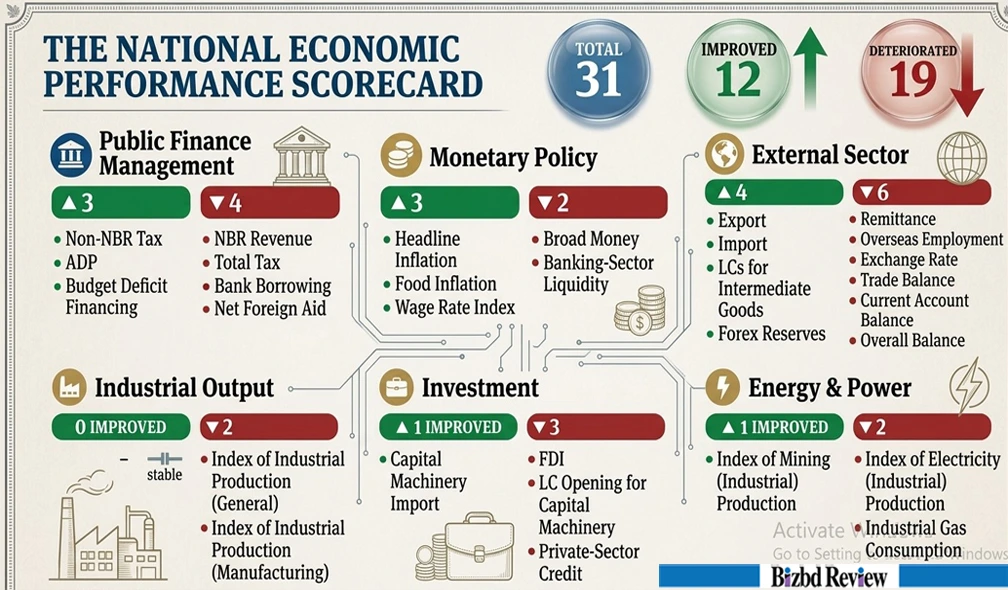
The CPD’s six-month Recovery Scorecard found that 19 of 31 key economic indicators deteriorated during the government’s first six months, suggesting that the economic recovery is likely to be prolonged.

Industrial output weakened sharply, with manufacturing and general industrial production growth falling to zero from 3.5 per cent and 3.4 per cent, respectively.

‘The economic recovery process in Bangladesh will be prolonged,’ Debapriya said, urging the government to adopt a realistic approach to economic management.

The scorecard covered public finance management, monetary policy, the external sector, industrial output and investment, and energy and power.

Public finance management recorded three improvements against four deteriorations, monetary policy three against two, the external sector four against six, while industrial output and investment showed predominantly negative trends.

Energy and power also recorded one improvement against two deteriorations.

The deterioration in public finance was driven largely by weak revenue mobilisation and increased dependence on domestic borrowing.

National Board of Revenue receipts growth slowed from 12.4 per cent to 11.1 per cent, while overall tax revenue growth fell sharply from 12.3 per cent to 4.9 per cent.

The government’s reliance on domestic bank borrowing increased from 48 per cent to 53.8 per cent of the annual target.

The inflow of net foreign loans and grants declined from $771.4 million to $734.3 million, while external debt per capita increased by 14.5 per cent.

Debapriya said the government should prepare a realistic ‘core budget’ to protect expenditure on education, health and social protection in the face of fiscal constraints.

The CPD projected a revenue shortfall of Tk 1.30 lakh crore to Tk 1.40 lakh crore in the 2026-27 financial year.

Monetary policy was one of the areas where the scorecard recorded more improvements than deteriorations.

Headline inflation declined from 9.1 per cent to 8.3 per cent, mainly due to a decline in food inflation from 9.3 per cent to 7.2 per cent.

The Wage Rate Index edged up from 8.1 per cent to 8.2 per cent, although real wage growth remained negative.

At the same time, broad money growth accelerated from 10.5 per cent to 11.1 per cent and banking-sector liquidity increased from Tk 78,161.6 crore to Tk 1,00,778.4 crore, reflecting weak private-sector credit demand and heavy government borrowing, the CPD report said.

According to the report, four indicators in the external sector improved while six deteriorated.

Export growth recovered from a negative 3.2 per cent to 3.5 per cent but remittance growth slowed from 21.4 per cent to 11.8 per cent and average monthly overseas employment fell sharply from 95,521 to 51,235 amid the Middle East war.

The trade deficit widened from $6.7 billion to $10.4 billion, while the current account moved from a $1.3 billion surplus to a $0.6 billion deficit.

Net FDI inflow fell from $662 million to $594 million. Letter of credit openings for capital machinery dropped from 14.6 per cent growth to a negative 13.6 per cent, while private-sector credit growth slowed from 6 per cent to 4.5 per cent.

Although capital machinery import growth rose from a negative 6.6 per cent to 67.5 per cent, the CPD noted that the increase was from an exceptionally low base.

CPD distinguished fellow Mustafizur Rahman said Bangladesh needed to focus more strongly on industrialisation to generate decent employment, arguing that manufacturing should remain a key driver of job creation while services supporting industry could also expand.

Debapriya said Bangladesh had broad consensus on the need for energy security but lacked effective implementation and coordination.

He called for greater domestic exploration, including through BAPEX, alongside faster development of renewable energy and nuclear power.

In the interim, he said, Bangladesh would have to rely on imported LNG and liquid fuels to maintain electricity generation, fertiliser production and industrial activity.

According to the CPD, the economic recovery has failed to gain sufficient traction because the government has not yet introduced a coordinated and comprehensive reform package.

Debapriya identified weak fiscal management, external shocks, political-economy constraints, law-and-order problems and weak institutional capacity as major obstacles.

He said the government had also failed to establish a clear, time-bound road map linking its reform commitments.

Debapriya said the government had yet to demonstrate sufficient political courage to take difficult reform decisions.

He particularly pointed to the unresolved issue of public-sector pay and allowances, saying the government could have taken a ‘phased approach’ after considering the recommendations of the previous pay commission.

Debapriya said institutions such as the Anti-Corruption Commission, National Human Rights Commission, bodies dealing with enforced disappearances, Election Commission and Public Service Commission needed to remain independent and credible.

He also criticised delays in restructuring the NBR, describing coordination within the government as a major challenge.

The CPD recommended an immediate ‘core budget’ for October 2026 to June 2027 based on realistic and updated economic data.

It also called for an integrated reform package covering energy security, domestic gas exploration, power purchase agreements and restructuring of public financial institutions.
61,881 workers lose jobs as 95 factories shut: CPD

Update Time : 09:54:07 pm, Monday, 24 August 2026

At least 95 factories permanently closed down and 61,881 workers lost their jobs in the country’s three major industrial belts between January and August, according to a Centre for Policy Dialogue report.

The closures were recorded in the industrial belts of Gazipur, Savar-Ashulia and Narayanganj-Narsingdi, with prolonged energy shortages cited as one of the key reasons for the shutdowns.

The local think tank launched the report on Monday to mark the completion of six months of the Bangladesh Nationalist Party-led government, which assumed office on February 17 after winning the February 12 national election.

CPD distinguished fellow Debapriya Bhattacharya presented the findings of the report titled ‘Six Months of the Government: A Commentary on its Performance’ at a dialogue at the CPD office in the capital.

The report said the government’s expectations of completing the economic recovery within a year and achieving faster growth in the second year were ‘overly optimistic’.

The CPD’s six-month Recovery Scorecard found that 19 of 31 key economic indicators deteriorated during the government’s first six months, suggesting that the economic recovery is likely to be prolonged.

Industrial output weakened sharply, with manufacturing and general industrial production growth falling to zero from 3.5 per cent and 3.4 per cent, respectively.

‘The economic recovery process in Bangladesh will be prolonged,’ Debapriya said, urging the government to adopt a realistic approach to economic management.

The scorecard covered public finance management, monetary policy, the external sector, industrial output and investment, and energy and power.

Public finance management recorded three improvements against four deteriorations, monetary policy three against two, the external sector four against six, while industrial output and investment showed predominantly negative trends.

Energy and power also recorded one improvement against two deteriorations.

The deterioration in public finance was driven largely by weak revenue mobilisation and increased dependence on domestic borrowing.

National Board of Revenue receipts growth slowed from 12.4 per cent to 11.1 per cent, while overall tax revenue growth fell sharply from 12.3 per cent to 4.9 per cent.

The government’s reliance on domestic bank borrowing increased from 48 per cent to 53.8 per cent of the annual target.

The inflow of net foreign loans and grants declined from $771.4 million to $734.3 million, while external debt per capita increased by 14.5 per cent.

Debapriya said the government should prepare a realistic ‘core budget’ to protect expenditure on education, health and social protection in the face of fiscal constraints.

The CPD projected a revenue shortfall of Tk 1.30 lakh crore to Tk 1.40 lakh crore in the 2026-27 financial year.

Monetary policy was one of the areas where the scorecard recorded more improvements than deteriorations.

Headline inflation declined from 9.1 per cent to 8.3 per cent, mainly due to a decline in food inflation from 9.3 per cent to 7.2 per cent.

The Wage Rate Index edged up from 8.1 per cent to 8.2 per cent, although real wage growth remained negative.

At the same time, broad money growth accelerated from 10.5 per cent to 11.1 per cent and banking-sector liquidity increased from Tk 78,161.6 crore to Tk 1,00,778.4 crore, reflecting weak private-sector credit demand and heavy government borrowing, the CPD report said.

According to the report, four indicators in the external sector improved while six deteriorated.

Export growth recovered from a negative 3.2 per cent to 3.5 per cent but remittance growth slowed from 21.4 per cent to 11.8 per cent and average monthly overseas employment fell sharply from 95,521 to 51,235 amid the Middle East war.

The trade deficit widened from $6.7 billion to $10.4 billion, while the current account moved from a $1.3 billion surplus to a $0.6 billion deficit.

Net FDI inflow fell from $662 million to $594 million. Letter of credit openings for capital machinery dropped from 14.6 per cent growth to a negative 13.6 per cent, while private-sector credit growth slowed from 6 per cent to 4.5 per cent.

Although capital machinery import growth rose from a negative 6.6 per cent to 67.5 per cent, the CPD noted that the increase was from an exceptionally low base.

CPD distinguished fellow Mustafizur Rahman said Bangladesh needed to focus more strongly on industrialisation to generate decent employment, arguing that manufacturing should remain a key driver of job creation while services supporting industry could also expand.

Debapriya said Bangladesh had broad consensus on the need for energy security but lacked effective implementation and coordination.

He called for greater domestic exploration, including through BAPEX, alongside faster development of renewable energy and nuclear power.

In the interim, he said, Bangladesh would have to rely on imported LNG and liquid fuels to maintain electricity generation, fertiliser production and industrial activity.

According to the CPD, the economic recovery has failed to gain sufficient traction because the government has not yet introduced a coordinated and comprehensive reform package.

Debapriya identified weak fiscal management, external shocks, political-economy constraints, law-and-order problems and weak institutional capacity as major obstacles.

He said the government had also failed to establish a clear, time-bound road map linking its reform commitments.

Debapriya said the government had yet to demonstrate sufficient political courage to take difficult reform decisions.

He particularly pointed to the unresolved issue of public-sector pay and allowances, saying the government could have taken a ‘phased approach’ after considering the recommendations of the previous pay commission.

Debapriya said institutions such as the Anti-Corruption Commission, National Human Rights Commission, bodies dealing with enforced disappearances, Election Commission and Public Service Commission needed to remain independent and credible.

He also criticised delays in restructuring the NBR, describing coordination within the government as a major challenge.

The CPD recommended an immediate ‘core budget’ for October 2026 to June 2027 based on realistic and updated economic data.

It also called for an integrated reform package covering energy security, domestic gas exploration, power purchase agreements and restructuring of public financial institutions.