5:39 am, Tuesday, 20 October 2026

Inditex warns policy changes may shift orders from Bangladesh

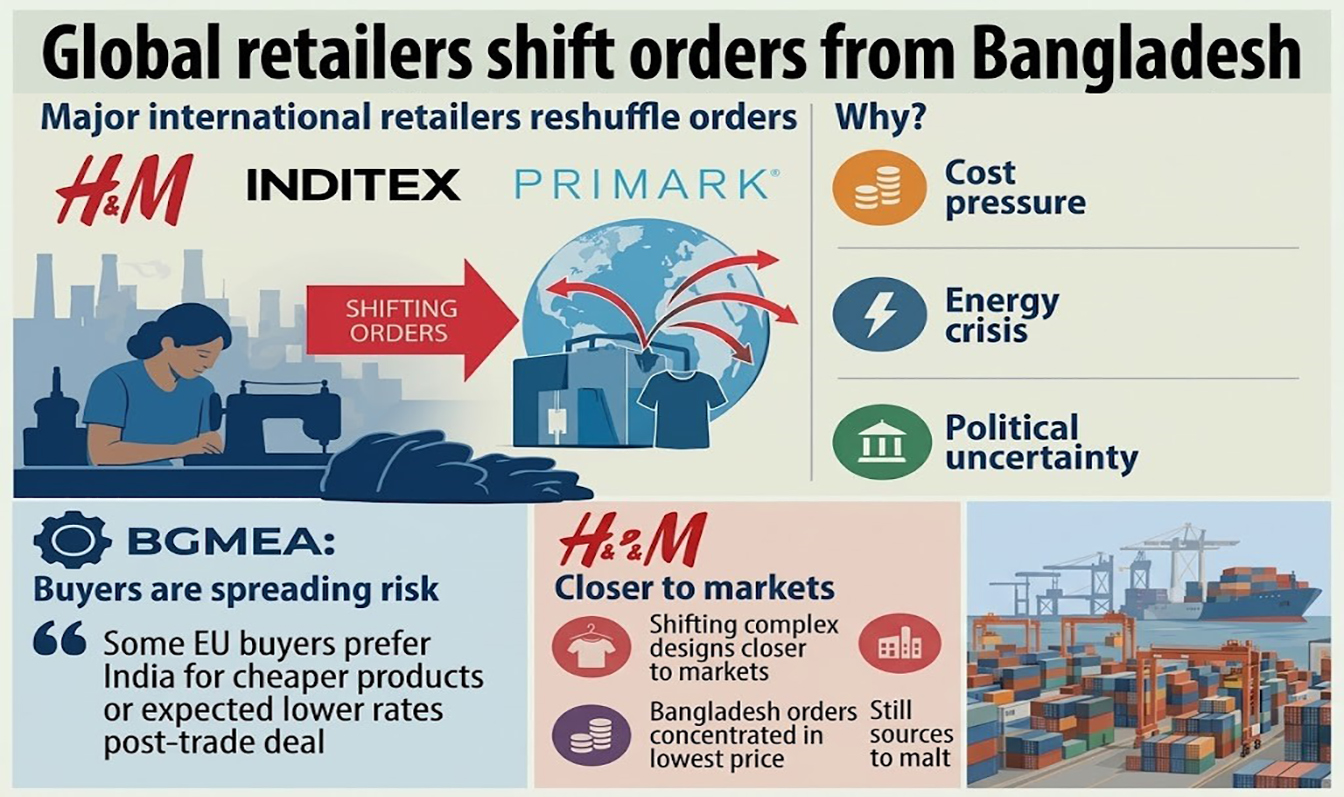
Inditex, one of the major European Union buyers of Bangladeshi garments, has expressed concern to the government over frequent policy changes that have increased sourcing costs and delivery times, warning that the uncertainty could prompt buyers to shift orders to competing countries, including Pakistan and Cambodia.

Top officials of the Spanish apparel group raised the concerns at a meeting with Commerce Minister Khandaker Abdul Muktadir at his office at the Secretariat in Dhaka on Sunday, according to meeting sources.

The concerns centred on the withdrawal of bonded warehouse facilities for importing certain counts of cotton yarn, restrictions on yarn imports through land ports and the cancellation of the transshipment facility for Bangladeshi exports.

Inditex, which sources garments worth about $2.5 billion annually from Bangladesh, is among the five largest European Union-based buyers of locally made apparel, the sources said.

Bangladesh Knitwear Manufacturers and Exporters Association director Fakir Kamruzzaman Nahid and Bangladesh Employers Federation president Fazlee Shamim Ehsan, among others, attended the meeting.

Nahid, also managing director of Fakir Fashion Ltd, said local yarn prices had increased following the withdrawal of bonded warehouse facilities for cotton yarn of 10 to 30 counts.

‘Local yarn prices have increased to as high as $3.70 per kg from an average of $3.15 per kg,’ he said after the meeting.

He said international buyers considered global raw material prices when placing orders and that higher local prices were putting Bangladeshi manufacturers at a competitive disadvantage.

As a result, buyers might not place the expected volume of orders in Bangladesh, while the recent increase in raw material costs had discouraged international buyers from placing orders in the country, he added.

Nahid said other major buyers, including H&M and C&A, had also expressed concerns over the issues.

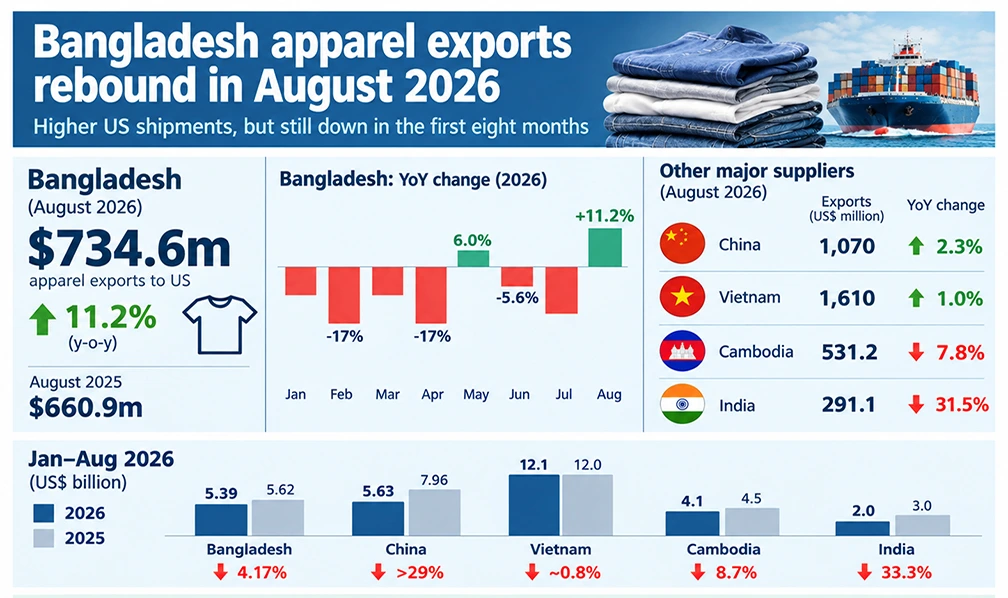
He warned that some orders could shift to competing garment-producing countries, including Vietnam and India.

Ehsan said frequent policy changes had made international buyers apprehensive, with uncertainty over what measures might be introduced and when adding to existing challenges, including the energy crisis.

The uncertainty could prompt buyers to hold back orders or shift part of their sourcing to other destinations, he said.

The meeting also discussed increasing the capacity of Sylhet Airport, opening the third terminal of Hazrat Shahjalal International Airport and addressing other logistical constraints, Ehsan added.

Meanwhile, the Bangladesh Garment Manufacturers and Exporters Association (BGMEA) and BKMEA have jointly written to the prime minister, expressing concern over a crisis of confidence among international buyers caused by a series of unexpected policy changes.

The two trade bodies said the changes included a ban on yarn imports through land ports introduced on April 15, 2025, and two subsequent moves to impose higher safeguard duties on cotton yarn imports, which were later suspended.

They also cited a ban on knit fabric imports under the Import Policy 2026–29, introduced on August 14 and subsequently withdrawn, as well as the withdrawal of bonded warehouse facilities for cotton yarn imports last month.

The associations said the frequent and unexpected changes had severely undermined buyer confidence and made it difficult for manufacturers to maintain reliable supply chains.

They called for the immediate withdrawal of the decision to withdraw the bonded facility and proposed consultations with BGMEA, BKMEA and the Bangladesh Textile Mills Association (BTMA) to develop a policy framework that would address local textile millers’ concerns while safeguarding the competitiveness of garment exporters.

The BTMA, however, said in a statement on Sunday that withdrawing the bonded facility did not amount to a ban on yarn imports and that no new duty had been imposed, as duty-free imports remained possible against bank guarantees.

The association said the measure was intended not to disrupt legitimate import and export activities but to prevent misuse of the facility, protect government revenue and ensure fair competition between domestically produced and imported yarn.

The BTMA demanded that cotton yarn of 10 to 30 counts continue to be imported under the existing bank-guarantee-based system by genuine exporters, despite the withdrawal of the bonded facility.

The dispute has become a major concern for garment exporters, as higher raw material costs and uncertainty over import procedures could undermine their ability to offer competitive prices and secure orders from international buyers.

The three trade bodies — BGMEA, BKMEA and BTMA — also held a meeting to seek a resolution after the prime minister instructed them to find a way out of the dispute.

The meeting, which lasted more than four hours on Sunday, discussed a proposal to withdraw bonded warehouse facilities for yarn imports of 14 to 28 counts, but BGMEA and BKMEA rejected the proposal.

The parties, however, failed to reach a consensus on the issue by Sunday.
Inditex warns policy changes may shift orders from Bangladesh

Update Time : 03:33:21 am, Monday, 19 October 2026

Inditex, one of the major European Union buyers of Bangladeshi garments, has expressed concern to the government over frequent policy changes that have increased sourcing costs and delivery times, warning that the uncertainty could prompt buyers to shift orders to competing countries, including Pakistan and Cambodia.

Top officials of the Spanish apparel group raised the concerns at a meeting with Commerce Minister Khandaker Abdul Muktadir at his office at the Secretariat in Dhaka on Sunday, according to meeting sources.

The concerns centred on the withdrawal of bonded warehouse facilities for importing certain counts of cotton yarn, restrictions on yarn imports through land ports and the cancellation of the transshipment facility for Bangladeshi exports.

Inditex, which sources garments worth about $2.5 billion annually from Bangladesh, is among the five largest European Union-based buyers of locally made apparel, the sources said.

Bangladesh Knitwear Manufacturers and Exporters Association director Fakir Kamruzzaman Nahid and Bangladesh Employers Federation president Fazlee Shamim Ehsan, among others, attended the meeting.

Nahid, also managing director of Fakir Fashion Ltd, said local yarn prices had increased following the withdrawal of bonded warehouse facilities for cotton yarn of 10 to 30 counts.

‘Local yarn prices have increased to as high as $3.70 per kg from an average of $3.15 per kg,’ he said after the meeting.

He said international buyers considered global raw material prices when placing orders and that higher local prices were putting Bangladeshi manufacturers at a competitive disadvantage.

As a result, buyers might not place the expected volume of orders in Bangladesh, while the recent increase in raw material costs had discouraged international buyers from placing orders in the country, he added.

Nahid said other major buyers, including H&M and C&A, had also expressed concerns over the issues.

He warned that some orders could shift to competing garment-producing countries, including Vietnam and India.

Ehsan said frequent policy changes had made international buyers apprehensive, with uncertainty over what measures might be introduced and when adding to existing challenges, including the energy crisis.

The uncertainty could prompt buyers to hold back orders or shift part of their sourcing to other destinations, he said.

The meeting also discussed increasing the capacity of Sylhet Airport, opening the third terminal of Hazrat Shahjalal International Airport and addressing other logistical constraints, Ehsan added.

Meanwhile, the Bangladesh Garment Manufacturers and Exporters Association (BGMEA) and BKMEA have jointly written to the prime minister, expressing concern over a crisis of confidence among international buyers caused by a series of unexpected policy changes.

The two trade bodies said the changes included a ban on yarn imports through land ports introduced on April 15, 2025, and two subsequent moves to impose higher safeguard duties on cotton yarn imports, which were later suspended.

They also cited a ban on knit fabric imports under the Import Policy 2026–29, introduced on August 14 and subsequently withdrawn, as well as the withdrawal of bonded warehouse facilities for cotton yarn imports last month.

The associations said the frequent and unexpected changes had severely undermined buyer confidence and made it difficult for manufacturers to maintain reliable supply chains.

They called for the immediate withdrawal of the decision to withdraw the bonded facility and proposed consultations with BGMEA, BKMEA and the Bangladesh Textile Mills Association (BTMA) to develop a policy framework that would address local textile millers’ concerns while safeguarding the competitiveness of garment exporters.

The BTMA, however, said in a statement on Sunday that withdrawing the bonded facility did not amount to a ban on yarn imports and that no new duty had been imposed, as duty-free imports remained possible against bank guarantees.

The association said the measure was intended not to disrupt legitimate import and export activities but to prevent misuse of the facility, protect government revenue and ensure fair competition between domestically produced and imported yarn.

The BTMA demanded that cotton yarn of 10 to 30 counts continue to be imported under the existing bank-guarantee-based system by genuine exporters, despite the withdrawal of the bonded facility.

The dispute has become a major concern for garment exporters, as higher raw material costs and uncertainty over import procedures could undermine their ability to offer competitive prices and secure orders from international buyers.

The three trade bodies — BGMEA, BKMEA and BTMA — also held a meeting to seek a resolution after the prime minister instructed them to find a way out of the dispute.

The meeting, which lasted more than four hours on Sunday, discussed a proposal to withdraw bonded warehouse facilities for yarn imports of 14 to 28 counts, but BGMEA and BKMEA rejected the proposal.

The parties, however, failed to reach a consensus on the issue by Sunday.