3:34 pm, Sunday, 6 September 2026

Bangladesh merchandise exports rebound with 13pc growth in August

  • Bizbd Report
  • Update Time : 11:18:53 pm, Tuesday, 1 September 2026
  • 30

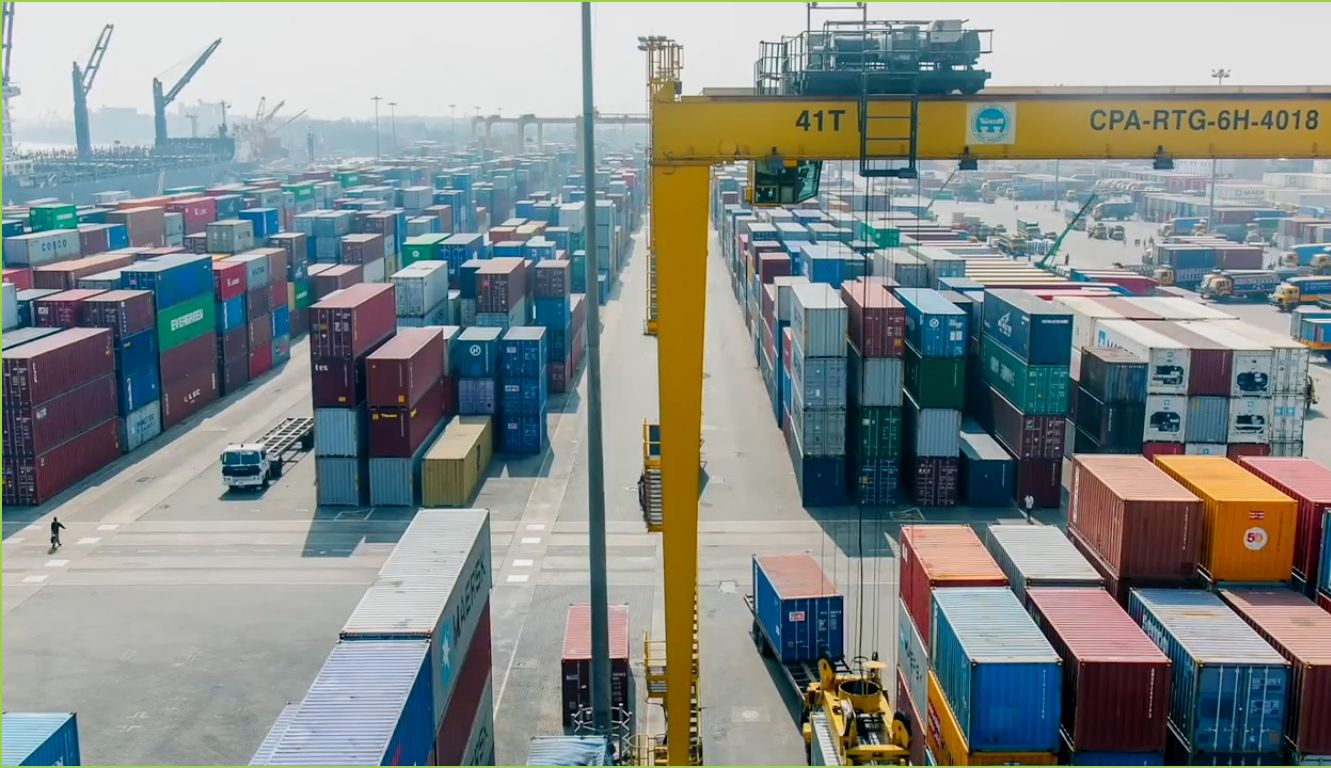
Chittagong Port, the principal maritime gateway of Bangladesh.

Bangladesh’s merchandise exports rebounded strongly in August, rising 13.14 per cent year-on-year to $4.42 billion, driven by robust growth in ready-made garment (RMG) shipments and stronger performance across several non-apparel sectors.

The country exported goods worth $3.91 billion in August 2025, according to data released by the Export Promotion Bureau (EPB) on September 1.

The growth marked a sharp turnaround from July, when merchandise exports declined by 0.9 per cent year-on-year.

RMG exports, the country’s dominant export earner, rose 13.92 per cent in August to $3.60 billion.

Within the sector, knitwear exports increased 14.88 per cent to $2.03 billion, while woven garment shipments rose 12.70 per cent to $1.57 billion.

Despite the strong monthly performance, exporters have questioned whether the August figures fully reflect conditions on the ground, particularly amid disruptions to production and higher raw material costs.

Mohammad Hatem, president of the Bangladesh Knitwear Manufacturers and Exporters Association (BKMEA), declined to comment on the export performance.

He said, however, that production had been significantly disrupted in August and that growth of around 14 per cent was therefore “not acceptable”, adding that the data required further scrutiny.

Fazlee Shamim Ehsan, executive president of the BKMEA, said exports in August were lower than in July, when production had already been disrupted for nearly nine days.

‘Production was hampered more in August than in July, and the reflection will be seen in September’s performance,’ he said.

Ehsan also pointed to rising raw material costs as a possible factor behind the increase in export values. The price of yarn, he said, had risen to about $3.20 per kilogram from $2.70.

Overall merchandise exports rose 5.43 per cent year-on-year to $9.15 billion in the first two months of the financial year 2026-27, compared with $8.68 billion in July-August of the FY26.

The RMG sector remained the principal driver, with exports increasing 5.12 per cent to $7.49 billion during the period.

Home textile exports also performed strongly, rising 11.17 per cent to $154.55 million.

Several non-apparel sectors recorded particularly strong growth, helping offset weaker performances by agricultural goods and frozen and live fish.

Jute and jute goods exports increased 37.09 per cent in July-August to $162.53 million, up from $118.56 million in the corresponding period a year earlier.

Engineering product exports rose 23.88 per cent to $129.80 million. Bicycle exports, a major engineering product, increased 21.50 per cent to $29.39 million.

Chemical product exports grew 23.40 per cent to $76.21 million, while pharmaceutical exports, a key component of the sector, rose 28.52 per cent to $46.86 million.

Leather and leather product exports increased 12.58 per cent to $257.53 million.

Some sectors, however, continued to struggle. Plastic product exports fell 4.27 per cent to $42.82 million.

Agricultural exports declined 9.10 per cent to $158.78 million, while exports of frozen and live fish fell 10.25 per cent to $73.19 million.

In a statement, the state-run EPB attributed the improvement to stronger demand in key international markets, increased buyer confidence in Bangladesh as a reliable sourcing destination, expansion of production capacity and higher exports of value-added products.

The agency also pointed to continued efforts to diversify Bangladesh’s products and export markets.

The broader expansion across apparel and non-apparel sectors, it said, reflected the growing competitiveness and resilience of Bangladesh’s export sector amid a challenging global trading environment.

The August rebound provides a stronger start to the second month of the new fiscal year, although exporters warn that production disruptions and rising input costs could affect the export performance in the coming months.
Bangladesh merchandise exports rebound with 13pc growth in August

Update Time : 11:18:53 pm, Tuesday, 1 September 2026

Bangladesh’s merchandise exports rebounded strongly in August, rising 13.14 per cent year-on-year to $4.42 billion, driven by robust growth in ready-made garment (RMG) shipments and stronger performance across several non-apparel sectors.

The country exported goods worth $3.91 billion in August 2025, according to data released by the Export Promotion Bureau (EPB) on September 1.

The growth marked a sharp turnaround from July, when merchandise exports declined by 0.9 per cent year-on-year.

RMG exports, the country’s dominant export earner, rose 13.92 per cent in August to $3.60 billion.

Within the sector, knitwear exports increased 14.88 per cent to $2.03 billion, while woven garment shipments rose 12.70 per cent to $1.57 billion.

Despite the strong monthly performance, exporters have questioned whether the August figures fully reflect conditions on the ground, particularly amid disruptions to production and higher raw material costs.

Mohammad Hatem, president of the Bangladesh Knitwear Manufacturers and Exporters Association (BKMEA), declined to comment on the export performance.

He said, however, that production had been significantly disrupted in August and that growth of around 14 per cent was therefore “not acceptable”, adding that the data required further scrutiny.

Fazlee Shamim Ehsan, executive president of the BKMEA, said exports in August were lower than in July, when production had already been disrupted for nearly nine days.

‘Production was hampered more in August than in July, and the reflection will be seen in September’s performance,’ he said.

Ehsan also pointed to rising raw material costs as a possible factor behind the increase in export values. The price of yarn, he said, had risen to about $3.20 per kilogram from $2.70.

Overall merchandise exports rose 5.43 per cent year-on-year to $9.15 billion in the first two months of the financial year 2026-27, compared with $8.68 billion in July-August of the FY26.

The RMG sector remained the principal driver, with exports increasing 5.12 per cent to $7.49 billion during the period.

Home textile exports also performed strongly, rising 11.17 per cent to $154.55 million.

Several non-apparel sectors recorded particularly strong growth, helping offset weaker performances by agricultural goods and frozen and live fish.

Jute and jute goods exports increased 37.09 per cent in July-August to $162.53 million, up from $118.56 million in the corresponding period a year earlier.

Engineering product exports rose 23.88 per cent to $129.80 million. Bicycle exports, a major engineering product, increased 21.50 per cent to $29.39 million.

Chemical product exports grew 23.40 per cent to $76.21 million, while pharmaceutical exports, a key component of the sector, rose 28.52 per cent to $46.86 million.

Leather and leather product exports increased 12.58 per cent to $257.53 million.

Some sectors, however, continued to struggle. Plastic product exports fell 4.27 per cent to $42.82 million.

Agricultural exports declined 9.10 per cent to $158.78 million, while exports of frozen and live fish fell 10.25 per cent to $73.19 million.

In a statement, the state-run EPB attributed the improvement to stronger demand in key international markets, increased buyer confidence in Bangladesh as a reliable sourcing destination, expansion of production capacity and higher exports of value-added products.

The agency also pointed to continued efforts to diversify Bangladesh’s products and export markets.

The broader expansion across apparel and non-apparel sectors, it said, reflected the growing competitiveness and resilience of Bangladesh’s export sector amid a challenging global trading environment.

The August rebound provides a stronger start to the second month of the new fiscal year, although exporters warn that production disruptions and rising input costs could affect the export performance in the coming months.