9:22 pm, Thursday, 2 April 2026

US cuts tariff on Bangladeshi exports to 20 per cent

The United States has reduced the reciprocal tariff on Bangladeshi imports to 20 per cent, down from the previously announced 35 per cent, following intense negotiations that concluded in late July.

The move, confirmed in a statement from the White House on August 1, comes as part of a wider revision of tariff rates applied to 70 countries.

While the tariff cut brings short-term relief to Bangladeshi exporters, it has also sparked debate among economists about what the country may have conceded in return, much of which remains undisclosed under non-disclosure agreements (NDAs).

The final round of negotiations was held between US officials and a Bangladeshi delegation, after which President Donald J Trump formally announced the revised tariff regime.

Bangladesh’s chief adviser, Muhammad Yunus, congratulated the country’s negotiators, calling the deal a ‘landmark trade victory’ that safeguarded the country’s economic interests and global market access.

‘The agreement preserves our comparative advantage, enhances our access to the world’s largest consumer market, and safeguards our core national interests,’ read a statement from the chief adviser’s press wing.

The new tariffs took effect on August 1, meaning Bangladeshi exporters are now subject to a 20 per cent reciprocal tariff on top of an average 15 per cent regular tariff.

The earlier rate of 35 per cent had been imposed in a letter from Washington to Dhaka on 8 July.

Among Bangladesh’s regional and trade competitors, India faces a 25 per cent US tariff, Vietnam 20 per cent, Pakistan 19 per cent, Cambodia 19 per cent, and Indonesia 19 per cent.

Neighbouring Sri Lanka and Afghanistan were hit with 20 and 15 per cent tariffs respectively, while Myanmar faces a 40 per cent rate. Notably, China and Mexico were not on the revised tariff list.

Adviser to the Ministry of Power and Energy, Muhammad Fouzul Kabir Khan, praised Commerce Adviser Sk Bashir Uddin for his role in the successful negotiation, noting his ability to stabilise domestic markets and secure favourable trade terms.

The tariff issue emerged in April, when President Trump cited concerns over trade deficits and imposed sweeping tariff hikes on several nations — Bangladesh faced an initial 37 per cent rate.

On April 9, the US paused the increases for three months to allow time for negotiations, which concluded on 31 July.

During the negotiations, Bangladesh reportedly agreed to purchase US-made Boeing aircraft and import wheat from the US in a bid to reduce the bilateral trade deficit.

On July 27, Dhaka announced a plan to buy 25 Boeing aircraft. Earlier, on July 20, the two countries signed a memorandum of understanding for Bangladesh to import 700,000 tonnes of wheat annually for five years.

Subsequently, the government approved the purchase of 220,000 tonnes at $302.75 per tonne on July 23.

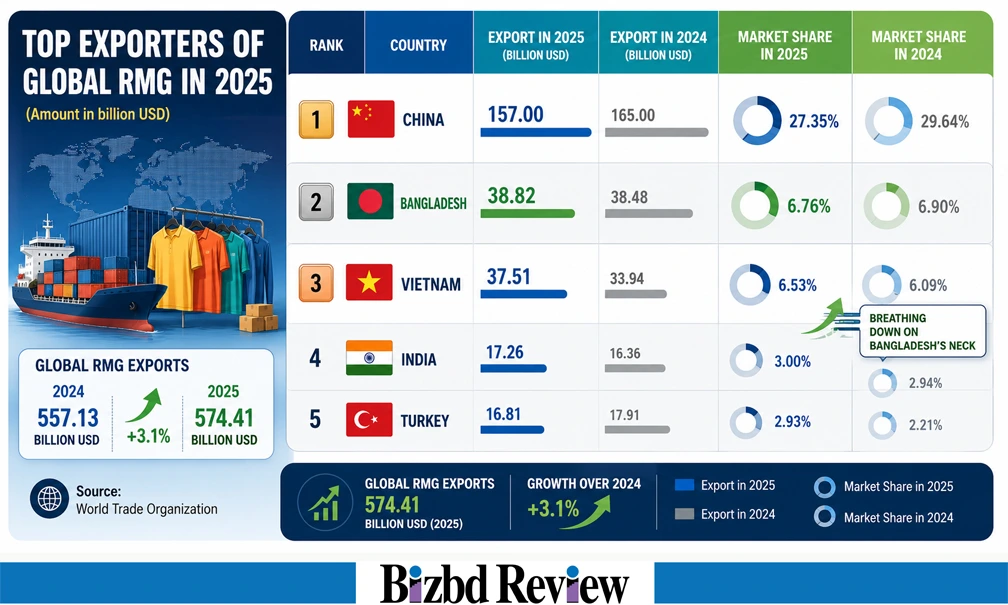
In 2024, Bangladesh exported goods worth $8.4 billion to the US — $7.34 billion of which came from the readymade garment (RMG) sector — while imports from the US stood at $2.2 billion.

Economists have expressed cautious optimism. Professor Mustafizur Rahman, a distinguished fellow at the Centre for Policy Dialogue, welcomed the reduction but noted that the full cost of the concessions remains unclear.

‘The tariff cut reduces uncertainty, but the concessions — such as purchases of LNG, aircraft, and wheat — must be weighed carefully. The clauses under the NDA must also be scrutinized,’ he said. ‘There is also the risk of disrupting trade balances with other key partners, such as China and Russia.’

He added that the move could drive Bangladesh to accelerate institutional reforms, especially regarding intellectual property rights, trade union recognition, and customs cooperation — areas reportedly part of the agreement with the US.

Research and Policy Integration for Development Chairman Mohammad Abdur Razzaque said the new 20 per cent rate aligns Bangladesh with its competitors, offering exporters a level playing field.

However, he echoed the call for greater transparency.

‘The overall deal must be reviewed in light of Bangladesh’s commitments, many of which are not yet public,’ he said.
Most Viewed

US cuts tariff on Bangladeshi exports to 20 per cent

Update Time : 09:18:58 pm, Friday, 1 August 2025

The United States has reduced the reciprocal tariff on Bangladeshi imports to 20 per cent, down from the previously announced 35 per cent, following intense negotiations that concluded in late July.

The move, confirmed in a statement from the White House on August 1, comes as part of a wider revision of tariff rates applied to 70 countries.

While the tariff cut brings short-term relief to Bangladeshi exporters, it has also sparked debate among economists about what the country may have conceded in return, much of which remains undisclosed under non-disclosure agreements (NDAs).

The final round of negotiations was held between US officials and a Bangladeshi delegation, after which President Donald J Trump formally announced the revised tariff regime.

Bangladesh’s chief adviser, Muhammad Yunus, congratulated the country’s negotiators, calling the deal a ‘landmark trade victory’ that safeguarded the country’s economic interests and global market access.

‘The agreement preserves our comparative advantage, enhances our access to the world’s largest consumer market, and safeguards our core national interests,’ read a statement from the chief adviser’s press wing.

The new tariffs took effect on August 1, meaning Bangladeshi exporters are now subject to a 20 per cent reciprocal tariff on top of an average 15 per cent regular tariff.

The earlier rate of 35 per cent had been imposed in a letter from Washington to Dhaka on 8 July.

Among Bangladesh’s regional and trade competitors, India faces a 25 per cent US tariff, Vietnam 20 per cent, Pakistan 19 per cent, Cambodia 19 per cent, and Indonesia 19 per cent.

Neighbouring Sri Lanka and Afghanistan were hit with 20 and 15 per cent tariffs respectively, while Myanmar faces a 40 per cent rate. Notably, China and Mexico were not on the revised tariff list.

Adviser to the Ministry of Power and Energy, Muhammad Fouzul Kabir Khan, praised Commerce Adviser Sk Bashir Uddin for his role in the successful negotiation, noting his ability to stabilise domestic markets and secure favourable trade terms.

The tariff issue emerged in April, when President Trump cited concerns over trade deficits and imposed sweeping tariff hikes on several nations — Bangladesh faced an initial 37 per cent rate.

On April 9, the US paused the increases for three months to allow time for negotiations, which concluded on 31 July.

During the negotiations, Bangladesh reportedly agreed to purchase US-made Boeing aircraft and import wheat from the US in a bid to reduce the bilateral trade deficit.

On July 27, Dhaka announced a plan to buy 25 Boeing aircraft. Earlier, on July 20, the two countries signed a memorandum of understanding for Bangladesh to import 700,000 tonnes of wheat annually for five years.

Subsequently, the government approved the purchase of 220,000 tonnes at $302.75 per tonne on July 23.

In 2024, Bangladesh exported goods worth $8.4 billion to the US — $7.34 billion of which came from the readymade garment (RMG) sector — while imports from the US stood at $2.2 billion.

Economists have expressed cautious optimism. Professor Mustafizur Rahman, a distinguished fellow at the Centre for Policy Dialogue, welcomed the reduction but noted that the full cost of the concessions remains unclear.

‘The tariff cut reduces uncertainty, but the concessions — such as purchases of LNG, aircraft, and wheat — must be weighed carefully. The clauses under the NDA must also be scrutinized,’ he said. ‘There is also the risk of disrupting trade balances with other key partners, such as China and Russia.’

He added that the move could drive Bangladesh to accelerate institutional reforms, especially regarding intellectual property rights, trade union recognition, and customs cooperation — areas reportedly part of the agreement with the US.

Research and Policy Integration for Development Chairman Mohammad Abdur Razzaque said the new 20 per cent rate aligns Bangladesh with its competitors, offering exporters a level playing field.

However, he echoed the call for greater transparency.

‘The overall deal must be reviewed in light of Bangladesh’s commitments, many of which are not yet public,’ he said.