Bizbd Report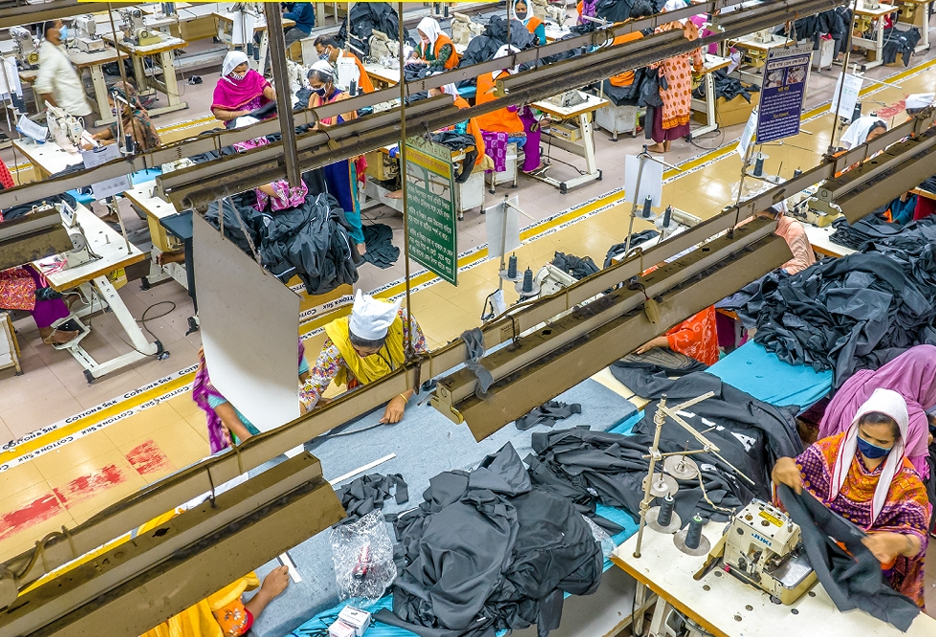
Governments, factory owners and global fashion brands are profiting from the repression of garment workers and the widespread abuse of labour rights across Bangladesh, India, Pakistan and Sri Lanka, according to a pair of new reports by Amnesty International.
The reports released on November 27 said that major global fashion brands were boosting profits by relying on an underpaid, predominantly female garment workforce in Bangladesh and three other South Asian countries, and that intimidation, retaliation, and management-controlled committees were used to silence workers.
The two reports — ‘Stitched Up: Denial of Freedom of Association for Garment Workers in Bangladesh, India, Pakistan and Sri Lanka’ and ‘Abandoned by Fashion: The urgent need for fashion brands to champion worker rights’ — stated that widespread anti-union abuse existed in the garment industry, manifesting in violations of workers’ rights as well as harassment and violence by employers.
‘An unholy alliance of fashion brands, factory owners, and the governments of Bangladesh, India, Pakistan, and Sri Lanka is propping up an industry known for its endemic human rights abuses,’ said Agnès Callamard, secretary general of Amnesty International
She said that by failing to ensure that garment workers’ right to unionise and collectively bargain was respected, the industry had thrived for decades on the exploitation of a grossly underpaid, overworked, and predominantly female workforce.
‘This is an indictment of the entire business model of the garment industry which sacrifices the rights of garment workers in Bangladesh, India, Pakistan and Sri Lanka in the relentless pursuit of profits for the shareholders of largely western fashion companies,’ Callamard said.
Together, the studies showed that despite a decade of promises following Rana Plaza tragedy in Bangladesh and a growing global focus on ethical sourcing, millions of workers—especially women—remained trapped in a system that restricted their right to organise, kept wages low and entrenched exploitation.
Bangladeshi suppliers, however, strongly criticised the Amnesty International report, describing it as flawed and misleading.
Amnesty argued that although brands routinely highlighted codes of conduct, sustainability frameworks and human rights commitments, these mechanisms have little impact on the daily realities of workers.
Amnesty International said that the two reports were based on research it had carried out between September 2023 and August 2024, including 88 interviews covering 20 factories in the four countries.
This research involved 64 workers and 12 union leaders and labour rights activists, with over two thirds of those interviewed being female.
Amnesty stated that in November 2023 it had sent a survey to 21 major brands and retailers in Germany, Denmark, Japan, Spain, Sweden, the UK, the USA, and China, requesting information on their human rights policies, monitoring, and actions on freedom of association, gender equality, and purchasing practices.
It reported that Adidas, ASOS, Fast Retailing, Inditex, Otto Group, and Primark had provided full responses, while many others, including M&S and Walmart, had replied with partial information, and some, such as Boohoo, H&M, Desigual, Next, and Gap, had failed to provide any information.
Amnesty’s findings confirmed that Bangladesh’s garment workers continue to face systemic barriers to forming or joining independent unions.
In a sector that employs millions of women and accounts for around 80 percent of national export earnings, the lack of worker voice has far-reaching social and economic implications, reports observed.
Interviews with workers such as 18-year-old Susmita and machinist Ishita in Dhaka revealed persistent exploitation, including unpaid wages, excessive overtime, and lack of promotion due to union involvement.
Amnesty International found that the global fashion industry’s business model was a central driver of union suppression.
It stated that international brands relied on complex, opaque supply chains with aggressive pricing, tight deadlines, and short-term contracts, which pressured factories to prioritise cost-cutting and flexibility over worker rights.
Reports said that when buyers demanded low prices and threatened to shift orders, factory managers often viewed unions as a threat, leading to retaliation against workers attempting to organise.
Amnesty said that the structure of the industry incentivised union-busting while allowing brands to avoid responsibility through subcontracting and weak monitoring.
Bangladesh Knitwear Manufacturers and Exporters Association executive president Fazle Ehsan Shamim, challenged the findings, arguing that the data collection had been inaccurate and did not reflect reality at the factory level.
He said that worker rights in Bangladesh were in relatively strong condition compared to other countries and called for a more balanced understanding of the sector rather than relying on misleading data source.
Study found that Transparency remained uneven and inadequate. Although 19 of the 21 surveyed brands published some information about their suppliers, these disclosures were usually limited to tier 1 factories and rarely include data on whether unions exist within those workplaces.
Only one company, Fast Retailing, systematically reported on union presence across its supply chain.
Without such information, unions and labour groups struggle to identify patterns of abuse, and the public cannot verify corporate claims about protecting worker rights.
Amnesty concluded that brands were failing to meet their responsibilities under international frameworks such as the UN Guiding Principles on Business and Human Rights.
In Bangladesh, 11 of the 13 workers interviewed described a climate of fear surrounding union activity.
All 11 union organisers interviewed across Bangladesh, India, and Pakistan reported experiencing harassment, dismissals, threats, or violence linked to their efforts to form or join unions.
In Bangladesh’s Special Economic Zones, legal restrictions prohibit independent unions entirely, allowing only welfare associations that lack collective bargaining power.
Susmita, an 18-year-old garment worker in a Dhaka SEZ and former child worker, told Amnesty International in May 2024 that she had been a union member at her previous factory to fight for unpaid overtime, but she was unable to form a union in her current SEZ workplace.
BKMEA leader Ehsan said that while isolated cases of workers being dismissed for union activity might occur, such incidents did not represent the broader situation.
Amnesty also examined wage structures, noting that in Bangladesh the minimum wage was raised to Tk12,500 in 2023, which remained well below the living wage estimated by independent labour groups.
Ehsan, also the president of Bangladesh Employers Federation, said that Bangladeshi entrepreneurs supported moving towards a living wage but emphasised that unilateral implementation would threaten global competitiveness and risk job losses.
He stressed that a living wage needed to be a globally coordinated standard, requiring international brands and consumers to share responsibility.
Workers told Amnesty that they must work excessive overtime to cover basic expenses, a burden disproportionately borne by women.
Amnesty noted that brands rarely adjust their payment terms to accommodate wage increases, leaving factories under financial pressure and limiting their ability to comply with labour laws.
Bangladesh featured prominently in Amnesty’s findings due to its role as the world’s second-largest apparel exporter and its long-standing struggles with labour rights.
The country’s competitive advantage—low unit costs—has created an economic model that depends heavily on a compliant, non-unionised workforce, study found.
It stated that while safety standards had improved significantly since Rana Plaza, the fundamental issue of worker power remained largely unaddressed, and that brands had benefited from low-wage structure while failing to support genuine improvements in labour rights.
Lipi, not her real name, a worker at a factory in Mirzapur in Gazipur, interviewed in May 2024, said that the employer considered workers who wanted to form a union as their enemies and viewed their organising efforts as a conspiracy against the factory.
‘I have personally been told by many in management not to engage in union activity, but I want to for the betterment of the workers,’ she said.
According to Amnesty International, another major barrier to unionisation was the rise of employer-dominated ‘yellow unions.’
The report documented a notable case at Dekko Designs in Dhaka, where a pro-management union was allegedly registered using workers’ names and personal details without consent, effectively blocking the formation of an independent union.
Talking to Amnesty International, Bangladesh Centre for Workers’ Solidarity executive director Kalpona Akter said that yellow unions had emerged after Rana Plaza when employers saw them as a way to counter the rise of independent unions.