Bizbd Report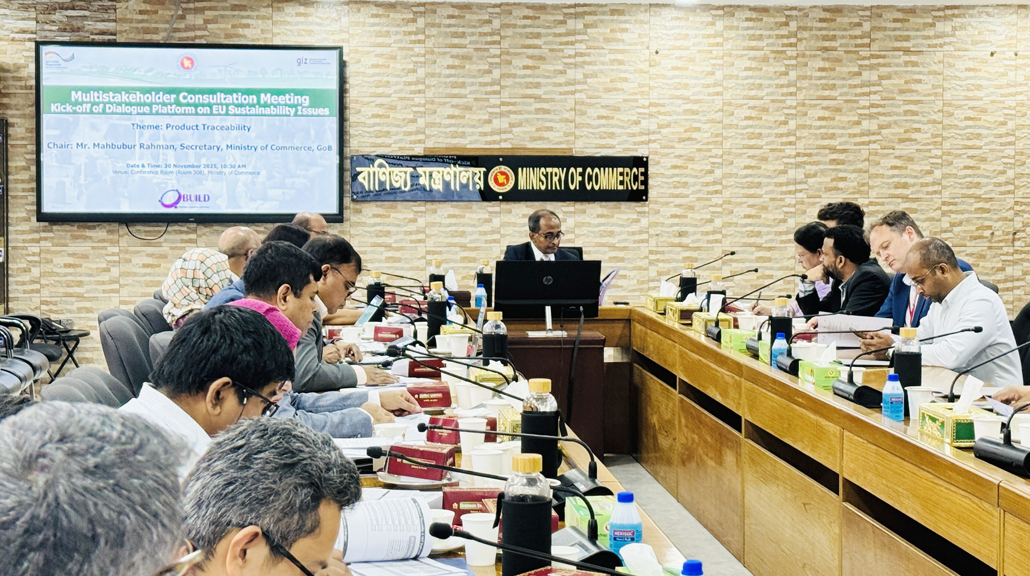
Experts and industry leaders identified several challenges in establishing effective national product traceability.
These include problems with data validation and generation, difficulties in linking different digital platforms, weak institutional coordination, and high costs for the digital systems needed.
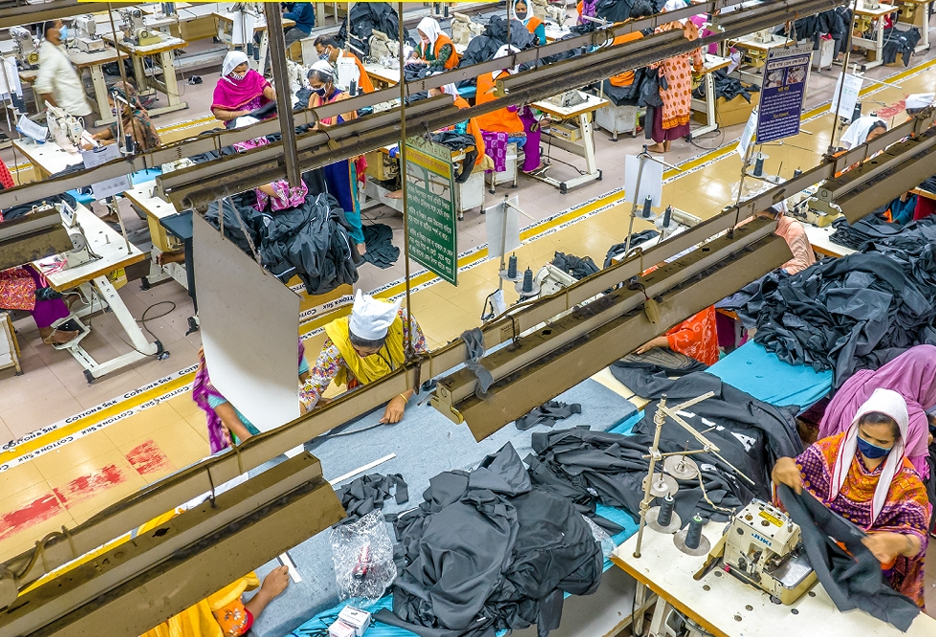
In a high-level policy discussion on product traceability organised by the Ministry of Commerce on November 30, industry stakeholders said that readymade garment exporters were facing serious difficulties in meeting diverse and non-uniform data requirements.
Development partners noted that smaller firms and subcontractors often lacked the systems and capacity needed to comply with increasingly complex international rules.
In the same discussion, industry representatives reiterated that RMG exporters were struggling to meet data demands that were becoming more stringent as global buyers sought greater transparency and sustainability information.
To address these issues, experts recommended drafting a National Traceability Strategy with sector-specific actions, setting a unified national standard, and creating a digital platform to help share data smoothly across the supply chain.
They also suggested developing a jhut sector directory, expanding green financing, extending traceability to mid- and low-tier firms, and introducing a Unique ID system for exporters.
Public–private co-investment and a national dialogue platform were highlighted as key to creating a strong and internationally accepted traceability system.
The Ministry of Commerce, working with the Deutsche Gesellschaft für Internationale Zusammenarbeit (GIZ) GmbH under the STILE-II Project, convened the discussion.
It brought together government officials, industry leaders, and development partners.
The meeting was chaired by Commerce Secretary Mahbubur Rahman. Its aim was to guide national strategies that will help Bangladesh remain competitive as the European Union introduces new sustainability requirements.
Business Initiative Leading Development (BUILD) provided research and thematic support for the event under GIZ’s Sustainability in the Textile Sector project.
In her keynote presentation, BUILD Chief Executive Ferdaus Ara Begum said that product traceability had become a national priority, noting that global markets—particularly the EU—were introducing new rules connected to the circular economy, Digital Product Passports, responsible business conduct, and sustainability reporting.
She pointed out that, with 92 per cent of Bangladesh–EU trade coming from the RMG sector, Bangladesh would need to align with the EU Green Deal by around 2030 to remain competitive.
Ferdaus Ara also highlighted long-standing gaps in data validation, platform interoperability, institutional coordination, and the high initial cost of compliance.
She said that countries such as Vietnam, China, Japan, Korea, and India had strengthened their traceability systems through public–private investment.
Ferdaus Ara said that Bangladesh would require a National Traceability Strategy with sector-specific actions, stronger institutional arrangements, a jhut sector directory, enhanced digital infrastructure, and green financing to help industries adopt traceability systems in a more affordable way.
Commerce Secretary Mahbubur Rahman referred to Germany’s experience and said Bangladesh must establish a national digital platform for data exchange.
He called on development partners to support this effort. He confirmed that work has started on a National Traceability Strategy, which may include sector-based pilot programmes led by the ministry with technical help from GIZ.
Representatives from BGMEA, BKMEA, and the leather sector shared updates on their ongoing pilots.
They said that although progress was underway, the programmes would need to expand to cover deeper data layers and include mid- and low-tier firms, such as subcontracting units and animal-level tracking in tanneries.
This is needed to meet buyer expectations and ensure clear visibility across the entire supply chain, industry people said.
BGMEA director Sheikh H M Mustafiz said that garment makers were facing increasing pressure from brands, buyers, and consultants, all of whom requested similar but non-standardised data.
He said that exporters were struggling to meet the requirements of multiple platforms without common standards and noted that a unified national guideline would help reduce complexity and lower costs.
Jannis Hussain, First Secretary at the German Embassy in Dhaka, said that two major challenges persisted, namely data availability and the high cost of the necessary digital infrastructure.
Commerce ministry Additional Secretary Abdur Rahim Khan highlighted the need for stronger due diligence and suggested setting up a Project Implementation Unit, drawing lessons from Thailand and Cambodia.
Planning Wing Joint Secretary Mostofa Jamal Haider said improved traceability would give Bangladesh stronger negotiating power in the post-LDC period.
Officials from BSTI, BCSIR, BPC, ERD, the Planning Commission, and representatives from the textile, apparel, leather, and fisheries sectors attended the meeting and shared their views.