7:13 pm, Friday, 5 December 2025

Bangladesh economy shows early signs of stabilisation: PRI

  • Bizbd Report
  • Update Time : 10:24:47 pm, Thursday, 27 November 2025
  • 142

Bangladesh’s economy is showing tentative signs of stabilisation as exports, remittances and moderating inflation offer some relief, according to the September–October edition of the Monthly Macroeconomic Insights (MMI).

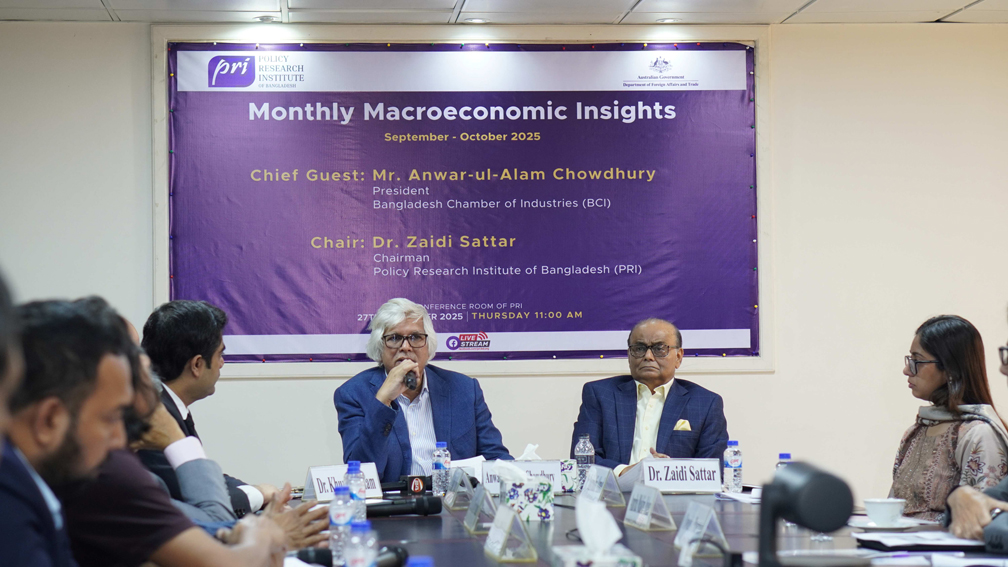
The report, prepared by the Centre for Macroeconomic Analysis (CMEA) of the Policy Research Institute of Bangladesh (PRI) in partnership with the Department of Foreign Affairs and Trade (DFAT) of the Australian Government, was presented at a session held on November 27 at PRI’s conference room in Dhaka.

Despite improving indicators, the report cautioned that the economic recovery remained fragile.

Foreign exchange reserves have strengthened, providing short-term relief, but investment appetite is still weak.

Private credit growth has slowed, while prolonged political uncertainty continues to weigh heavily on business sentiment, the report said.

According to the MMI, these factors collectively limit the strength and sustainability of the recovery.

The report highlighted severe vulnerabilities in the financial sector, with non-performing loans (NPLs) reaching its highest level in 25 years.

The steadily deteriorating asset quality threatened credit flows and the broader economic recovery, underscoring the urgent need for governance reforms and a comprehensive NPL resolution mechanism.

It mentioned that on the fiscal side, Bangladesh’s tax-to-GDP ratio remained critically low by regional and global standards, restricting the government’s development spending.

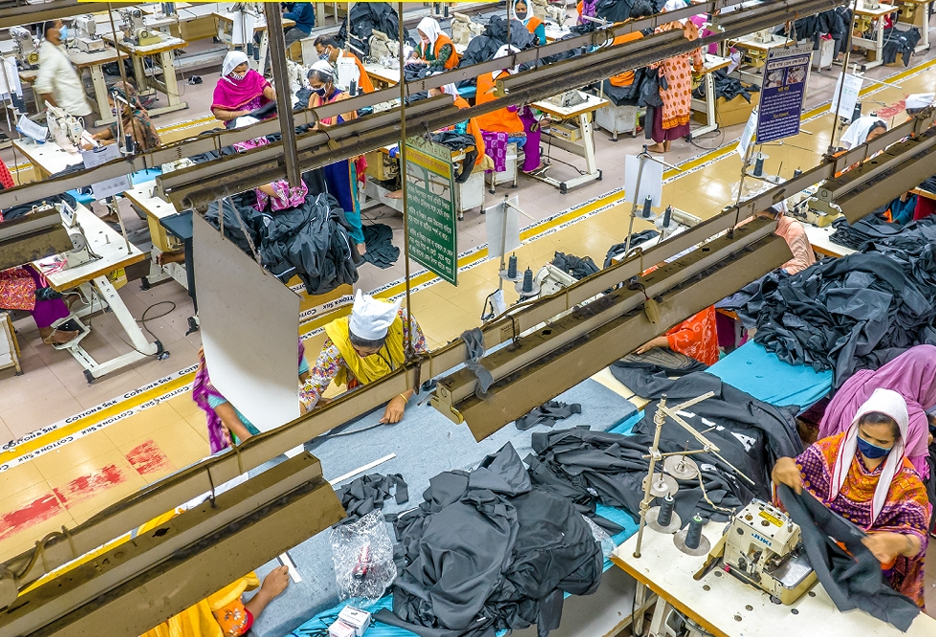
Export growth is described as modest and overly dependent on the ready-made garment sector, pointing to an urgent need for diversification and enhanced competitiveness.

Anwar-ul-Alam Chowdhury, President of the Bangladesh Chamber of Industries (BCI), said that sustainable progress required consistent local development supported by a stable political environment.

He argued that regular and credible elections were essential for long-term economic confidence.

He stressed the need to strengthen domestic policy frameworks, adopt a long-term energy strategy, provide fiscal support, improve the effectiveness of the National Board of Revenue (NBR), pursue banking sector reforms, and invest robustly in skills development to build a more resilient and competitive economy.

The event was chaired by Zaidi Sattar, Chairman of PRI. In his remarks, Sattar expressed concern over the rising Real Effective Exchange Rate (REER) since May, noting that it signalled weakening competitiveness.

He explained that Bangladesh Bank could no longer intervene in the market by purchasing dollars to depreciate the taka.

As a result, he argued that relaxing import restrictions was now the only viable option—one that would support exporters and help maintain stability under the current flexible exchange-rate regime.

Ashikur Rahman, Principal Economist at PRI, said Bangladesh lacked the institutional capacity to apply international best practices in resolving NPLs, as it had never faced a crisis of this scale before.

He stressed that now was the time to build that capacity, noting that countries such as Malaysia, the UK and China had successfully used specialised Asset Management Companies to purchase bad loans.

Ashikur warned that the estimated Tk 6.4 trillion in NPLs sitting on the financial sector’s balance sheet had severe macroeconomic implications.

It kept lending rates elevated, increased banks’ reliance on central bank liquidity support and limited credit flows to productive sectors.

This, he said, fuelled a ‘toxic cycle’ of weak investment, mounting inflationary pressure and slowing growth.

He cautioned that without urgent action, Bangladesh risked becoming trapped in a high-interest-rate, high-inflation, low-investment and low-growth equilibrium.

The panel discussion featured insights from Nasiruddin Ahmed, former Chairman of NBR; A K M Atiqur Rahman, Professor at North South University; Wasel Bin Shadat, Research Director at BUILD; and Amrita Makin Islam, Deputy Managing Director of Picard Bangladesh Limited.

Bangladesh economy shows early signs of stabilisation: PRI

Update Time : 10:24:47 pm, Thursday, 27 November 2025

Bangladesh’s economy is showing tentative signs of stabilisation as exports, remittances and moderating inflation offer some relief, according to the September–October edition of the Monthly Macroeconomic Insights (MMI).

The report, prepared by the Centre for Macroeconomic Analysis (CMEA) of the Policy Research Institute of Bangladesh (PRI) in partnership with the Department of Foreign Affairs and Trade (DFAT) of the Australian Government, was presented at a session held on November 27 at PRI’s conference room in Dhaka.

Despite improving indicators, the report cautioned that the economic recovery remained fragile.

Foreign exchange reserves have strengthened, providing short-term relief, but investment appetite is still weak.

Private credit growth has slowed, while prolonged political uncertainty continues to weigh heavily on business sentiment, the report said.

According to the MMI, these factors collectively limit the strength and sustainability of the recovery.

The report highlighted severe vulnerabilities in the financial sector, with non-performing loans (NPLs) reaching its highest level in 25 years.

The steadily deteriorating asset quality threatened credit flows and the broader economic recovery, underscoring the urgent need for governance reforms and a comprehensive NPL resolution mechanism.

It mentioned that on the fiscal side, Bangladesh’s tax-to-GDP ratio remained critically low by regional and global standards, restricting the government’s development spending.

Export growth is described as modest and overly dependent on the ready-made garment sector, pointing to an urgent need for diversification and enhanced competitiveness.

Anwar-ul-Alam Chowdhury, President of the Bangladesh Chamber of Industries (BCI), said that sustainable progress required consistent local development supported by a stable political environment.

He argued that regular and credible elections were essential for long-term economic confidence.

He stressed the need to strengthen domestic policy frameworks, adopt a long-term energy strategy, provide fiscal support, improve the effectiveness of the National Board of Revenue (NBR), pursue banking sector reforms, and invest robustly in skills development to build a more resilient and competitive economy.

The event was chaired by Zaidi Sattar, Chairman of PRI. In his remarks, Sattar expressed concern over the rising Real Effective Exchange Rate (REER) since May, noting that it signalled weakening competitiveness.

He explained that Bangladesh Bank could no longer intervene in the market by purchasing dollars to depreciate the taka.

As a result, he argued that relaxing import restrictions was now the only viable option—one that would support exporters and help maintain stability under the current flexible exchange-rate regime.

Ashikur Rahman, Principal Economist at PRI, said Bangladesh lacked the institutional capacity to apply international best practices in resolving NPLs, as it had never faced a crisis of this scale before.

He stressed that now was the time to build that capacity, noting that countries such as Malaysia, the UK and China had successfully used specialised Asset Management Companies to purchase bad loans.

Ashikur warned that the estimated Tk 6.4 trillion in NPLs sitting on the financial sector’s balance sheet had severe macroeconomic implications.

It kept lending rates elevated, increased banks’ reliance on central bank liquidity support and limited credit flows to productive sectors.

This, he said, fuelled a ‘toxic cycle’ of weak investment, mounting inflationary pressure and slowing growth.

He cautioned that without urgent action, Bangladesh risked becoming trapped in a high-interest-rate, high-inflation, low-investment and low-growth equilibrium.

The panel discussion featured insights from Nasiruddin Ahmed, former Chairman of NBR; A K M Atiqur Rahman, Professor at North South University; Wasel Bin Shadat, Research Director at BUILD; and Amrita Makin Islam, Deputy Managing Director of Picard Bangladesh Limited.