7:59 pm, Sunday, 15 February 2026

BNP wins landslide two-thirds majority in national polls

Bangladesh Nationalist Party (BNP) is set to form the next government after sweeping the 13th Jatiya Sangsad elections, securing a commanding majority in unofficial results released early Friday.

A nationwide referendum on proposed state reforms was conducted alongside the parliamentary polls on February 12.

The Election Commission data showed that voter participation in both the general election and the referendum stood at 59.44 per cent.

Unofficial tallies collected from returning officers’ offices indicated that the BNP-led alliance won at least 214 of the 299 contested constituencies, with the BNP itself securing 211 seats.

The Bangladesh Jamaat-e-Islami-led alliance won at least 77 constituencies, including six seats secured by candidates of the National Citizen Party.

At a press briefing on Thursday night, the BNP’s central election steering committee expressed confidence that the party would form the next government, having crossed the two-thirds majority threshold.

Polling began at 7:30am in 299 of the country’s 300 constituencies and continued uninterrupted until 4:30pm, when vote counting commenced. Voting in Sherpur-3 was postponed following the death of a candidate.

The parliamentary election and simultaneous constitutional referendum concluded in what observers described as a competitive and largely peaceful atmosphere, marking a sharp departure from the country’s previous three general elections.

The vote was held to obtain an elected government one and a half years after the July mass uprising that led to the overthrow of the Awami League administration.

The voting in the parliamentary elections and the referendum was marked by visible enthusiasm across the capital on Thursday, although a handful of isolated incidents were reported elsewhere in the country.

Alongside the JS voting, citizens cast ‘Yes’ or ‘No’ ballots in a referendum on proposed fundamental amendments to the constitution.

A total of 2,028 candidates, including 274 independents, from 50 political parties contested the election.

Among the parties, the Bangladesh Nationalist Party has fielded the highest number of candidates, with 291 nominees. Islami Andolan Bangladesh has put forward 258 candidates, while the Jamaat-e-Islami has nominated 228. The Jatiya Party has fielded 198 candidates.

According to official figures, the country has 12.77 crore registered voters, including around 6.48 crore men and 6.28 crore women.

Across the country, candidates and their supporters were seen maintaining a restrained presence during the polling, with no reports of dominating behaviour at polling stations.

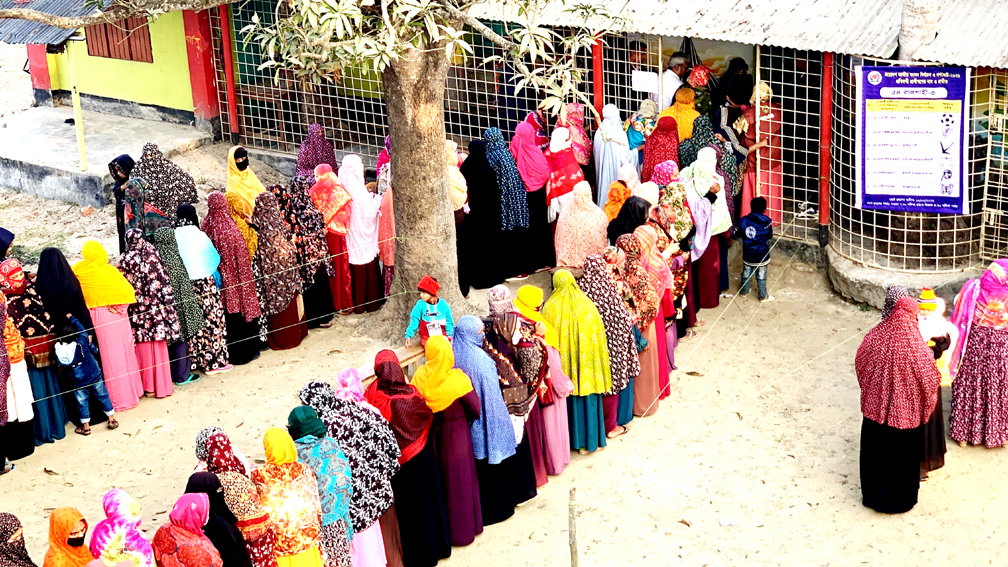
Voters formed long queues from early morning, a scene largely not evidenced in the previous three parliamentary elections during the rule of Sheikh Hasina, when turnout was often subdued and contests were widely viewed as lacking competitiveness.

The atmosphere this year differed significantly from the past three parliamentary contests held in 2014, 2018 and 2024.

During those elections, the field was widely seen as being dominated by the incumbents, along with their party leaders and activists.

There was criticism that the polls under the previous regime were largely ceremonial exercises aimed at renewing the Awami League’s tenure for another five years.

Over that period, the once-familiar sight of long queues of voters steadily faded.

Turnout scenes that have historically symbolised public participation appeared to recede into memory, with voter lines becoming almost a memory of the time past.

In contrast to earlier polls, when allegations of booth occupation and ballot stuffing were prominent, no major incidents of occupying centres, fraudulent voting or significant violence were reported in the Thursday polls.

Voters were able to travel to and from polling stations without obstruction from any political group.

Several political parties also raised complaints over irregularities in certain areas.

Interim government chief adviser Professor Muhammad Yunus cast his vote in the morning at Gulshan Model School and College in the capital.

Speaking to reporters afterwards, he described the day as that of the birth of a new Bangladesh and one of profound joy, marking an end to a period of darkness and the beginning of new hopes.

Bangladesh Nationalist Party chairman and Dhaka-17 candidate Tarique Rahman also voted at the same centre earlier in the day.

He told reporters that he was fully confident of victory.

Later, speaking outside the BNP Gulshan office, he said that his party would accept the results if the election was conducted in a neutral and controversy-free manner.

Jamaat amir Shafiqur Rahman cast his ballot at Monipur High School and College in the capital.

He hoped that the vote would produce a government representing the country’s 18 crore people rather than any individual, family or party.

The Election Commission has expressed gratitude to all political parties, candidates, law enforcement agencies, public and private officials engaged in election duties, observers, media personnel, voters and citizens for their overall cooperation in ensuring a free, fair, neutral and festive manner.

In a statement issued after the polling concluded, the commission thanked all stakeholders for their roles in facilitating the nationwide vote.

In another first, expatriate Bangladeshis had cast their votes in postal polling.

The polling was conducted at 42,958 centres nationwide. Of these, 42,659 were designated for in-person voting while 299 centres were assigned for counting the postal ballots.

The commission has identified around half of the in-person polling stations as sensitive, based on local risk assessments.

Around 9.58 lakh members of law enforcement agencies have been deployed in all constituencies.

Additionally, about 2,100 executive magistrates and 657 judicial magistrates were on duty to address any electoral or legal violations.

A key feature of this election was the referendum on the July National Charter (Constitutional Reform) Implementation Order, 2025.

A majority of the votes cast in favour of ‘yes’ in the referendum will have a Constitutional Reform Council consisting of elected members of the new parliament.

The council will function concurrently with the Jatiya Sangsad and will be tasked with finalising constitutional reforms within 180 working days from its first sitting.

The constitutional reforms adopted by the council will be final and will not require further approval.

The ousted Awami League government faced sustained criticism over the general elections held in 2014, 2018 and 2024.

An investigation committee appointed by the interim administration concluded that the three previous elections were not isolated events but part of a long-term strategy designed to keep the Awami League in power after the abolition of the caretaker government system in 2011 through the 15th Amendment to the Constitution.

The report concluded that the constitutional amendment enabled a series of one-sided and engineered elections, culminating in the 10th, 11th and 12th Jatiya Sangsads in 2014, 2018 and 2024.

These elections, held at significant public expenses, severely eroded citizens’ voting rights, the committee chief said.

The 2014 election was characterised by boycotts, widespread violence and a large number of uncontested seats, with 153 candidates elected unopposed.

In 2018, opposition parties participated but according to the report, faced systematic suppression, including mass arrests and politically motivated cases, while courts routinely denied bail.

The 2024 poll, boycotted again by major opposition forces, allegedly relied on dummy candidates to simulate competition.
BNP wins landslide two-thirds majority in national polls

Update Time : 02:07:32 pm, Friday, 13 February 2026

Bangladesh Nationalist Party (BNP) is set to form the next government after sweeping the 13th Jatiya Sangsad elections, securing a commanding majority in unofficial results released early Friday.

A nationwide referendum on proposed state reforms was conducted alongside the parliamentary polls on February 12.

The Election Commission data showed that voter participation in both the general election and the referendum stood at 59.44 per cent.

Unofficial tallies collected from returning officers’ offices indicated that the BNP-led alliance won at least 214 of the 299 contested constituencies, with the BNP itself securing 211 seats.

The Bangladesh Jamaat-e-Islami-led alliance won at least 77 constituencies, including six seats secured by candidates of the National Citizen Party.

At a press briefing on Thursday night, the BNP’s central election steering committee expressed confidence that the party would form the next government, having crossed the two-thirds majority threshold.

Polling began at 7:30am in 299 of the country’s 300 constituencies and continued uninterrupted until 4:30pm, when vote counting commenced. Voting in Sherpur-3 was postponed following the death of a candidate.

The parliamentary election and simultaneous constitutional referendum concluded in what observers described as a competitive and largely peaceful atmosphere, marking a sharp departure from the country’s previous three general elections.

The vote was held to obtain an elected government one and a half years after the July mass uprising that led to the overthrow of the Awami League administration.

The voting in the parliamentary elections and the referendum was marked by visible enthusiasm across the capital on Thursday, although a handful of isolated incidents were reported elsewhere in the country.

Alongside the JS voting, citizens cast ‘Yes’ or ‘No’ ballots in a referendum on proposed fundamental amendments to the constitution.

A total of 2,028 candidates, including 274 independents, from 50 political parties contested the election.

Among the parties, the Bangladesh Nationalist Party has fielded the highest number of candidates, with 291 nominees. Islami Andolan Bangladesh has put forward 258 candidates, while the Jamaat-e-Islami has nominated 228. The Jatiya Party has fielded 198 candidates.

According to official figures, the country has 12.77 crore registered voters, including around 6.48 crore men and 6.28 crore women.

Across the country, candidates and their supporters were seen maintaining a restrained presence during the polling, with no reports of dominating behaviour at polling stations.

Voters formed long queues from early morning, a scene largely not evidenced in the previous three parliamentary elections during the rule of Sheikh Hasina, when turnout was often subdued and contests were widely viewed as lacking competitiveness.

The atmosphere this year differed significantly from the past three parliamentary contests held in 2014, 2018 and 2024.

During those elections, the field was widely seen as being dominated by the incumbents, along with their party leaders and activists.

There was criticism that the polls under the previous regime were largely ceremonial exercises aimed at renewing the Awami League’s tenure for another five years.

Over that period, the once-familiar sight of long queues of voters steadily faded.

Turnout scenes that have historically symbolised public participation appeared to recede into memory, with voter lines becoming almost a memory of the time past.

In contrast to earlier polls, when allegations of booth occupation and ballot stuffing were prominent, no major incidents of occupying centres, fraudulent voting or significant violence were reported in the Thursday polls.

Voters were able to travel to and from polling stations without obstruction from any political group.

Several political parties also raised complaints over irregularities in certain areas.

Interim government chief adviser Professor Muhammad Yunus cast his vote in the morning at Gulshan Model School and College in the capital.

Speaking to reporters afterwards, he described the day as that of the birth of a new Bangladesh and one of profound joy, marking an end to a period of darkness and the beginning of new hopes.

Bangladesh Nationalist Party chairman and Dhaka-17 candidate Tarique Rahman also voted at the same centre earlier in the day.

He told reporters that he was fully confident of victory.

Later, speaking outside the BNP Gulshan office, he said that his party would accept the results if the election was conducted in a neutral and controversy-free manner.

Jamaat amir Shafiqur Rahman cast his ballot at Monipur High School and College in the capital.

He hoped that the vote would produce a government representing the country’s 18 crore people rather than any individual, family or party.

The Election Commission has expressed gratitude to all political parties, candidates, law enforcement agencies, public and private officials engaged in election duties, observers, media personnel, voters and citizens for their overall cooperation in ensuring a free, fair, neutral and festive manner.

In a statement issued after the polling concluded, the commission thanked all stakeholders for their roles in facilitating the nationwide vote.

In another first, expatriate Bangladeshis had cast their votes in postal polling.

The polling was conducted at 42,958 centres nationwide. Of these, 42,659 were designated for in-person voting while 299 centres were assigned for counting the postal ballots.

The commission has identified around half of the in-person polling stations as sensitive, based on local risk assessments.

Around 9.58 lakh members of law enforcement agencies have been deployed in all constituencies.

Additionally, about 2,100 executive magistrates and 657 judicial magistrates were on duty to address any electoral or legal violations.

A key feature of this election was the referendum on the July National Charter (Constitutional Reform) Implementation Order, 2025.

A majority of the votes cast in favour of ‘yes’ in the referendum will have a Constitutional Reform Council consisting of elected members of the new parliament.

The council will function concurrently with the Jatiya Sangsad and will be tasked with finalising constitutional reforms within 180 working days from its first sitting.

The constitutional reforms adopted by the council will be final and will not require further approval.

The ousted Awami League government faced sustained criticism over the general elections held in 2014, 2018 and 2024.

An investigation committee appointed by the interim administration concluded that the three previous elections were not isolated events but part of a long-term strategy designed to keep the Awami League in power after the abolition of the caretaker government system in 2011 through the 15th Amendment to the Constitution.

The report concluded that the constitutional amendment enabled a series of one-sided and engineered elections, culminating in the 10th, 11th and 12th Jatiya Sangsads in 2014, 2018 and 2024.

These elections, held at significant public expenses, severely eroded citizens’ voting rights, the committee chief said.

The 2014 election was characterised by boycotts, widespread violence and a large number of uncontested seats, with 153 candidates elected unopposed.

In 2018, opposition parties participated but according to the report, faced systematic suppression, including mass arrests and politically motivated cases, while courts routinely denied bail.

The 2024 poll, boycotted again by major opposition forces, allegedly relied on dummy candidates to simulate competition.